News Desk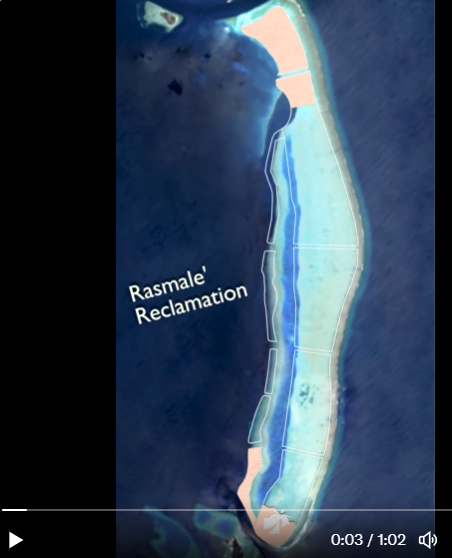
When Mohamed Alabbar, the Emirati property tycoon whose Eagle Hills firm helped shape Dubai’s skyline with the Burj Khalifa, swept into Malé in theatrical style—meeting local press and dangling visions of high-end jobs and investment opportunities for Maldivians—it was designed to look like the dawn of a transformative economic era.
He promised local participation, jobs, and a slice of the pie in Rasmalé, the government’s ambitious megacity reclamation project at Fushidhiggaru Falhu. Yet beneath the slick public relations blitz lies a web of political spectacle, legal hurdles, and mounting public skepticism.
Despite the $20-billion headlines, the reality on paper is far more preliminary. Attorney General Ahmed Usham clarified that what was signed on September 21 is merely a non-binding Letter of Intent—a commercial framework rather than a final contract. Furthermore, the deal cannot proceed under existing tourism laws; it requires the government to draft bespoke real estate legislation and shepherd it through Parliament to accommodate a proposed 99-year lease for 500 hectares of reclaimed land.
Why is there so much fanfare right now?
The intense public buzz is driven by a convergence of political strategy, massive economic scale, and underlying legal anxieties.
1. Political Urgency Meets Headline Numbers
For President Mohamed Muizzu’s administration, Rasmalé is the political centerpiece of its tenure. Having promised a massive land-reclamation initiative to address the capital’s severe housing and space crisis, the government needed a headline-grabbing victory. A prominent billionaire arriving in dramatic fashion to pledge $20 billion delivers an immediate political win—even if the ink on actual binding contracts is months or years away.
2. Grand Promises for Locals
Alabbar’s media pitch targeted key local concerns: jobs and ownership. The project claims it will create over 54,000 direct and indirect jobs while allowing Maldivians to invest directly in real estate within the commercial zone. Promising that the public will actively share in the wealth of a luxury waterfront development helps build local buy-in for a project that has otherwise faced questions over its environmental and financial feasibility.
3. The Bespoke Law Requirement
The buzz is equally fueled by friction behind the scenes. Present Maldivian tourism and property laws do not cleanly accommodate a mixed-use, integrated real estate development of this magnitude under a single 99-year master lease. The government must pass a “bespoke law”—a custom-tailored real estate framework—through the People’s Majlis. This has drawn scrutiny from legal experts and lawmakers who question whether national legislation is being adapted specifically to suit a foreign developer.
4. Opposition Pushback and Court Challenges
The opposition, led by the Maldivian Democratic Party (MDP), has latched onto the announcement. Questions are being raised in Majlis over whether independent valuations were conducted before committing 500 hectares of prime land for nearly a century. Legal challenges have already been filed seeking to challenge the validity of the preliminary commercial agreement, ensuring that the deal remains at the top of the news cycle.
While the government insists that land ownership will remain strictly in Maldivian hands and that the project will fully comply with the constitution, the immediate future hinges on legislative debates.
Until the Majlis drafts and passes the new real estate laws—and until binding contracts replace the current Letter of Intent—the “James Bond” arrival remains a masterclass in high-stakes optics: a high-visibility preview designed to lock in public momentum before the complex legal work has even begun.