News Desk
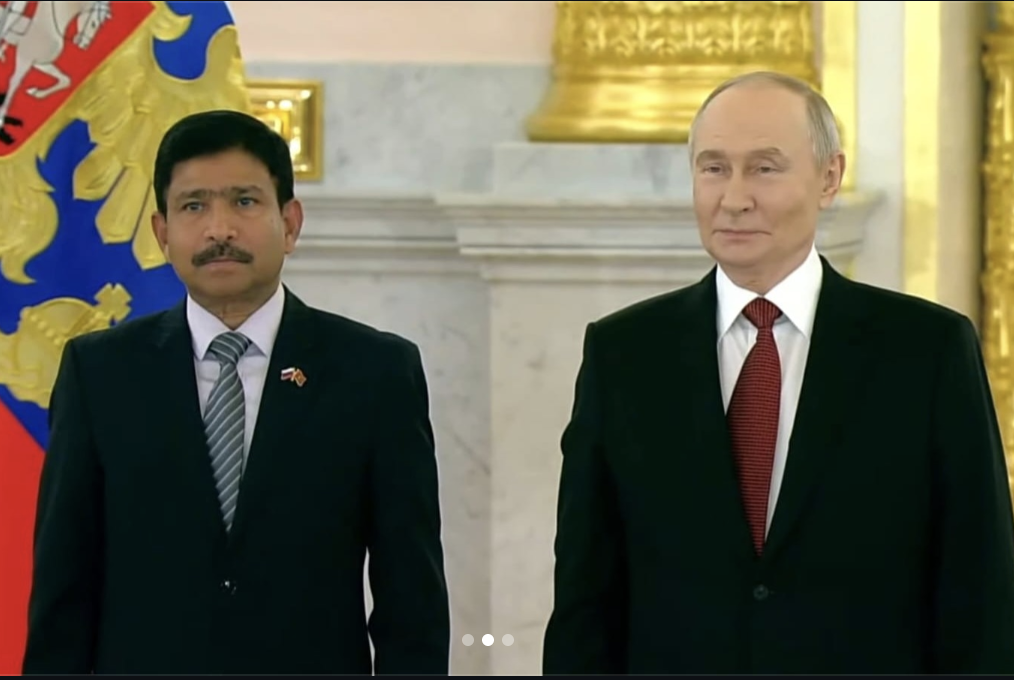
A bill before the Majlis would bar President Vladimir V. Putin of Russia from entering the country, though it does not name him. The immigration bill, submitted on 9 November, would deny entry to anyone charged by the International Criminal Court or subject to one of its arrest warrants. President Putin has been since 17 March 2023, when the court accused him of unlawfully deporting children from Ukraine to Russia. Moscow rejects the warrant, and the court has said it would stand even if a peace deal included an amnesty.
The bill is not the only barrier. The Maldives is a state party to the Rome Statute, the treaty that created the court, which obliges members to arrest and hand over anyone with an active warrant who enters their territory. I
In 2024, after the court issued a warrant for Prime Minister Benjamin Netanyahu of Israel, the homeland security minister, Ali Ihusan, said he would be arrested if he came.
The bill adds a domestic ban on top of that duty. It also bars people listed by Interpol, people accused of crimes under international law and fugitives from other countries’ justice systems.
The treaty’s record suggests that obligation is often not met. The court has no police of its own and relies on member states to act. Mongolia hosted President Putin in September 2024 and did not arrest him. In October of that year, judges found it had failed to comply with its obligations. Hungary received Netanyahu in April 2025, and its prime minister, Viktor Orban, announced during the visit that Hungary would leave the court. Tajikistan, which joined in 2002, hosted President Putin from 8 to 12 October 2025. In March this year the court found that it too had broken the treaty and referred it to the body of member states. Tajikistan and Mongolia argued that Russia is not a member and that a head of state has immunity. The judges were not persuaded. Tajikistan’s lower house has since voted to withdraw from the court.
The Maldives has not faced such a test, and there is no sign that President Putin plans to visit. An entry ban would give officials a way to refuse a visitor without having to decide whether to arrest a head of state. How they would use it is untested.
The bill has not yet been debated. It is one of four submitted on Monday by the governing People’s National Congress, which holds a large majority in the Majlis.