News Desk
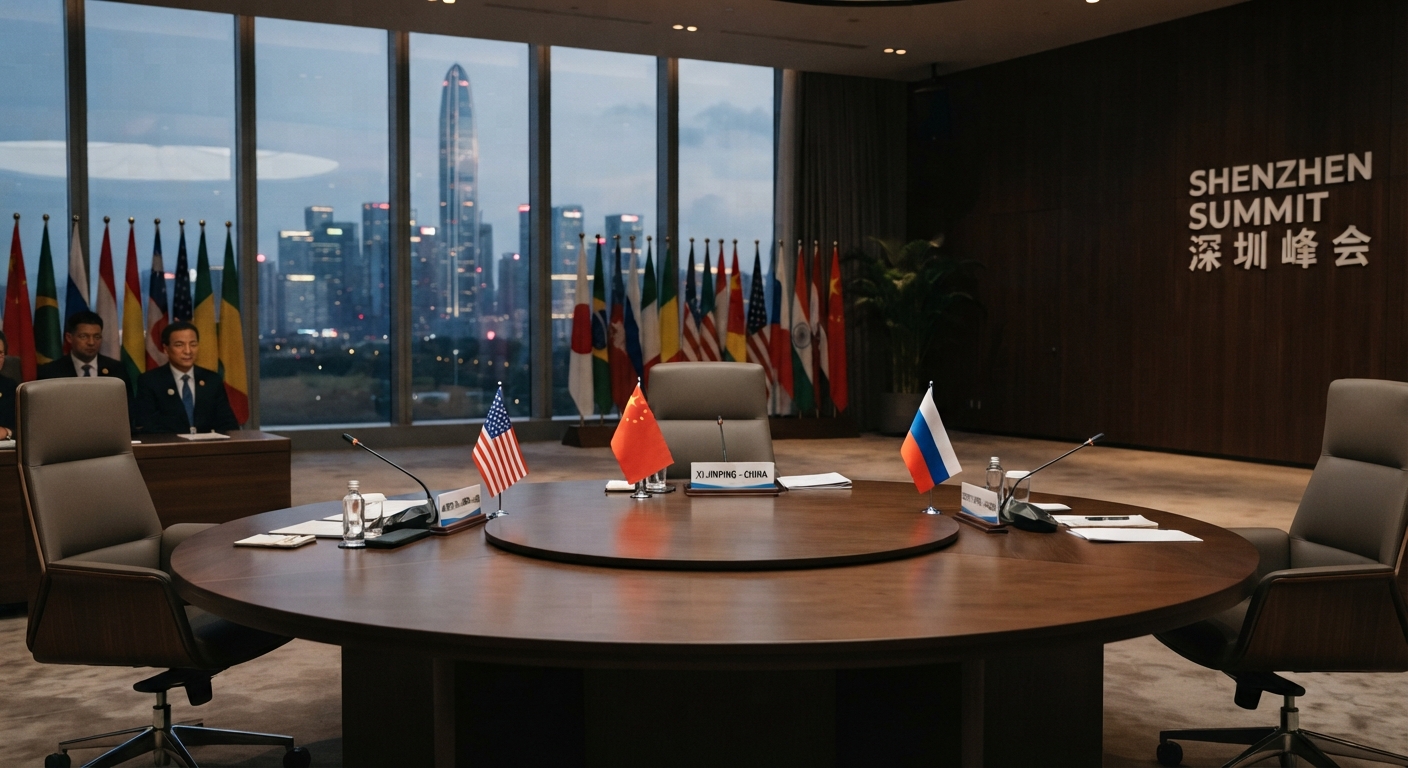
When President Donald Trump, President Vladimir Putin and President Xi Jinping sat together in Shenzhen on Thursday, the imagery inevitably invited comparisons to the 1945 Yalta Conference, where Franklin D. Roosevelt, Winston Churchill and Joseph Stalin redrew the post-war map. Unlike the statesmen who assembled in Yalta in 1945, however, the three figures gathered in Shenzhen are hardly champions of democratic governance. Aside from President Xi, whose authority rests on a rigid one-party system, both of his counterparts have faced severe legal jeopardy: President Trump has stood before a domestic court where his moral and legal conduct was formally censured, even if he escaped a custodial sentence, while President Putin remains the subject of an active arrest warrant from the International Criminal Court.
President Trump himself boasted before the meeting that the gathering would be “bigger than Yalta”, while European leaders, including the German chancellor, Friedrich Merz, warned that a “Yalta format” would fail to deliver peace.
Despite the grand historical comparisons invoked ahead of the gathering, the Shenzhen meeting was far less consequential than its choreography suggested. Rather than a transformative concert of superpowers, the week amounted largely to a series of separate bilateral consultations held on the sidelines of the Asia-Pacific Economic Cooperation conference, where each leader pursued narrow national agendas—from Washington’s trade truce and technology disputes with Beijing to Moscow’s separate discussions over Ukraine and energy licences.
The trilateral session itself was essentially an opportunistic add-on convened by President Xi to project diplomatic prestige as host, bringing the three together briefly around a table without producing any binding framework, institutional roadmap or substantive breakthrough.
The summit revealed a fractured international order in which Washington, Moscow and Beijing share no overarching vision—save for a mutual desire to dismantle the rules that restrain them. The official communiqué produced by the three leaders ran to fewer than 250 words and contained no binding mechanisms, timelines or targets.
It touched upon four broad themes: reforming the United Nations, expanding the supply of refined petroleum products, curbing the reach of the International Criminal Court and reaffirming the familiar Cold War axiom that a nuclear war cannot be won.
Conspicuously absent from the text were the two conflicts dominating global security: the ongoing war in Ukraine and the escalating conflict involving Iran. Beyond these immediate crises, the leaders also bypassed any mention of human rights or democracy—a notable omission given that all three governments exhibit, to varying degrees, autocratic tendencies.
The critical distinction between Yalta and Shenzhen lies in strategic intent. In 1945, three wartime allies united against a common adversary negotiated a shared institutional architecture—including the United Nations and its Security Council—to manage their post-war rivalry.
In Shenzhen, by contrast, each leader arrived pursuing narrow bilateral transactions with one counterpart while seeking to keep the third out of the room. Throughout the week, diplomacy moved along three separate bilateral tracks rather than a unified trilateral front: Washington and Beijing focused on managing friction over semiconductors, rare earth minerals, arms sales to Taiwan and a fragile trade truce extending into January; Washington and Moscow conducted separate discussions regarding Ukraine and a temporary licence governing diesel supplies; and Beijing and Moscow reviewed bilateral trade and energy ties, notably leaving the long-stalled Power of Siberia 2 pipeline unsigned.
The three powers achieved full consensus on only one: reducing institutional and legal constraints on major powers—specifically regarding the United Nations, the International Criminal Court and official immunity—without agreeing on any replacement framework.
Every other item on the agenda was either managed bilaterally or left unresolved amid competing strategic priorities. On refined fuel, Washington and Moscow arranged for Russian diesel to be sold under an American licence with quiet Chinese assent, while Ukraine remained strictly a bilateral track between the United States and Russia, leaving Beijing on the sidelines and Europe pressing for a seat at the table. Elsewhere, direct contests between Washington and Beijing over Taiwan and advanced technology left Moscow either supporting China at no cost or dependent on Chinese supply chains.
Where all three held distinct, irreconcilable positions—such as on nuclear arms control, the Korean Peninsula, Central Asia and the Caucasus, and the conflict in Iran and the Persian Gulf, where the United States is at war, China seeks an open Strait of Hormuz and Russia benefits from disruption—the summit produced no joint programme of action, offering only a rhetorical pledge on nuclear risk reduction while bypassing substantive agreements altogether.
Even on United Nations reform, consensus ends at the slogan. Washington seeks a leaner, less costly bureaucracy; Beijing aims to expand its institutional influence as American engagement recedes; and Moscow’s primary objective is preserving its Security Council veto intact. The practical limits of their cooperation were underscored this week as the Security Council remained deadlocked in straw polls to select a successor to the outgoing secretary-general, Antonio Guterres.
For middle powers and smaller nations—from Europe and the Gulf to the Indian Ocean—this emerging landscape carries profound implications. Already middle powers have moved to hedge their bets in Shenzhen and beyond, advancing independent trade agreements and security partnerships rather than waiting on Washington or Beijing.
The three major powers have signalled a willingness to weaken existing multilateral guardrails without proposing any replacement framework.
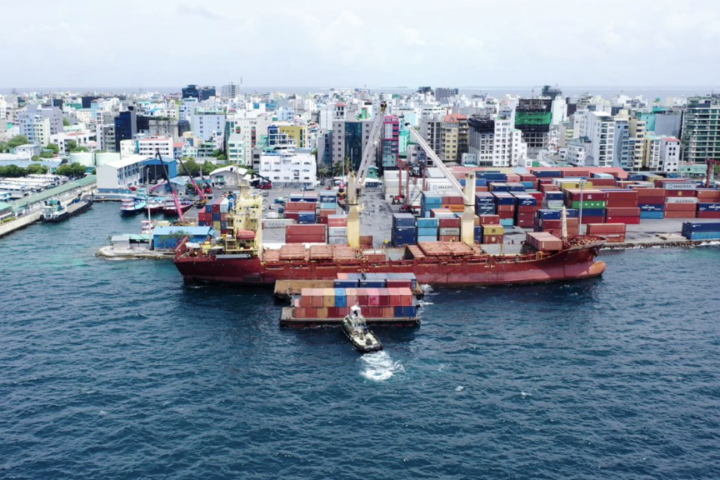
In an international system where great powers increasingly prefer ad hoc, bilateral bargains over collective rules, smaller nations cannot rely on the stability of a benign global directorate—nor need they fear a rigid division of the world into formal spheres of influence. Rather, small island states such as the Maldives, whose economic resilience and maritime security rest on predictable international law and the proximity of strong, stabilising neighbours, face a far more transactional era. As distant powers prioritise narrow bilateral deals over collective rules, such nations cannot afford to alienate their natural regional partners in favour of far-flung alignments; navigating this landscape demands steady, pragmatic neighbourhood diplomacy rather than deference to a consensus in Shenzhen that does not exist.