 News Desk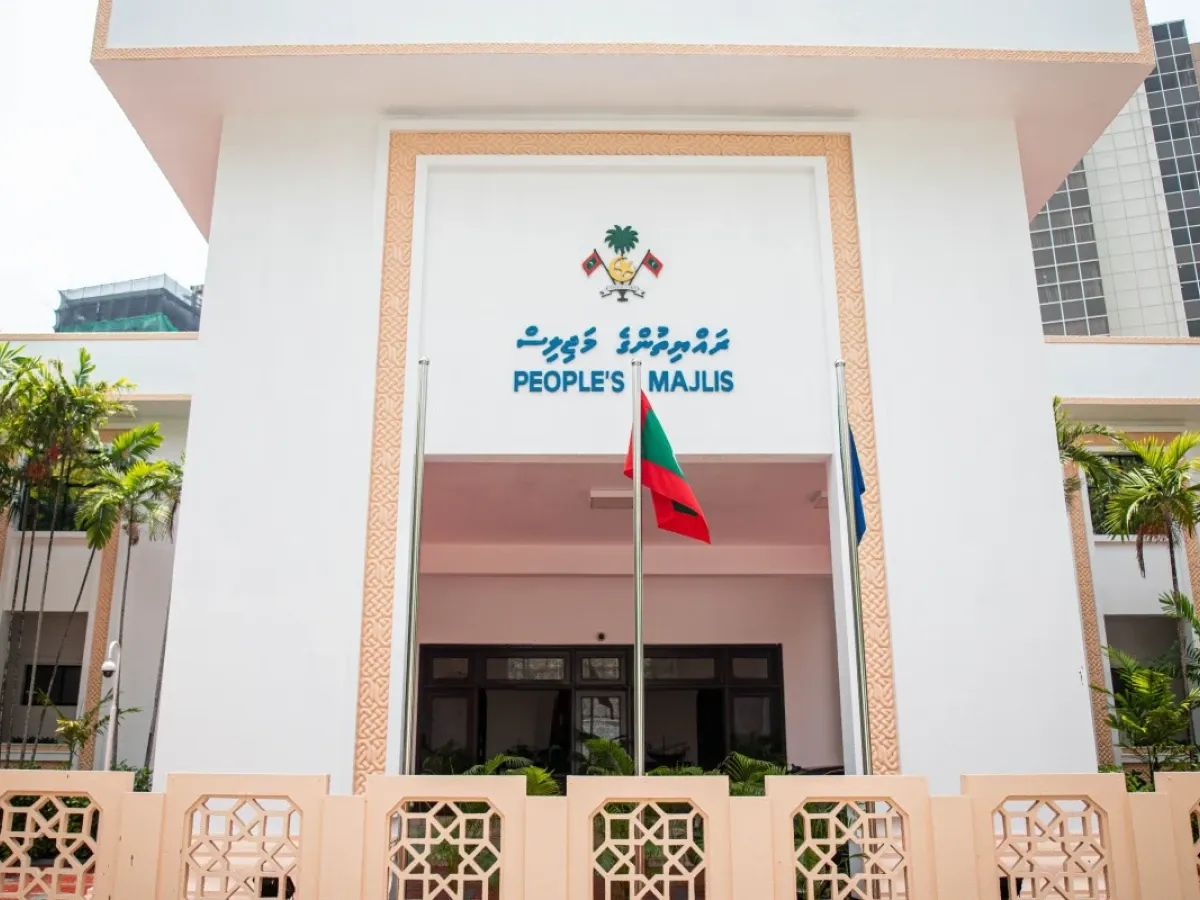
In the Maldives — the scatter of coral atolls long romanticised as God’s own archipelago — the country’s Parliament marked its 93rd anniversary this week with a shy, almost whispered acknowledgment. No fanfare, no hedikaa party, not even a public ceremony. Just a modest post on X, easy to miss in the endless scroll. It was an unusually quiet moment for an institution that, by any regional measure, has every reason to stand tall.
For the People’s Majlis is not merely another small‑state legislature. It is the oldest sovereign law‑making body in South Asia, an indigenous creation of Maldivians themselves, born not of colonial engineering but of a political culture that took root centuries before European ships appeared in the Indian Ocean. In a region where civilizations rose along mighty rivers, the Maldives carved out its own distinction — a sovereign island polity that built a consultative political tradition without the fertile deltas or vast hinterlands that shaped its neighbours.
The contrast is striking. In South Asia, the origins of parliamentary life are typically traced to British rule — to commissions, dispatches, and constitutional experiments. But the Maldivian story begins elsewhere: in the quiet deliberations of state council that emerged nearly nine hundred years ago, after the archipelago embraced Islam and developed its own forms of shura‑based governance.
When Ibn Battuta arrived in the mid‑fourteenth century, he found a kingdom governed not by the unchecked will of a monarch but by councils of scholars, judges, and nobles who debated matters of law and public life. Their deliberations, preserved in chronicles and travel accounts, reveal a political tradition far older — and far more indigenous — than most assume about the region.
Long before Ceylon held its first elections under British supervision, and centuries before South Asia’s modern constitutions were drafted, the Maldives had already cultivated a culture of political consultation that would evolve into one of the region’s earliest legislative institutions.
Here is the paper that follows — a study of how that tradition emerged, endured, and diverged sharply from the colonial pathways that shaped governance elsewhere in the Indian Ocean.
—————————–
Indigenous Sovereignty and Colonial Constraint: A Comparative Study of Early Maldivian Consultative Governance and the 1931 State Council of Ceylon
22 December 2025
Abstract
This paper examines two contrasting trajectories of political development in the Indian Ocean region. The first is the Maldives, where consultative governance emerged organically following the Islamisation of the archipelago in the twelfth century and evolved into a recognisable proto‑legislative institution by the sixteenth century. The second is Ceylon under British rule, where the 1931 Donoughmore Constitution introduced universal suffrage but created a State Council that lacked the essential characteristics of a sovereign parliament. Through historical chronicles, foreign accounts, and constitutional documents, this study argues that the Maldives developed indigenous mechanisms of political consultation long before European influence, while Ceylon’s early representative institutions remained constrained by colonial authority.
- Introduction
Political institutions in South Asia are often studied through the lens of colonial constitutional reforms. This approach obscures the fact that some polities in the region developed indigenous consultative traditions centuries before European intervention. The Maldives is a notable example. Its modern legislature, the People’s Majlis, is the product of a long evolution rooted in Islamic governance and local political culture. In contrast, Ceylon’s first experiment with representative government under the Donoughmore Constitution was shaped entirely by British administrative priorities and lacked genuine sovereignty. This paper brings these two histories into conversation to highlight the diversity of political development in the region.
- The Emergence of Shura‑Based Governance in the Maldives (1153–1300)
The conversion of the Maldives to Islam in 1153 introduced new administrative norms grounded in Islamic political theory. Maldivian chronicles such as the Raadhavalhi describe the establishment of councils composed of religious scholars, judges, and leading nobles who advised the Sultan on matters of law, taxation, and public affairs (Mohamed 2004). These bodies reflected the Islamic principle of shura, which required rulers to consult knowledgeable individuals in governance.
The earliest Islamic sultanates of the twelfth and thirteenth centuries appear to have institutionalised this consultative practice. Although these councils did not resemble modern parliaments, they provided a structured mechanism for collective decision‑making. Their existence demonstrates that the Maldives possessed an indigenous political tradition that valued consultation and shared governance long before the rise of European colonialism in the region.
- Ibn Battuta’s Testimony and Fourteenth‑Century Administrative Structure
The most detailed early description of Maldivian governance comes from Ibn Battuta, who served briefly as qadi in the Maldives in 1344–1345. In his Rihla, he describes a court headed by Queen Khadijah, supported by a hierarchy of wazirs, amirs, and judicial officials (Ibn Battuta 1929). He also notes the presence of a consultative body that deliberated on administrative and legal matters. Although he does not use the term “Majlis,” his account confirms that the Maldives had a functioning advisory council with defined responsibilities by the mid‑fourteenth century.
Ibn Battuta’s observations are significant because they provide external corroboration of the institutional structures described in Maldivian chronicles. They also demonstrate that the Maldives had developed a sophisticated administrative system that integrated Islamic legal principles with local political practices.
- Sixteenth‑Century Consolidation of a Proto‑Legislative Body
By the sixteenth century, Maldivian consultative governance had become more formalised. The period of Portuguese intrusion (1558–1573) and the subsequent liberation led by Muhammad Thakurufaanu is well documented in Maldivian sources. These chronicles describe a council of island chiefs and nobles who deliberated on taxation, military mobilisation, and succession (Luthfee 1995). Meetings were held at Bodu Gey in Malé, which functioned as a central venue for political decision‑making.
The office of the Fandiyaaru (Chief Justice) played a central role in this system. The Fandiyaaru presided over legal and administrative deliberations in consultation with other officials, reinforcing the collective nature of governance. European visitors in the seventeenth and eighteenth centuries, including Captain Robert Christopher in 1602, also noted the existence of a council of elders advising the Sultan (Christopher 1607). These accounts confirm that the Maldives possessed a recognisable consultative institution with legislative functions well before the modern era.
- The 1931 Donoughmore Constitution and the Limits of the Ceylon State Council
In contrast to the indigenous evolution of Maldivian governance, the first major experiment in representative government in Ceylon was a product of British colonial policy. The earliest modern legislative institution in the island, the Legislative Council of 1833 established under Governor Sir Robert Wilmot‑Horton, was composed largely of appointed officials and served primarily as an advisory body created through the Colebrooke–Cameron Reforms. It exercised no independent authority over legislation, finance, or executive power. The Donoughmore Constitution of 1931 introduced universal adult suffrage and replaced this earlier council with the State Council, but the new institution still lacked the essential characteristics of a sovereign parliament.
5.1 Non‑Elected Executive Control
The State Council included three powerful Officers of State appointed by the British government: the Chief Secretary, the Legal Secretary, and the Financial Secretary. These officials controlled defence, foreign affairs, justice, and finance. They sat in the Council and the Board of Ministers but were not elected and could not be removed by a vote of no confidence (Donoughmore Report 1928). Their presence ensured that key areas of governance remained under British control.
5.2 The Governor’s Reserve Powers
Under Article 22 of the Ceylon (State Council) Order in Council of 1931, the Governor possessed the power of Certification. If the State Council refused to pass legislation deemed essential to the public interest, the Governor could enact it unilaterally. He also held veto power over any bill passed by the Council. In 1932, the Governor used certification powers four times to override the decisions of elected members (Hansard 1934). These powers made it impossible for the Council to exercise final legislative authority.
5.3 The Executive Committee System
The Donoughmore Constitution replaced the Westminster cabinet model with an executive committee system inspired by the London County Council. The fifty elected members were divided into seven committees responsible for different administrative sectors. This system was designed to train Ceylonese leaders in administration rather than empower them to make sovereign policy decisions. The Soulbury Commission later criticised the system for creating a lack of collective responsibility and preventing the emergence of a unified government capable of challenging colonial authority (Soulbury Report 1945).
5.4 Financial Constraints
A sovereign parliament typically exercises control over public finance. The State Council did not. Any bill involving public expenditure or taxation required the prior approval of the Governor or the Financial Secretary. This restriction ensured that fiscal policy remained firmly in British hands (Ceylon Order in Council 1931).
- Comparative Analysis
The contrast between the Maldives and Ceylon highlights two distinct paths of political development. The Maldives developed consultative institutions organically over several centuries, rooted in Islamic governance and local political culture. These institutions exercised real influence over taxation, succession, and governance. In Ceylon, by contrast, the first representative institution was created by a colonial power and deliberately structured to limit local autonomy. The State Council lacked control over defence, foreign affairs, finance, and final legislative authority. It was an administrative experiment rather than a sovereign parliament.
Summary Table:
Comparative Features of Maldivian Consultative Governance and the 1931 Ceylon State Council
| Feature | Maldives (Early Consultative Governance – Majlis) | Ceylon (1931 State Council) |
| Origins | Emerged from Shura‑based advisory councils established after Islamisation in the 12th–13th centuries; indigenous evolution |
Created by the Donoughmore Constitution in 1931; externally designed by the British |
| Sovereignty | Exercised authority within a fully sovereign polity; no external veto power |
Lacked sovereignty; Governor held veto and certification powers under the 1931 Order in Council |
| Executive Control | Executive authority held by the Sultan and local officials; no foreign officers |
Key executive offices (Chief Secretary, Legal Secretary, Financial Secretary) held by British officials |
| Legislative Power | Consultative bodies exercised real influence over taxation, succession, and governance | Advisory and administrative; legislation subject to Governor’s veto and certification |
| Fiscal Authority | Fiscal decisions made within a sovereign framework; taxation and expenditure controlled locally |
No independent fiscal authority; all money bills required approval of Governor or Financial Secretary |
| Foreign Affairs and Defense | Controlled by Maldivian rulers throughout pre‑modern and early modern periods | Entirely retained by the British administration; State Council had no authority |
| Historical Continuity | Continuous evolution over several centuries, culminating in the modern Majlis | Short-lived transitional institution (1931–1947) replaced by the Soulbury Constitution |
- Conclusion
The Maldives and Ceylon present two very different historical experiences of political development. The Maldives demonstrates that small island polities in the Indian Ocean developed indigenous consultative traditions long before European influence. Ceylon’s early representative institutions, while significant in the history of democratic reform, remained constrained by colonial authority and lacked genuine sovereignty. Understanding these contrasting trajectories enriches our understanding of political evolution in the region and challenges assumptions that parliamentary traditions in South Asia emerged solely through colonial constitutional engineering. When these histories are placed side by side, it becomes clear that the Maldives possesses the oldest continuous parliamentary tradition in South Asia. Its consultative institutions, established from the twelfth century onward and exercised within a sovereign polity, predate by several centuries the colonial-era legislative bodies introduced in Ceylon and the wider subcontinent. These institutions evolved without the presence of foreign administrators or external political control, ensuring that their development remained entirely indigenous. As the Maldives marks ninety‑three years of its modern Majlis and constitutional history this year, this long arc of institutional continuity underscores the country’s position as the earliest and most enduring parliamentary tradition in South Asia.
References
Christopher, R. 1899. A Voyage to the Maldives. London: Hakluyt Society. (Edited and published by the Hakluyt Society based on the 1602 manuscript.)
Colebrooke, William, and Charles Hay Cameron. Report of the Colebrooke–Cameron Commission on the Administration of Ceylon. Colombo: Government Press, 1833.
Ceylon (State Council) Order in Council. 1931. London: His Majesty’s Stationery Office.
Donoughmore Commission. 1928. Report of the Special Commission on the Constitution of Ceylon. Cmd. 3131. London: HMSO.
Hansard. 1934. House of Commons Debates, 21 February 1934.
Ibn Battuta. 1929. The Travels of Ibn Battuta. Translated by H. A. R. Gibb. Cambridge: Hakluyt Society.
Luthfee, M. I. 1995. The Maldives: A Historical Overview. Malé: National Centre for Linguistic and Historical Research.
Mohamed, N. 2004. A Concise History of the Maldives. Malé: National Centre for Linguistic and Historical Research.
Soulbury Commission. 1945. Report on Constitutional Reform in Ceylon. Cmd. 6677. London: HMSO.
de Silva, K. M. 1981. A History of Sri Lanka. Berkeley: University of California Press.