 News Desk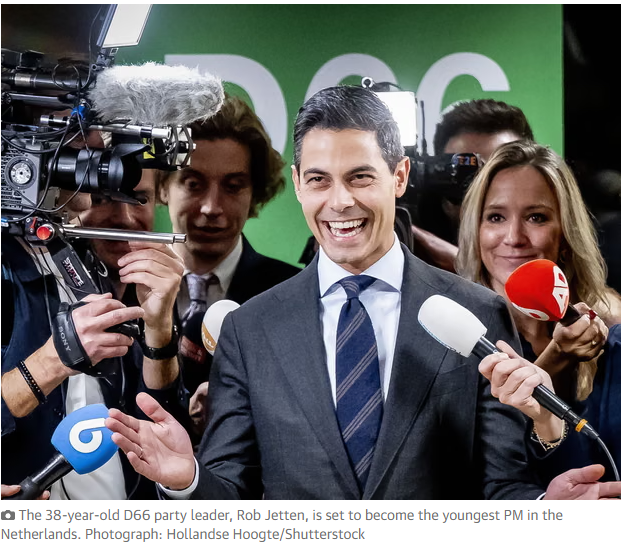
AMSTERDAM — For many Dutch Muslims, the liberal-progressive party D66’s electoral victory this week was more than a political shift. It was a moment of reprieve.
After years of rising anti-immigrant sentiment and the growing influence of far-right parties, the win by D66 — led by 38-year-old Rob Jetten — has offered a measure of reassurance to communities long targeted by xenophobic rhetoric and exclusionary policies.
“We’ve been holding our breath,” said Fatima El-Hassan, a secondary school teacher in Rotterdam and second-generation Moroccan-Dutch. “This result tells us that there’s still space for dignity, for belonging.”
The party’s platform includes commitments to humane asylum procedures, stronger anti-discrimination enforcement, and expanded access to education and language training for newcomers. While coalition negotiations remain underway, many see D66’s success as a symbolic rejection of the divisive politics championed by Geert Wilders’ PVV, which campaigned for islamophobia banning Islamic schools and reducing immigration.
In recent years, Dutch Muslims have faced increasing scrutiny — from surveillance in mosques to debates over religious dress in public institutions. The normalization of Islamophobic language in political discourse has left many feeling politically vulnerable.
“Every election feels like a referendum on our existence,” said Ahmed, a community organizer in Utrecht. “We’re not just voters. We’re the litmus test for what kind of country the Netherlands wants to be.”
The rise of youth-led civic initiatives, interfaith dialogues, and cultural programming has helped counter negative stereotypes. Yet visibility has not always translated into safety. A 2024 report by the Netherlands Institute for Human Rights found that Muslims remain disproportionately affected by housing discrimination and workplace bias.
Rob Jetten, poised to become the youngest prime minister in Dutch history, has emphasized social cohesion and climate justice. His appeal among younger voters — including many from immigrant backgrounds — reflects a generational shift toward more inclusive politics.
Still, activists caution against premature celebration. “Symbolism matters, but policy is what shapes lives,” said Hala al-Karib, a Sudanese advocate for women’s rights. “We need accountability, not just empathy.”
As the Netherlands charts its political future, Muslim communities are watching closely. Will promises of inclusion be upheld in the face of coalition compromises? Will structural inequalities be addressed, not just acknowledged?
For now, there is cautious optimism — tempered by lived experience and a deep understanding of how quickly political tides can turn.
“We belong here,” El-Hassan said. “And we’ll keep showing up — in classrooms, in parliament, in the streets. This is our home too.”