 News Desk
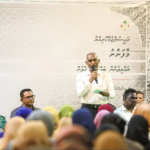
Male’, Maldives –In an exclusive interview with Ceylon Today, President Dr. Mohamed Muizzu emphasized his administration’s commitment to safeguarding the Maldives’ sovereignty, fostering economic growth, and ensuring the Indian Ocean remains a zone of peace amid geopolitical rivalries. Addressing key issues such as the Maldives’ strategic partnerships, economic challenges, and the controversial “India Out” movement, President Muizzu provided insights into his foreign policy and vision for a developed Maldives by 2040.
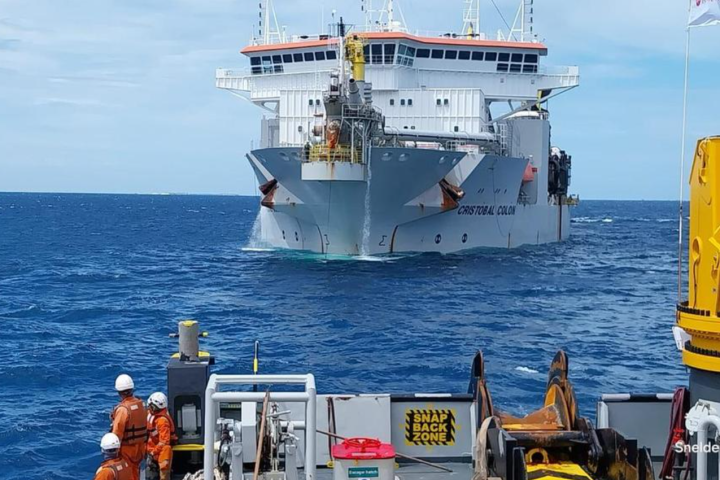
President Muizzu clarified the Maldives’ stance on its strategic location in the Indian Ocean, stating that the country will not allow its geographical position to be misused by any nation for military purposes. “We are a small state, but we act in the best interest of our sovereignty, territorial integrity, and to support free and open trade in the region,” he said. He highlighted the Maldives’ decision to allow a Chinese vessel entry after Sri Lanka denied it, underscoring that the move was not to permit research in Maldivian waters but to assert the nation’s independent decision-making. “We are not aligned with any country, and we will not allow any country to control or conduct research in our waters,” he affirmed.
On the Indo-Pacific strategy, President Muizzu stressed that any such framework must prioritize peace, stability, and sustainable development in the region. “As a small state, as well as a large maritime state, the Maldives has a deep interest in ensuring peace and stability in the Indian Ocean,” he noted, advocating for cooperation without entanglement in major power rivalries.
The President also discussed a recent Memorandum of Understanding (MoU) with China on maritime cooperation, clarifying that it focuses on marine scientific research, environmental protection, capacity building, sustainable fisheries, and the blue economy—explicitly excluding military cooperation. “Our focus remains on economic and sustainable development, and this MoU supports those objectives,” he said.
Addressing the Maldives’ economic challenges, President Muizzu highlighted two consecutive years of positive growth since taking office in November 2023. Facing a national debt crisis, his administration has implemented bold reforms, including diversifying the tourism-dependent economy into sectors like fisheries, renewable energy, and the blue economy, while improving revenue collection and expenditure management. “We are seeing steady growth in our economy,” he stated, outlining plans to achieve ‘developed country status’ by 2040.
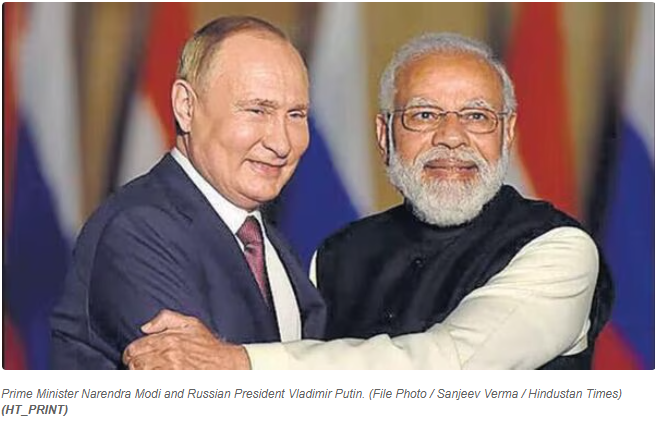
President Muizzu reiterated that the Maldives’ foreign policy is rooted in national interests, emphasizing non-alignment and non-interference. He addressed criticisms of inconsistency in balancing relations with India, China, and the US, stating, “Our approach is consistent in that we prioritize our sovereignty, economic development, and regional stability above all else.” On the “India Out” movement, a key campaign issue during his 2023 election, he clarified that it was not about severing ties with India but ensuring sovereignty. “We value our relationship with India, which has been a long-standing partner in our development,” he said, noting strengthened ties while maintaining independence.
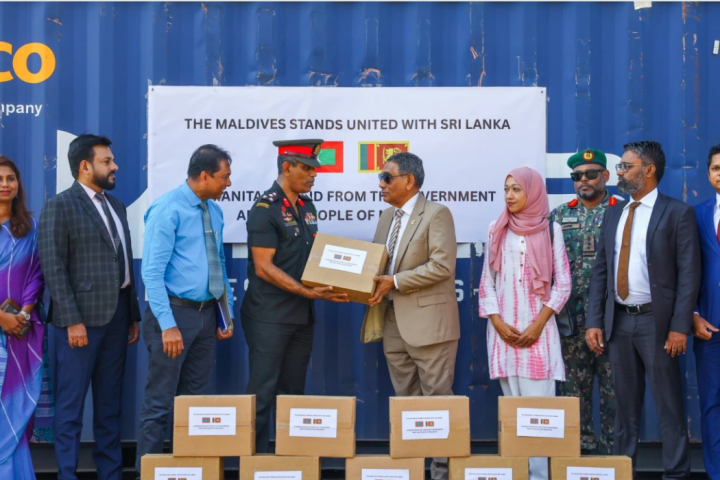
Looking forward, President Muizzu underscored the importance of strong bilateral ties with neighbors like India and Sri Lanka, alongside international cooperation on shared challenges such as climate change, maritime security, and sustainable development. “We are committed to ensuring that the Maldives remains a zone of peace, stability, and prosperity in the Indian Ocean,” he concluded.