News Desk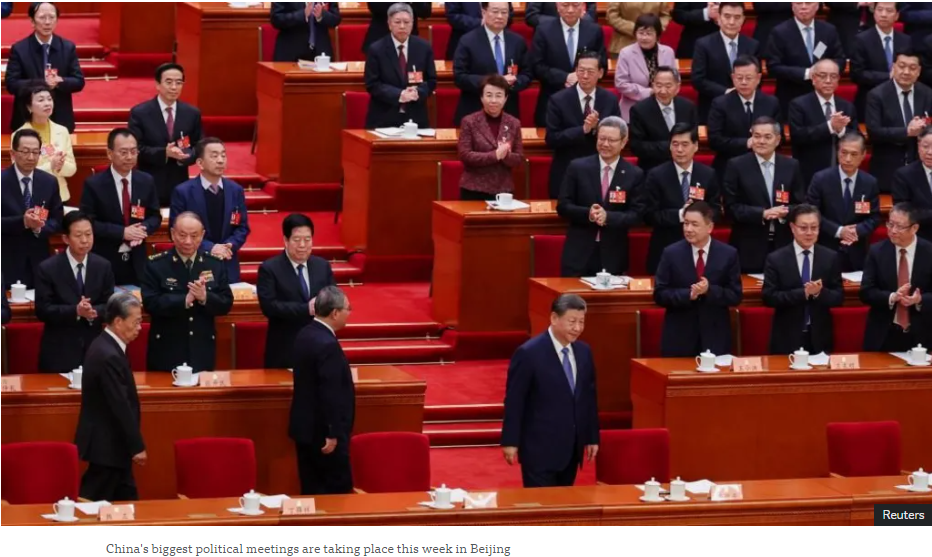
Each year, China’s most important political gathering—the “Two Sessions”—is presented as a moment of national consultation and policy direction.
Delegates from across the country assemble in Beijing to participate in the annual meetings of the National People’s Congress and the Chinese People’s Political Consultative Conference.
The sessions, which began on March 4 this year, are expected to shape fiscal, economic, and policy priorities for the coming months.
Yet as the meetings unfold in the capital, Amnesty International Australia reports that another, less visible process is taking place simultaneously.
Petitioners—citizens who travel to Beijing seeking justice for grievances ranging from land disputes to alleged official misconduct—say they are facing detentions, surveillance, and in some cases disappearance after attempting to pursue complaints through official channels.
The measures form part of what authorities call “stability maintenance,” a domestic security effort designed to prevent protests, public criticism, or disruptions during politically sensitive events.
China’s petitioning system, known as xinfang, theoretically provides a mechanism through which citizens can present grievances to higher authorities. Many individuals whose complaints remain unresolved at local levels travel to Beijing in the hope that central officials might intervene.
In practice, human rights groups and petitioners say the process rarely results in meaningful redress. Instead, local authorities often attempt to intercept petitioners before they reach central government offices.
Preventing complaints from reaching Beijing is widely seen as a performance metric for local officials under the governance system.
During the Two Sessions, the pressure to maintain what authorities describe as “zero petitions” intensifies. Petitioners say local governments deploy police, security personnel, and administrative measures to stop individuals from travelling or speaking publicly about their grievances.
Accounts from petitioners suggest that authorities have used a combination of warnings, forced pledges, and surveillance to prevent travel to Beijing this year.
One petitioner from Baotou in Inner Mongolia, who identified herself as Qiqi for safety reasons, described being summoned to a police station on March 2.
Officials asked her to sign a written pledge promising not to travel to sensitive locations in Beijing during the meetings. The document specifically prohibited visits to places such as Tiananmen Square, the leadership compound of Zhongnanhai, foreign embassies, or venues hosting major political events.
According to Qiqi, authorities warned that if petitioners succeeded in presenting grievances to central authorities during the meetings, local governments could face disciplinary consequences and financial penalties.
She said individuals attempting to purchase train tickets to Beijing are often detained immediately.
Similar restrictions have been reported by petitioners in several provinces, suggesting a coordinated effort to prevent travel to the capital before the meetings begin.
Reports from Beijing indicate that several petitioners who had already arrived in the city before the sessions have disappeared after encounters with security personnel.
On March 2, Sun Airong from Shandong Province and her son reportedly faced repeated visits from security personnel while staying in a residence in Beijing.
According to fellow petitioners who posted online accounts, individuals knocked on their door repeatedly late at night. When Sun did not respond, electricity to the residence was allegedly cut off.
Witnesses claim security personnel attempted to enter the property through a window. Several hours later, Sun could no longer be contacted by phone. Her current whereabouts remain unknown, according to other petitioners.
On the same day, another Shandong couple—Li Yanxiang and her husband Li Hongcai—posted appeals online claiming they were being unlawfully restricted by officials while outside their residence. The posts described surveillance and pressure from authorities attempting to force them to leave the capital.
Other petitioners reported being escorted out of Beijing by local security teams.
Tang Zhaoxing, a petitioner from Fuzhou, was reportedly surrounded by dozens of security personnel from his home district while staying in the capital on March 1.
According to fellow petitioners, he was taken away the following morning and sent back to his hometown. His phone later went unanswered.
Two petitioners from Chongqing—Liu Chengbi and Chen Dashu—were last seen near the Ministry of Public Security building in Beijing before reportedly being taken away by individuals from their home city.
Their current location remains unknown, according to contacts within the petitioning community.
Another petitioner from Chongqing, Liu Guangfen, has also reportedly lost contact with family members during the same period.
Even petitioners who have not attempted to travel to Beijing describe heightened monitoring in their home regions.
Sun Jinxiu, a petitioner from Gansu Province, said she was stopped by armed police on February 28 while visiting a friend during the Lunar New Year holiday.
She was taken to a police station and later transferred to a rural facility, where she remained confined in a vehicle until late at night.
Sun said local officials had also installed surveillance cameras facing her home days earlier, monitoring her residence continuously.
She described the measures as intrusive, particularly because she cares for a 90-year-old mother who requires regular assistance.
Some petitioners attempted to avoid restrictions by leaving their home cities before the meetings began.
Liu Dongbao, a Shanghai petitioner, said he travelled with his wife to her hometown in Shaanxi Province weeks earlier.
Liu said he had previously been detained for more than three months during sensitive events the previous year, during which he alleges he suffered physical abuse.
Despite relocating, Liu said local authorities from Shanghai visited him in Shaanxi and registered his presence with local police. He said officials warned him not to travel to Beijing during the Two Sessions.
Another petitioner, Lu Fuzhong, travelled to a rural village to pursue legal complaints against court rulings before being taken back to Shanghai by security personnel. His family later reported losing contact with him.
Friends and relatives of another petitioner, Wang Ruyun, also say they have not been able to reach her in recent days.
The widespread reports of detentions and disappearances reflect the intensity of security measures surrounding the Two Sessions. For the Chinese leadership, the annual gatherings are designed to project political unity and policy continuity.
Visible protests, public complaints, or gatherings of petitioners during the meetings risk undermining that image. As a result, authorities frequently deploy pre-emptive tactics aimed at neutralising potential dissent before it reaches public attention.
Under the administrative structure of the Chinese Communist Party, local officials often face pressure to prevent petitioners from escalating grievances to higher levels of government. Intercepting individuals before they reach Beijing has become a routine element of this system.
As the meetings continue in Beijing, families of several missing petitioners say they remain uncertain about the whereabouts of their relatives. Some hope that once the politically sensitive period ends, those detained will be released.
For now, the accounts emerging from across the country reveal a pattern in which the pursuit of grievances through official channels coincides with heightened surveillance and restrictions.