 News Desk
Viet Nam holds the 14th National Congress of the Communist Party of Viet Nam (CPV) from 19 to 25 January 2026 in Ha Noi, the country’s capital. The Congress is regarded as a major political event and an important milestone in Viet Nam’s development process.
The Congress will review and assess 40 years of the Renewal (Doi Moi) process, set out goals, orientations and key tasks for the next five and ten years, and outline a long-term vision toward 2045.
The implementation of the Resolution of the 13th Party Congress took place amid a challenging global and domestic context, marked by unprecedented developments such as the COVID-19 pandemic and the rapid advance of the Fourth Industrial Revolution. Despite these difficulties, Viet Nam continued to record notable achievements in national development.
During the 2021–2025 period, Viet Nam’s economy grew at an average rate of around 6.3 per cent per year, placing the country among the faster-growing economies in the region and globally. By 2025, GDP reached USD 514 billion, approximately 1.47 times higher than in 2020, ranking 32nd worldwide. GDP per capita rose to USD 5,026, bringing Viet Nam into the group of upper-middle-income countries.
Macroeconomic stability was maintained, with inflation, public debt, and budget deficits effectively controlled. The trade balance consistently recorded a high surplus. Growth quality improved, and the economic structure shifted positively toward modernization as the shares of industry and services increased. Infrastructure was expanded synchronously, with numerous large-scale, key national projects put into operation. The private sector was facilitated to develop further, becoming an important driver of the economy, with several large private corporations emerging and attaining international competitiveness.
Cultural, human, and social development made significant progress, with notable advances across many areas; social security and people’s living standards improved markedly. Policies on comprehensive human development were implemented in a substantive manner. Viet Nam’s Human Development Index (HDI) rose significantly (to 0.766, up 14 places, ranking in the “high” category), while its Global Happiness Index ranking climbed 33 places to 46th out of 143 countries. Education and training underwent fundamental reforms; science and technology, innovation, and digital transformation were promoted. Economic growth became more closely linked with social progress and equity; welfare and social security received strong attention. The material and spiritual well-being of the people improved clearly, with the poverty rate declining sharply from 4.4% (2021) to 1.3% (2025), meeting the goal of “leaving no one behind.” The health system developed positively, effectively controlling epidemics and mastering many advanced medical technologies; private health care expanded; health-insurance coverage reached 95.2% of the population (up from 90.9% in 2020), and average life expectancy reached 74.8 years (including about 67 healthy years).
National defense and security capacities were further strengthened; national independence, sovereignty, and territorial integrity were firmly safeguarded; social order and safety were ensured. The Party and State invested in building the People’s Army and People’s Public Security into revolutionary, regular, elite forces moving step by step toward modernization, with a number of services, arms, and units advancing directly to modern standards. The reorganization and restructuring of the Army and Public Security toward lean, streamlined, and strong forces were basically completed.
Viet Nam has consistently pursued a foreign policy of independence, self-reliance, peace, friendship, cooperation, and development, while diversifying and multilateralizing its external relations. External activities took on a pioneering role, helping maintain a peaceful and stable environment and opening up an unprecedented development landscape for the country. Party diplomacy, State diplomacy, and people-to-people diplomacy were carried out comprehensively and in a well-coordinated manner, achieving notable results. Relations with countries and partners were deepened, stabilized, and grew in a sustainable manner.
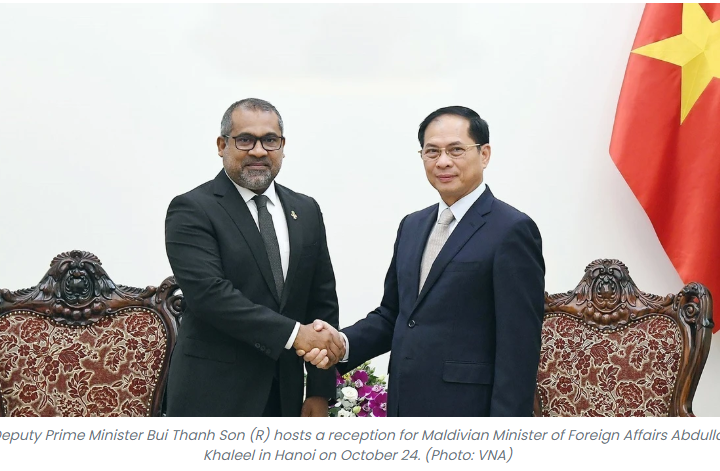
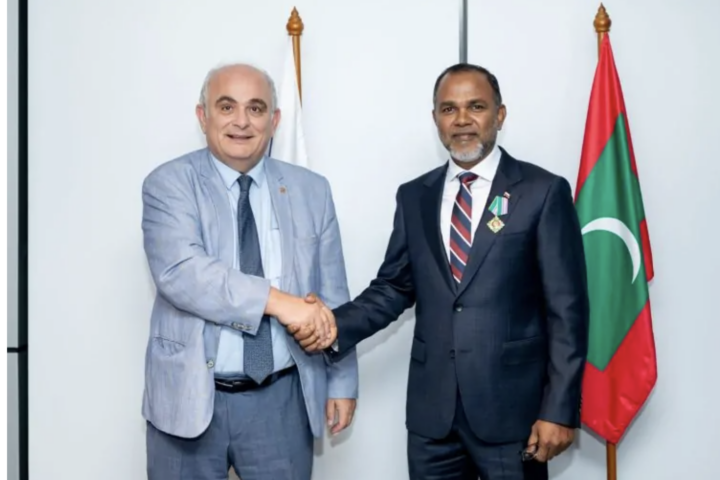
Viet Nam and Maldives have maintained friendly and cooperative relations, with growing exchanges in recent years. Both countries share an interest in promoting South–South cooperation, supporting multilateralism, and addressing common challenges such as climate change, sustainable development and maritime cooperation. Viet Nam has expressed its readiness to further strengthen cooperation with Maldives in areas of mutual interest, contributing to peace, stability and prosperity in the Indian Ocean and Asia–Pacific regions.