News Desk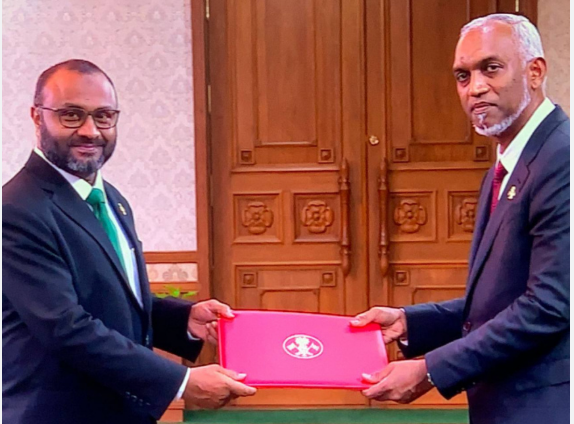
MALÉ, Maldives — Mohammed Shaheem Ali Saeed, the Islamic minister in President Dr. Mohamed Muizzu’s government and a senior religious figure who previously held the same post under an earlier administration, sparked controversy this week after disclosing the balance of a citizen’s bank account on social media.
Shaheem said the disclosure was intended to defend the Zakat Fund — the state‑run Islamic charity that distributes aid to the poor — against criticism that it had unfairly denied assistance to a struggling single mother. He later apologized, saying his aim was not to expose private information but to show that officials had acted in accordance with the rules governing eligibility.
The episode, however, has reignited a broader debate in the Maldives about privacy and accountability. In a country where ministries, courts, and even local councils routinely disclose personal details — from welfare recipients’ names to medical histories and financial records — the line between public transparency and individual rights remains blurred.
Shaheem’s disclosure came after a single mother of five, publicly complained that she had been denied zakat support despite her difficult circumstances. At a meeting attended by President Muizzu, she described her struggles, including caring for a sick child. Shaheem later posted that she had received MVR 15,500 from the Zakat House in September and earned MVR 22,000 a month in salary, adding that her account held MVR 75,000. He insisted the fund was acting in accordance with Islamic principles and apologized if his explanation revealed more than it should.
Such disclosures are not unusual in the Maldives. Court judgments often detail family disputes and financial records without anonymization. Welfare debates in Majlis sometimes include the names and conditions of recipients. And officials defending decisions on social media frequently cite personal data. In a small island society, where “everyone knows everyone,” privacy is often sacrificed in the name of accountability.
By contrast, other jurisdictions enforce strict protections. In the European Union, the General Data Protection Regulation prohibits disclosure of financial or health data without consent, with violations carrying multimillion‑euro fines. In the United States, health information is safeguarded under HIPAA, while banking secrecy laws protect financial records; officials who reveal such data risk lawsuits and dismissal. India’s Supreme Court recognized privacy as a fundamental right in 2017, requiring welfare schemes to anonymize beneficiaries. Singapore’s Personal Data Protection Act imposes penalties for publishing names of welfare recipients without consent. And Sri Lanka’s draft Data Protection Act would restrict disclosure of personal data by state agencies, ensuring disputes like the single mother’s remain confidential.
The Maldives, by contrast, has no comprehensive data protection law. While the Constitution guarantees certain rights, it does not explicitly prevent the disclosure of personal financial or welfare information. Officials often justify such revelations as necessary to “explain the truth,” but critics argue they erode trust in institutions.
Legal scholars say the country may need to adopt a framework similar to GDPR or HIPAA, with clear rules on anonymization, penalties for unauthorized disclosure, and independent oversight. Until then, personal information in the Maldives will continue to be treated as public property — a practice that, in many other parts of the world, would be unthinkable.
Image: President’s office