News Desk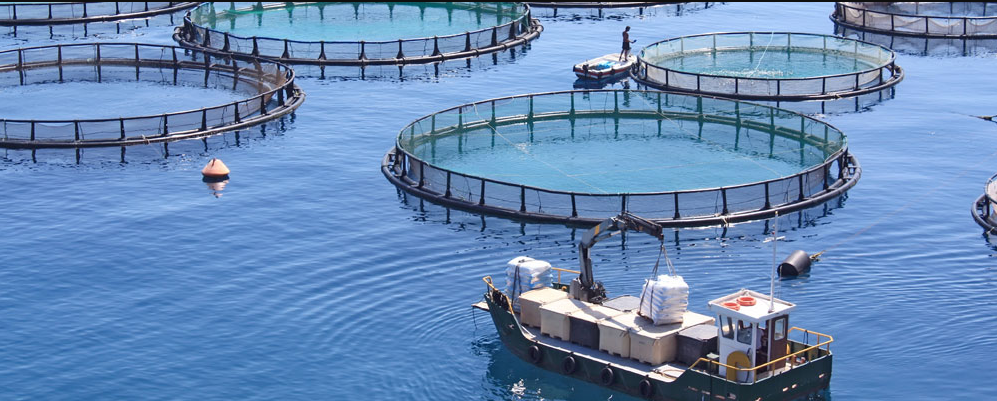
India’s launch of its first open-sea marine fish farming project marks a decisive transition in how the country engages with its vast maritime domain.
Located in the Andaman Sea near North Bay, close to Sri Vijaya Puram, the pilot initiative moves Indian aquaculture beyond near-shore and coastal limits into deeper, open waters.
This shift reflects a broader national emphasis on the Blue Economy, where oceans are increasingly recognised as productive economic assets rather than peripheral resources.
With a coastline stretching over 7,500 kilometres, India possesses one of the world’s largest and most diverse marine resource bases. Yet for decades, economic activity in the oceans remained largely confined to traditional fishing practices and limited coastal aquaculture.
The open-sea fish farming project represents a structural change in this approach, signalling a willingness to operationalise marine science and technology at scale.
The selection of the Andaman Sea for this pilot project is rooted in its ecological and geographic characteristics.
As part of the eastern Indian Ocean, the Andaman Sea is known for its clean waters, high biodiversity, and relatively low industrial pressure. These conditions make it particularly suitable for controlled experimentation in open-sea aquaculture.
The project was inaugurated during a field visit by Union Minister of State (Independent Charge) for Science and Technology and Earth Sciences, Jitendra Singh.
The on-site launch underscored the government’s intent to take marine technologies directly into operational environments rather than confining them to laboratories or pilot tanks.
The Andaman and Nicobar Islands, with their unique marine ecosystems, provide a natural setting to test how advanced aquaculture systems function in real ocean conditions.
The initiative is being implemented by the National Institute of Ocean Technology (NIOT) under the Ministry of Earth Sciences, in collaboration with the Andaman and Nicobar Islands administration.
This partnership brings together technical expertise, scientific oversight, and local governance, ensuring that the project remains both technologically robust and regionally grounded.
NIOT has developed specialised open-sea cages designed to withstand strong currents and wave action typical of deep-water environments. These cages allow marine finfish to grow in natural ocean conditions while remaining contained and protected.
By operating in open waters, the system allows fish to benefit from natural water exchange, temperature regulation, and nutrient flows that are difficult to replicate in near-shore or land-based facilities.
A defining feature of the project is its integrated approach to marine farming. The pilot focuses on the cultivation of marine finfish alongside seaweed, reflecting a diversified model of open-sea aquaculture.
During the launch, seaweed seeds were distributed to local fishing communities to encourage deep-water seaweed farming, while finfish seeds were introduced into NIOT-designed cages.
Seaweed farming is widely regarded as a low-input, climate-resilient activity with applications across food, pharmaceuticals, cosmetics, and biofertilisers. Its inclusion in the pilot highlights an effort to broaden the economic base of coastal livelihoods beyond capture fisheries alone.
Finfish cultivation in open seas, meanwhile, offers a scalable pathway to increase marine protein production without placing additional pressure on near-shore ecosystems.
The open-sea fish farming initiative is closely tied to livelihood generation for coastal and island communities. Traditional fishing communities in the Andaman region often operate within limited near-shore zones, where resources are finite and seasonal variations affect income stability.
Open-sea aquaculture introduces an additional economic activity that complements existing fishing practices.
By providing access to seaweed seeds and cage-based finfish cultivation, the project creates opportunities for fishers to engage with new forms of marine production.
The involvement of local communities from the pilot stage ensures that operational knowledge, maintenance practices, and harvesting techniques are shared at the grassroots level.
This integration positions coastal communities not merely as beneficiaries, but as active participants in India’s evolving ocean economy.
The project aligns closely with India’s broader Blue Economy vision, which emphasises sustainable use of ocean resources for economic growth, improved livelihoods, and ecosystem health.
Speaking at the launch, minister Jitendra Singh described the initiative as one of the earliest and most significant steps toward unlocking the economic potential of India’s oceans.
He noted that for much of the post-Independence period, India’s maritime resources did not receive policy attention comparable to land-based or Himalayan resources.
Since 2014, however, national thinking has increasingly acknowledged the strategic and economic value of the maritime domain.
The open-sea fish farming project exemplifies this shift by translating policy intent into field-level implementation.
As a pilot, the Andaman Sea project is designed to generate critical operational data on productivity, costs, environmental interactions, and scalability.
This evidence-based approach will inform decisions on whether and how similar models can be replicated along India’s eastern and western seaboards.
The data generated will also support the development of public–private partnership models in the future.
While the current initiative is government-led, the experience gained is expected to provide a foundation for wider participation by private players, cooperatives, and community-based organisations.
Such expansion could strengthen domestic marine production and enhance India’s position in global seafood markets.
The launch of the project was accompanied by a visit to the Mahatma Gandhi Marine National Park near Wandoor, one of India’s earliest marine protected areas, established in 1983.
Spread across 15 islands, the park is known for its coral reefs, mangroves, and diverse marine life, including turtles and numerous fish species.
The visit reinforced the principle that economic utilisation of marine resources can proceed alongside conservation.
Marine national parks in India are protected under the Wildlife Protection Act, 1972, which extends legal safeguards to coral reefs and marine fauna. The proximity of the open-sea farming pilot to such a protected area highlights the emphasis on ecological sensitivity and scientific monitoring.
India’s first open-sea marine fish farming project places the country within a global movement toward technology-driven ocean governance.
Nations with advanced maritime sectors increasingly rely on open-sea aquaculture to meet rising demand for marine food while managing coastal pressures.
By initiating such a project in the Andaman Sea, India signals its readiness to adopt comparable models adapted to its own ecological and social contexts.
The initiative demonstrates how marine science, institutional coordination, and community participation can converge in the open ocean.
As operational data accumulates and experience deepens, the project establishes a reference point for India’s future engagement with its oceans—not only as spaces of navigation and extraction, but as structured domains of sustainable economic activity.