News Desk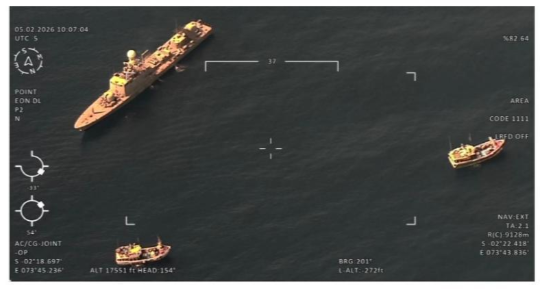
The Maldives has moved to reassert its long‑standing maritime position in the Indian Ocean, with President Dr. Mohamed Muizzu formally withdrawing a 2022 letter that had shifted the country’s stance in favour of Mauritius during a sensitive territorial dispute. The decision marks a significant recalibration of Maldivian foreign policy and underscores a renewed determination to defend what officials describe as the country’s core national interests and sovereign rights.
The letter, issued by former president Ibrahim Mohamed Solih on 22 August 2022, had aligned Malé with a United Nations General Assembly resolution supporting Mauritius’ sovereignty claim over the Chagos Archipelago.
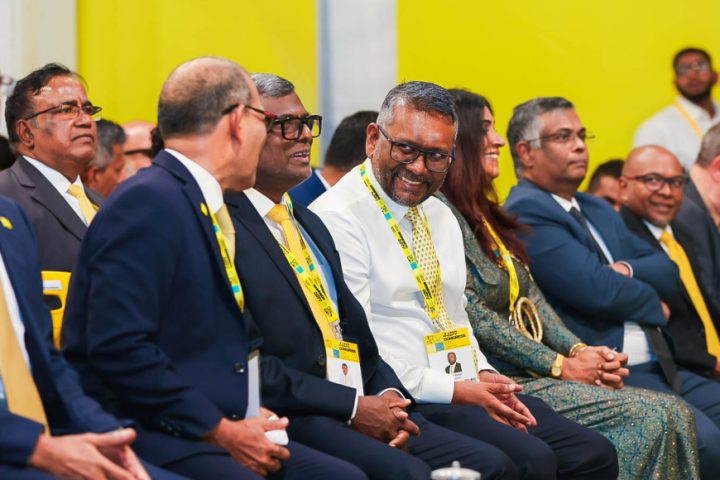
President Muizzu announced the withdrawal during his presidential address to the opening session of the People’s Majlis, arguing that the previous administration’s abrupt change of position had weakened the Maldives’ legal footing in the maritime boundary case before the International Tribunal for the Law of the Sea.
“…We have decided to withdraw this letter. I make this declaration today, on behalf of this proud nation and on behalf of all Maldivian people, before you, the Honourable Members of Majlis,” he said. “With reference to the archipelagic base points established under the Maritime Zones Act, I declare before this Honourable Majlis that the Exclusive Economic Zone of the Maldives, including the area vacated by the ITLOS decision, remains defined in accordance with the Act.”
The president signed the withdrawal letter immediately after delivering his address and intends to dispatch it to Mauritius without delay.
Since taking office in November 2023, the Muizzu administration has undertaken a comprehensive review of the Solih government’s conduct in the ITLOS proceedings. The president said international legal experts had advised that the 2022 letter “adversely affected” the Maldives’ territorial interests. He announced plans to establish a national inquiry under constitutional authority to examine how the case was handled and whether due process was followed.
The government has also highlighted historical claims, including a sixteenth‑century Maldivian royal decree asserting sovereignty over the Chagos Archipelago, as well as longstanding maritime links between Maldivian communities and the island chain. Officials say these records reinforce the Maldives’ legitimate interest in the future governance of the archipelago.
In 2023, ITLOS divided the overlapping 200‑nautical‑mile zones between the Maldives and Mauritius, awarding roughly 92,563 square kilometres to the Maldives and 45,331 square kilometres to Mauritius. President Muizzu said he does not accept the ruling and will amend the Maritime Zones Act to reassert boundaries defined in domestic law.
“The Government will submit to this Majlis the necessary amendments to the Maritime Zones Act to bring it into alignment with the Sixth Amendment to the Constitution,” he said.
He argued that the tribunal’s reliance on an International Court of Justice advisory opinion, which recognised Mauritian sovereignty over Chagos, was flawed and that the Maldives should not have conceded ground in the proceedings.
Following the president’s declaration, the Defence Ministry deployed the Coast Guard vessel Dharumavantha and surveillance drones to patrol the southern maritime zone, stating that the Maldives National Defence Force would take “all necessary measures” to safeguard the area. Shortly afterwards, the ministry issued a statement on X underscoring the constitutional responsibilities tied to protecting the nation’s territory.
It noted that Article 115(r) of the Constitution places on the president the duty to uphold the independence and territorial security of the Maldives. In his presidential address, President and Commander in Chief Dr Mohamed Muizzu reaffirmed that the protection of the country’s territory, its Special Economic Zone and its people remains central to the mission of the armed forces. Citing Article 7(n) of the Army Act, which mandates the military to defend and maintain the territory and the Special Economic Zone, the ministry assured the public that the Maldivian armed forces would continue to secure the area with vigilance and resolve.
According to the Defence Ministry’s statement, the Maldives has to date signed only the 1976 agreement on the division of maritime territory with states that do not have 200 nautical miles to the north of the Maldives. As the Maldives has not concluded any comparable agreement with any other party, all remaining areas are regarded as falling within the Maldives’ 200‑nautical‑mile zone, the ministry said.
The fast‑attack craft CGS Dharumavantha, donated by Türkiye and commissioned into service last year, has become a central asset in the country’s southern maritime patrols. Defence officials have likewise relied on surveillance drones sourced through cooperation with Ankara, a relationship Malé describes as part of its broader effort to modernise its maritime security capabilities while maintaining balanced ties with regional partners.

On Thursday, Dharumavantha intercepted two Sri Lankan fishing vessels 104 nautical miles south of Addu Atoll. Authorities have not yet disclosed whether the vessels were seized or whether legal action will follow.
The dispute has taken on new geopolitical weight as the United Kingdom and Mauritius negotiate the transfer of the Chagos Islands, home to the United States’ Diego Garcia military base. The Maldives has objected to the UK–Mauritius framework and has opened discussions with London, asserting that it has a stronger historical claim to the archipelago.
President Muizzu has already sent two formal letters to the British government outlining the Maldives’ objections to the proposed transfer of the Chagos Islands to Mauritius, and he has raised the matter directly with senior UK officials. In his presidential address, he stated: “Accordingly, the Government of the Maldives submitted formal written objections to the Government of the United Kingdom on 8 November 2024 and 18 January 2026, expressing our firm opposition to the British decision to grant ownership of Foalhavahi to Mauritius. Furthermore, on 15 December 2025, during an online call with the Deputy Prime Minister of the United Kingdom, The Right Honourable David Lammy, I raised this matter directly and conveyed the Government’s desire to engage in discussions with the UK regarding this issue.”
President Muizzu has also told international media that the Maldives would be willing to maintain the status quo for US operations on Diego Garcia if sovereignty were transferred to Malé rather than Port Louis. Speaking to Newsweek, he said that the United States “seeks to protect and secure the continuation of the use of Chagos for the US Naval Support Facility Diego Garcia,” adding that any future arrangement under Maldivian sovereignty would be subject to parliamentary approval.
The Maldives’ withdrawal of the 2022 letter and its rejection of the ITLOS ruling amount to a firm assertion of Maldivian sovereignty and a deliberate effort to restore what officials describe as the country’s rightful maritime posture. Mauritius continues to cite the ICJ advisory opinion and UN resolutions in support of its claim, but Malé argues that its historical ties to the Chagos Archipelago, its constitutional provisions and long‑standing domestic legislation, together with the archipelago’s far greater geographic proximity to the Maldives than to Mauritius, provide a stronger and more coherent basis for its position.
While the two governments remain divided in their interpretations of international law, Maldivian officials say the country now approaches the dispute with renewed clarity, legal consistency and diplomatic confidence. They argue that this strengthened footing leaves the Maldives better equipped to defend its maritime rights, uphold its constitutional obligations and pursue a stable, equitable outcome for the wider Indian Ocean region.