News Desk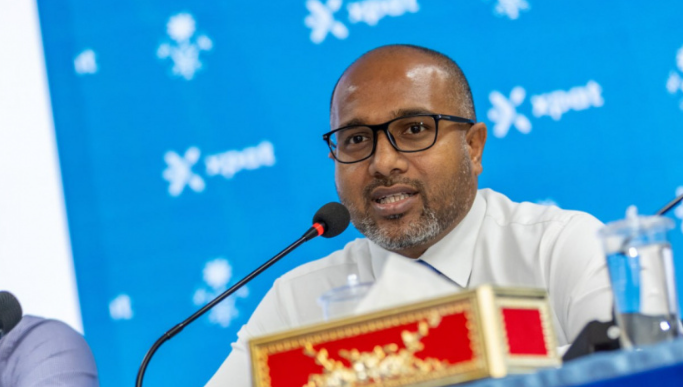
A political clash has erupted between Home Minister Ali Ihusan and Addu City Mayor Ali Nizar, with both men accusing the other of failing the country’s second‑largest city ahead of the local council elections.
The dispute began after Nizar criticised the government, saying it had done “nothing” for Addu. Ihusan — who is himself from Addu City — responded sharply, reminding Nizar that he has held the mayoralty for five years.
“He has been mayor for three years under an MDP government and two years under a PNC government,” Ihusan said. “Are you still asking me what happened to Addu?”
The minister added that he would answer such questions only if he were the mayor, implying that responsibility for the city’s condition lies with Nizar, not the government.
Nizar had also questioned the government’s claims of success in tackling gang crime in Addu. Ihusan rejected the criticism, saying the administration would not allow gangs to operate “anywhere in the Maldives.”
He then turned the accusation back on the mayor.
“Is he worried that Addu’s youth are avoiding such things and that crime is being reduced?” Ihusan asked, urging Nizar to take responsibility for improving the situation on the ground. “Stop the gangs in Addu, take legal action against the children involved, give them a chance to recover, and market Addu as a safe city.”
The exchange carries an additional layer of political tension because Ihusan has previously been at the centre of a divisive local issue: his push to separate his native island, Feydhoo, from Addu City. The proposal was ultimately defeated at the ballot box, and the idea has been shelved for now — but it remains a sensitive chapter in Addu’s political memory.
The confrontation reflects rising pressure as the mayoral race intensifies. For the PNC, the message is that Addu has stagnated under long‑term MDP leadership. For the MDP, the argument is that the government has neglected the south.
The result is a public, personal and increasingly pointed exchange between two of Addu’s most prominent political figures — each trying to shape the narrative before voters head to the polls.