News Desk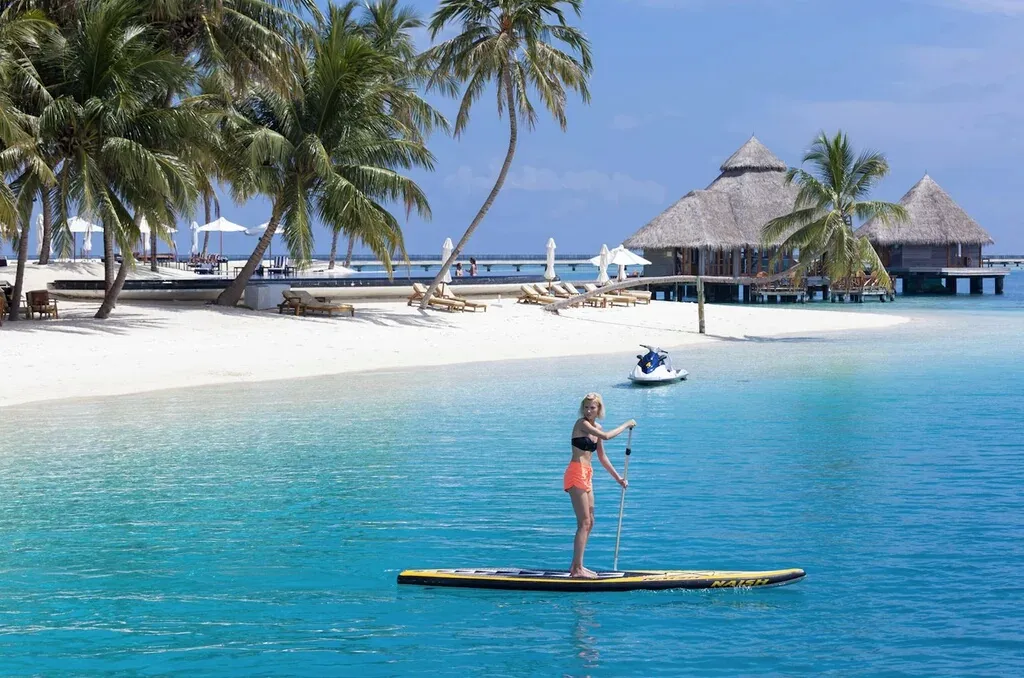
MALE’ — Forbes ran a piece this week mapping the wave of luxury resort brands heading to the Maldives. Bulgari. Nobu. Aman. Baccarat. Rosewood. Hyatt. Corinthia. Atlantis. Trump. The list goes on. The investment figures are large. The brand names are recognisable. The renderings are beautiful.
But read past the resort profiles and a harder question sits there, not fully answered.
The Maldives recorded 2.3 million visitors in 2025, a record. Three billion dollars in UAE investment is reportedly lined up through 2030. A law change two years ago allowed developers to sell individual villas to private buyers, and that single shift unleashed everything now being planned. Branded residences on remote atolls. Private island buyouts. A superyacht marina. Returns on the second-home market reportedly reaching 20 percent.
For developers and international buyers, the arithmetic is compelling. For the Maldives as a country, the arithmetic is more complicated.
The Forbes piece quotes investor Mohamed Ali Janah explaining that there is no freehold ownership in the Maldives. Everything is leasehold, 50 years extendable to 99. What that means in practice is that the islands being handed over to Bulgari and Baccarat and Trump will eventually come back. What condition they come back in, and what the surrounding reef looks like by then, is a different question.
The Maldives has always had a tension at the centre of its tourism model. The country earns its foreign currency from an industry built on an environment it cannot afford to damage. Every resort built near a coral reef is a calculation. Every private island handed over on a 99-year lease is a decision made now that someone else will live with later.
The guesthouse sector, which grew steadily over the past decade and gave ordinary Maldivians a stake in the tourism economy for the first time, does not feature in the Forbes piece. The ultra-luxury branded residence model points in a different direction entirely. Returns flow to developers and to buyers who may visit once a year. The Maldivian fisherman, the guesthouse owner in Maafushi, the family on a populated island watching a private resort being built on the next atoll over, they are not the target market and they are not the beneficiaries.
None of this makes the investment bad. Infrastructure is being built. Hanimaadhoo airport now handles jets. Jobs will be created. The country will earn lease revenue. These things are real.
But the Maldives is also a country of small islands that are measurably sinking. The coral reefs beneath the overwater villas are not decoration. They are the reason the water is that colour, the reason the fish are there, the reason any of this works. Building at the scale and pace now being planned leaves very little room for the kind of mistake that cannot be undone.
Forbes calls it a luxury boom. It is that. It is also a test of whether a small island nation can take three billion dollars in foreign investment without losing the thing that made anyone want to invest in the first place.
The brochures will not tell you how that ends. The reef will.