News Desk
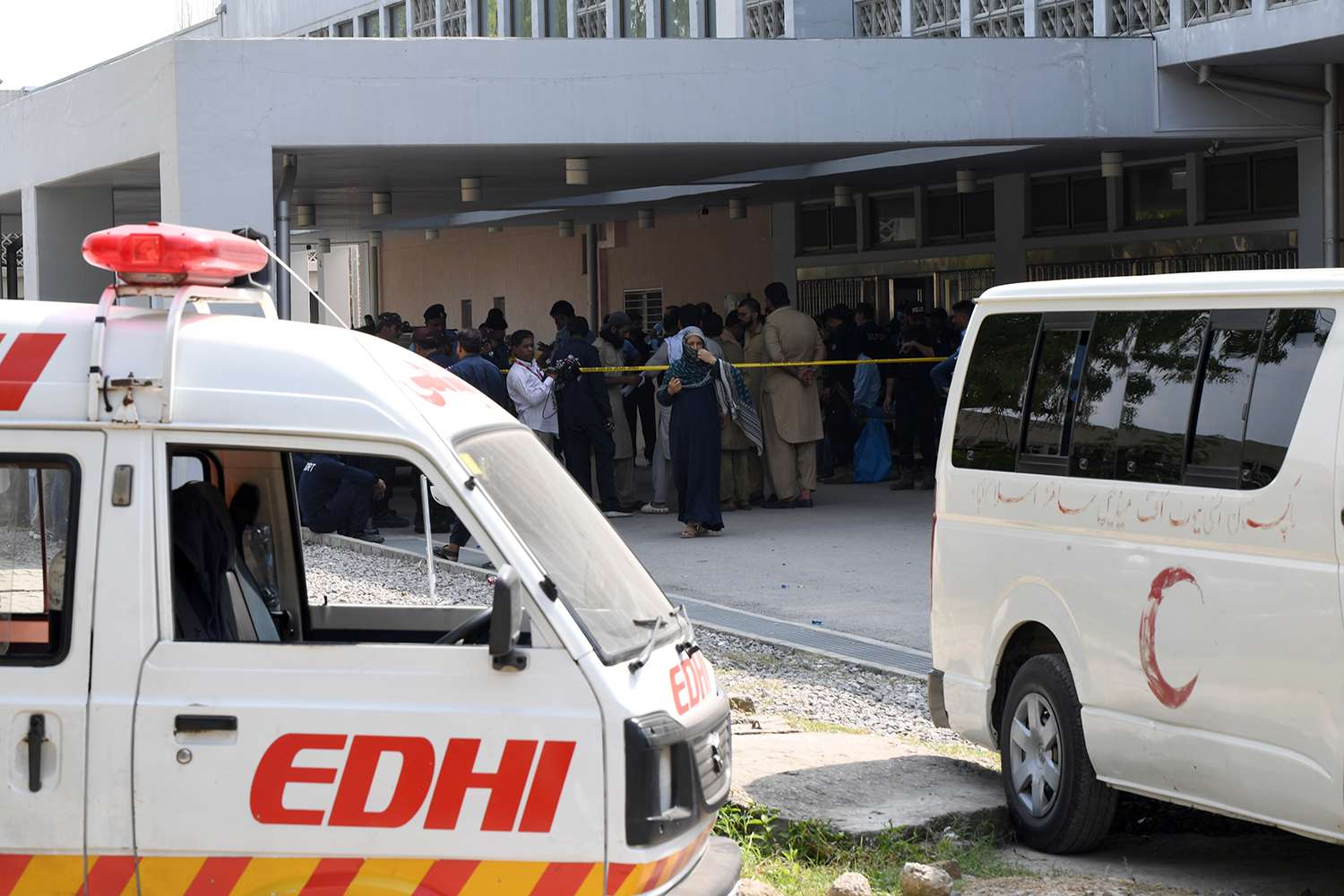
A hospital is meant to be the place people enter when everything else has failed them. At Pakistan’s largest public hospitals, however, the systems meant to protect patients can themselves become sources of danger. The deaths of 14 newborns in a fire at the Pakistan Institute of Medical Sciences (PIMS) in Islamabad on August 26 have exposed precisely that contradiction.
An inquiry into the tragedy has found systemic and institutional failures at the hospital, while a separate performance audit found that PIMS achieved only 39.7 percent compliance against an acceptable benchmark of 90 percent across the indicators assessed.
The findings turn what initially appeared to be a devastating hospital fire into a broader examination of institutional negligence, safety failures and administrative dysfunction. The tragedy did not emerge from one defective component alone.
Investigators found that an electrical fault was the most probable source of ignition, but the inquiry concluded that deficiencies in fire protection, emergency preparedness, evacuation procedures, staffing and management allowed a fire to become a mass-casualty event.
A fire that exposed the system
The August 26 blaze broke out in the nursery of PIMS’s Mother and Child Hospital, where 15 newborns were being cared for in a unit designed for 10 beds. The inquiry found that an electrical failure was the most likely cause of ignition. The National Forensics Agency identified an electrical supply cable associated with an air-conditioning unit as the probable point from which the fire began.
Investigators found no evidence that arson, an oxygen leak, an incubator or a warmer had caused the fire. But identifying the first spark did not explain why 14 newborns died. The inquiry instead drew attention to the conditions surrounding the fire. The nursery lacked a functioning automatic smoke detection and alarm system and did not have a sprinkler system. Some emergency escape routes were reportedly locked or obstructed.
The unit was overcrowded, several babies required oxygen or respiratory support, and there was no adequately approved and regularly practised nursery-specific evacuation procedure for such an emergency. The report distinguished between the likely cause of ignition and the institutional failures that allowed the incident to escalate.
That distinction is crucial. Electrical faults can occur in any complex building. The question exposed by the PIMS tragedy is why a modern medical facility caring for critically vulnerable newborns could not contain the consequences of such a failure.
Warnings had come before
The most disturbing aspect of the PIMS inquiry is that the hospital had already experienced a serious fire shortly before the nursery disaster. A fire at the PIMS Female Nursing Hostel on July 6, less than two months before the deaths of the newborns, had already exposed deficiencies in smoke detection, alarms, emergency warning systems, evacuation preparedness, fire-safety inspections and aspects of security response. The earlier inquiry recommended measures including comprehensive fire-safety audits, smoke detectors, alarm systems, emergency lighting, marked escape routes, functional firefighting equipment, periodic testing, electrical inspections and written emergency-response arrangements.
Yet the subsequent nursery fire demonstrated that those lessons had not been translated into a functioning hospital-wide safety culture. The chronology is difficult to overlook. A fire exposed deficiencies in July. Fourteen newborns died in another fire in August. The second inquiry then identified systemic and institutional failures. The issue was not simply the absence of warnings. It was the failure to convert warnings into operational safeguards.
Management under scrutiny
The inquiry placed primary responsibility for the institutional failures on PIMS senior management and identified negligence, inefficiency, misconduct, unauthorised absence, inadequate supervision and failure to perform assigned safety responsibilities among the areas requiring accountability. Prime Minister Shehbaz Sharif ordered disciplinary and criminal proceedings against officials identified in the inquiry.
The government also moved to change the leadership of PIMS, with Dr Muhammad Salman, CEO of the National Institutes of Health, appointed as executive director of the hospital on a deputation basis. The report also recommended scrutiny of the security arrangements and maintenance chain associated with the hospital. The action followed an initial decision to suspend eight individuals after the preliminary inquiry. Yet the latest parliamentary response has complicated the picture further.
On September 16, the Senate Functional Committee on Human Rights rejected the inquiry report as flawed and questioned the extent to which senior management had been held accountable for the deaths. The parliamentary scrutiny means the report itself has now become part of an institutional dispute over how responsibility for the tragedy should be established.
The 39.7% warning
Perhaps the starkest figure to emerge after the tragedy is not the number of deaths but the performance audit of PIMS. The Ministry of National Health Services assessed the hospital against a set of performance indicators and found only 39.7 percent compliance, compared with an acceptable benchmark of 90 percent. That gap provides a wider context for the fire.
A hospital cannot be judged solely by the quality of its doctors or the sophistication of its medical equipment. Its safety depends on maintenance, staffing, infection control, emergency preparedness, electricity, fire protection, procurement, medicines, security and management functioning together. When basic institutional systems perform far below the expected benchmark, the danger does not always announce itself immediately. It accumulates quietly until a crisis exposes the weaknesses simultaneously. The PIMS fire did precisely that.
Govt moves a little after 14 deaths
On September 16, the prime minister ordered authorities to complete short-term measures arising from the inquiry within three months. The directives include improvements to PIMS’s fire-safety system, consideration of recommendations contained in a WHO report, consultation with the Pakistan Kidney and Liver Institute on fire safety, and preparation of a longer-term roadmap for the hospital. The government also ordered an audit of Polyclinic Hospital and directed the Capital Development Authority and relevant institutions to conduct fire-safety audits of government and private hospitals and other buildings in Islamabad.
Thirty-seven measures arising from the inquiry were reported to be under immediate implementation. The three-month deadline now places the emphasis on execution rather than announcements. The significance of that deadline lies in the failures that preceded it: PIMS had already experienced a fire, had already received warnings and had already been expected to maintain safety systems.
A wider healthcare vulnerability
PIMS is not the whole of Pakistan’s healthcare system, but the episode has exposed vulnerabilities that extend beyond one hospital. Following the tragedy, Punjab ordered fresh fire-safety audits across public-sector health facilities. The review covered firefighting equipment, emergency exits and related safety arrangements, while deputy commissioners were directed to inspect facilities and emergency preparedness. Other government institutions also ordered safety audits after the PIMS fire.
These reactions demonstrate how quickly one hospital catastrophe can expose uncertainty about the condition of safety infrastructure elsewhere. Pakistan’s healthcare system already operates under considerable resource and capacity pressures. WHO’s country reporting identifies health governance, service delivery, workforce capacity and financial protection as continuing areas requiring attention.
WHO has also highlighted the role of health financing in determining access to quality care and protection from financial hardship. The PIMS tragedy adds another dimension: the physical safety of the facilities in which care is delivered.
When care becomes another risk
Patients entering hospitals are already vulnerable. Newborns in intensive care are more dependent on institutional systems than almost anyone else. They cannot evacuate themselves. Many cannot breathe without assistance. They rely on nurses, doctors, equipment, electricity, oxygen supplies, alarms and emergency procedures working together without interruption.
That makes failures in neonatal units particularly consequential. At PIMS, the inquiry found that 15 babies were in a 10-bed nursery when the fire began. The available staff and emergency arrangements were not sufficient to manage the rapid deterioration of conditions. CCTV footage showed the nursery becoming engulfed in smoke within minutes. The tragedy consequently became a test not merely of medical competence, but of whether the institution had prepared for a foreseeable emergency involving patients incapable of saving themselves.
The cost of institutional apathy
Healthcare failures rarely begin at the moment a patient dies. They often begin much earlier, when maintenance is deferred, warnings are ignored, inspections become routine paperwork, emergency procedures are not practised or responsibility becomes divided among departments. The PIMS case contains several of those elements. A previous fire had generated recommendations. A second incident killed 14 newborns. An inquiry identified systemic failures. A performance audit found compliance at less than half the stated benchmark. Parliament subsequently questioned the inquiry itself.
Taken together, these developments reveal an institutional problem larger than one electrical fault. The most painful fact remains the simplest: the victims were newborns who depended entirely on the hospital around them.
A hospital’s real test
The PIMS tragedy has placed Pakistan’s public healthcare management under an uncomfortable spotlight because it demonstrates how quickly ordinary administrative failures can become fatal when an emergency occurs. The government’s three-month deadline, the performance audit and the continuing parliamentary scrutiny have now created a clear record of what went wrong. Whether every finding ultimately survives further investigation is a matter for the relevant authorities and legal processes.
But the documented deficiencies already establish that the deaths cannot be viewed solely through the lens of an accidental electrical fire. The inquiry found institutional failures. The audit recorded 39.7 percent compliance against a 90 percent benchmark. Previous warnings had preceded the tragedy. And the hospital was caring for newborns whose survival depended almost completely on the systems surrounding them. A healthcare facility is judged not only by what happens during routine treatment, but by what happens when something suddenly goes wrong. At PIMS, that test ended in the deaths of 14 newborns.