News Desk
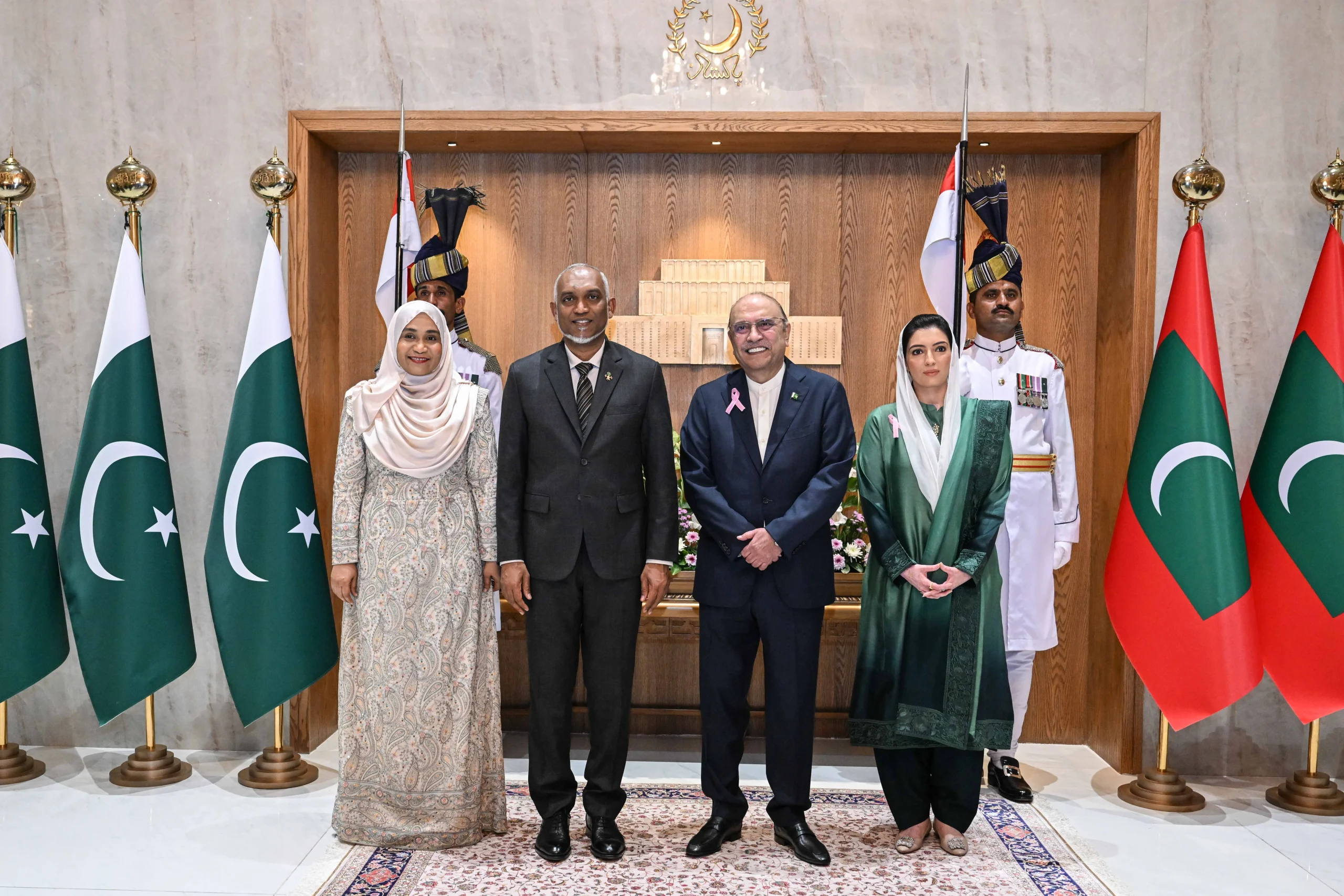
ISLAMABAD — Amid the grand fanfare of state banquets, high-level economic pledges, and military guards of honour, state visits are often remembered for their subtle, unspoken gestures. On Wednesday evening at Aiwan-e-Sadr, one such moment unfolded not through formal remarks, but through the delicate threads of a traditional gown.
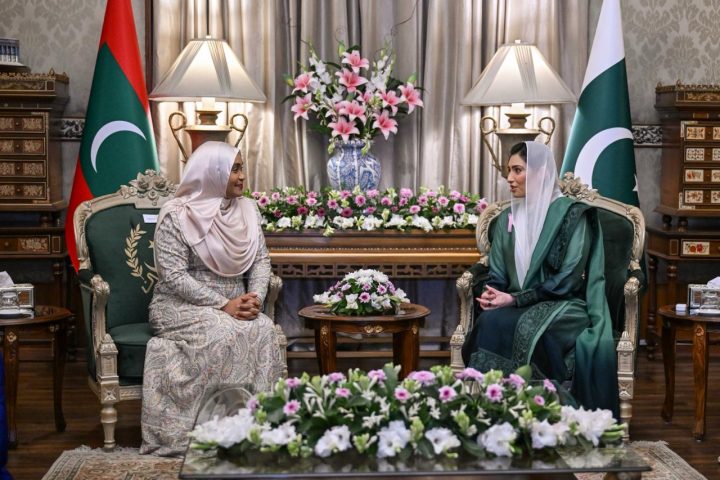
When First Lady Sajidha Mohamed stepped into the official residence of Pakistani President Asif Ali Zardari for an evening of bilateral discussions and a state banquet, her attire offered a quiet, artful tribute to the shared heritage of the host nation and the broader region.
She wore a traditional Maldivian dhigu hedhun—a floor-length, high-collared gown long celebrated as a hallmark of Maldivian elegance and national identity. Yet, it was the intricate print woven across the fabric that caught the eye of cultural observers: a sweeping, silver-hued pattern featuring the iconic paisley, or teardrop motif.
The motif, widely used in traditional Pakistani textiles and ceremonial arts, carries a rich, multi-layered history. While rooted historically in the broader Indo-Persian aesthetic tradition that flourished across Kashmir and the Mughal courts of South Asia, the teardrop design has long been embedded in the artisan heritage of the Indus region.
By marrying a classic Maldivian silhouette with a visual element deeply familiar to her hosts, First Lady Sajidha presented a subtle sartorial homage—a gesture of cultural resonance that mirrored the evening’s broader theme of enduring regional friendship.
Beside her, Pakistan’s First Lady, Aseefa Bhutto Zardari, wore an elegant emerald green ensemble—the color of Pakistan’s flag—paired with a pink ribbon symbolizing breast cancer awareness, a cause for which both women expressed passionate support during their bilateral meeting earlier in the evening.
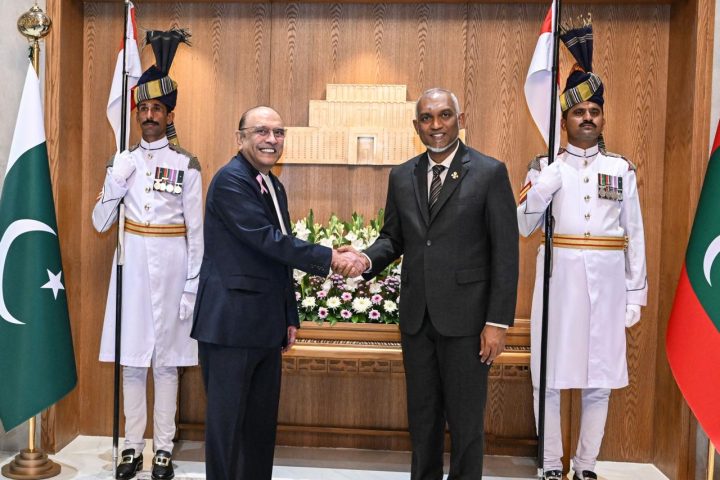
As the two First Ladies stood together alongside President Dr Mohamed Muizzu and President Zardari beneath the ceremonial flags of both nations, the atmosphere was one of warmth and mutual affection. Beyond the signed frameworks and trade targets, it was a moment where tradition, diplomacy, and shared heritage met in effortless harmony.