News Desk
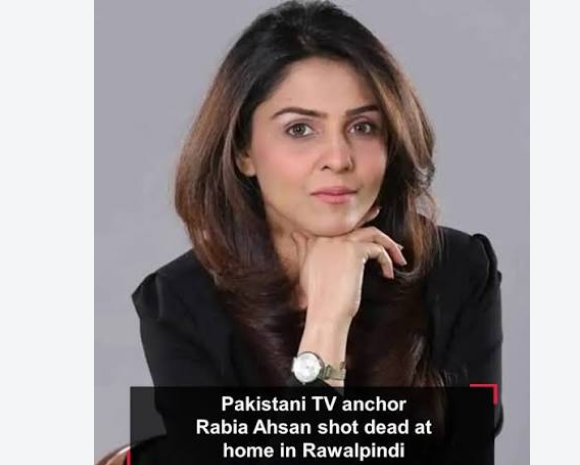
Pakistan’s conservative social structure is not restricted to rural areas alone. Patriarchy runs deep across all social and economic classes. The recent murder of Pakistani television anchor Rabia Ahsan demonstrates it. Women from educated, professionally established, and so-called cultured backgrounds can easily become vulnerable when their independence and success challenge the authority exercised by men in their families.
The actual reasons behind Rabia’s death are still not clear. However, she was facing difficulties in her marriage. Her husband, Ahsan Tahir Khan, often beat her, as Rabia’s colleagues recalled. Incidentally, Khan is a Grade-18 government official with the Overseas Pakistanis Foundation. His official stature did not prevent him from abusing his wife, a renowned journalist balancing professional responsibilities with motherhood.
Notably, a few reports suggested that Rabia’s family was reluctant to pursue the case against Khan despite the initial police investigations pointing to Khan’s involvement in the murder. Was it societal reputation and pressure that discouraged the family from seeking justice and accountability? Pakistan has a long history of successful and independent women facing domestic violence and social ostracism as they are perceived as a challenge to patriarchal norms, traditions and expectations.
Qandeel Baloch was one of Pakistan’s prominent social media celebrities and had millions of followers. Her daring posts, outspoken views and independent outlook on social media did not sit well with Pakistan’s social mindset. In 2016, she was killed by her own brother as he claimed she had brought dishonour to the family. Qandeel’s murder became a symbol of the dire consequences women can face when they are perceived to pose a threat to the patriarchal restrictions. What Qandeel said may appear controversial to many, but it should not have resulted in cold-blooded murder.
Shockingly, the state of Pakistan failed to deliver justice to her as her brother was acquitted by the court a few years later. Pakistan lawyer and activist Nighat Dad criticised the Pakistani court for not treating honour killings as conventional murders but as culpable homicide. “The courts’ decisions have often viewed the accused — mostly men — in such cases with particular empathy, treating the ‘affront’ to his honour in, let’s say, finding his sister with her ‘lover’ as a mitigating circumstance that entitles him to a lesser punishment,” she said.
Another case that is similar to the Rabia murder case is the killing of journalist Urooj Iqbal. Urooj had dreams of launching her own newspaper and becoming a digital entrepreneur. But her husband, Dilawar Ali, did not want all this. He asked her to leave journalism. She did not. She refused. Subsequently, she was killed by her husband. Interestingly, Dilawar himself was a journalist and owned a newspaper. But Urooj’s dream hurt his male ego.
What was more shocking was the inaction of the state of Pakistan. Police and politicians colluded with Dilawar and threatened Urooj’s brothers. Even her family was forced to sign a forgiveness letter. Pakistani society has no problems with husbands who either want to control their wives or decide whether they pursue a career. Neither the protectors of the constitution nor the administrators of Pakistan have any interest in ensuring that women enjoy their freedom or exercise their basic rights.
Pakistani legislator Chaudhry Shahbaz Ahmad played a crucial role in protecting Dilawar by taking matters to a panchayat (unofficial village council) and forcing Urooj’s family to sign out-of-court settlement. In Balochistan, television presenter and gender activist Shaheena Shaheen was killed by her husband in 2020 as he disapproved of her public profile, activism and growing recognition. Nobel laureate and educationist Malala Yousafzai was attacked. She survived. But human rights activist Sabeen Mahmud lost her battle with death after she was shot for speaking her mind on sensitive political matters.
Many professional women in Pakistan are vulnerable to frequent physical attacks, intimidation, and online harassment. Women journalists are most targetted. Intellectual and human rights activist I A Rahman slammed the Pakistan government for its apathy toward women journalists which he said aggravated the plight of women across the country. “Perhaps because it has convinced itself that like other ‘riff-raff’, women journalists too will get tired of shouting and things will return to normal without any effort on its part,” he said. “It seems the government’s contempt for women journalists has its roots in its lack of a forward-looking vision for the women of Pakistan.”