News Desk
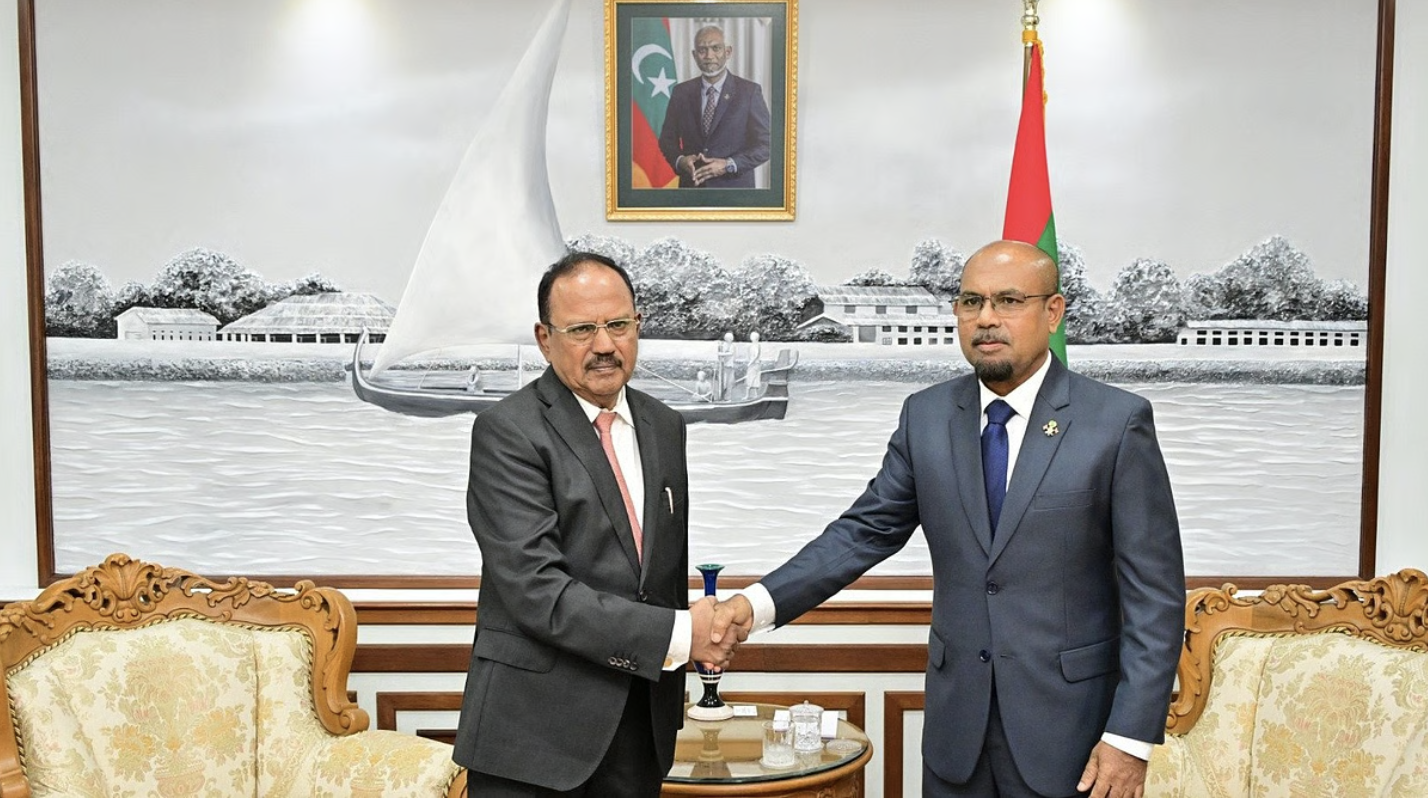
Indian National Security Adviser Ajit Doval urged Indian Ocean nations on Wednesday to keep shared waters open for regional unity rather than division, underscoring New Delhi’s push to deepen security ties in Malé following recent diplomatic shifts in the archipelago.
Addressing the eighth National Security Advisers’ Meeting of the Colombo Security Conclave (CSC) in Malé, Doval framed regional maritime cooperation around shared history and pressing security threats. The three-day conclave, running from 24 to 26 November, brings together top security officials from Maldives, India, Sri Lanka, Mauritius, Bangladesh, and Seychelles.
“We the littoral states of the Indian Ocean region share a common maritime space and are connected by civilisational heritage shaped over a long period of history,” Doval told delegates. Echoing remarks by Maldivian National Security Adviser Ibrahim Latheef, he added: “The generations before us left the legacy for us that the seas connected us. Let us leave for our progeny also a heritage, a tradition that will bind them together and not divide them through these seas.”
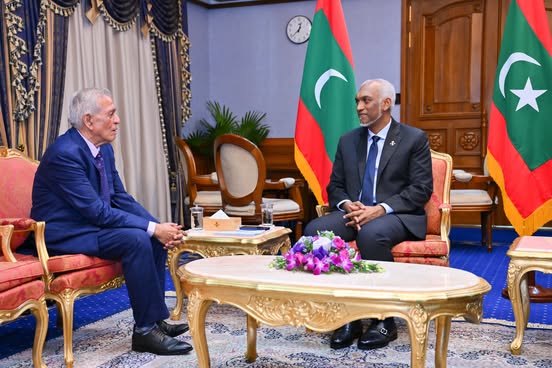
Doval’s visit carries added diplomatic weight in the Maldives. On Tuesday, ahead of the main conclave sessions, he held bilateral talks with Minister of Defence and National Service Hassan Rasheed to discuss strengthening defence and security cooperation. The meeting marked the first high-level engagement between New Delhi and Malé since President Dr Mohamed Muizzu’s recent visit to Pakistan, a trip closely watched by Indian officials given the Maldives’ strategic position astride major international shipping lanes.
During his Wednesday address, Doval linked the CSC directly to India’s Neighbourhood First policy and Prime Minister Narendra Modi’s MAHASAGAR vision—Mutual and Holistic Advancement for Security and Growth Across Regions—which PM Modi announced during a visit to Mauritius last March to guide New Delhi’s outreach to the Global South.
“We are committed to continue working closely with the CSC countries to enhance our collective capacities in dealing with the evolving serious security challenges,” Doval said, assuring member states of India’s full backing and assistance.
Originally formed in November 2020 when India, Sri Lanka, and the Maldives expanded an earlier trilateral maritime arrangement, the CSC has grown into a structured six-nation bloc. Its work centres on five pillars: maritime safety and security; countering terrorism and radicalisation; combating trafficking and transnational organised crime; cybersecurity and critical infrastructure protection; and humanitarian assistance and disaster relief.
Doval pointed to the signing of the CSC Charter and a Memorandum of Understanding in Colombo on 30 August 2024 as a turning point that gave the grouping a permanent secretariat and a Secretary General. He praised Admiral Ghormade, who is associated with the secretariat’s leadership, calling him one of the most outstanding professionals he had encountered in his career.
Thanking the Maldivian government and Ibrahim Latheef for hosting the conference, Doval noted that the grouping had evolved from a basic recognition of the Indian Ocean’s strategic value into an active regional body focused on national security, economic growth, and public welfare.
“We have got a secretariat, we have got a proper Secretary General, and we do hope that in the coming months, we will be able to carry it forward,” Doval said.