News Desk

The mother died when he was thirty-nine days old. There is no softer way to put it. Qasim Ibrahim was born on 30 August 1951 in Maamigili, Alif Dhaal Atoll, into a childhood that offered nothing but distance; from Malé, from money, from the future most people would recognise. At eighteen he took a job as a hospital clerk. Ten years later he was managing a furniture mart. Neither role suggested what came next, which was Villa: a trading house that grew into one of the largest private enterprises in the Maldives, spanning resorts, aviation, shipping, construction and media.
The loan that started it, in 1976, was fifteen thousand rufiyaa, raised against his own property. He has never really hidden how small the beginning was.
This week, at the Perdana Leadership Foundation in Putrajaya, Malaysia, the Asia Centre for Entrepreneurship handed him its biggest compliment.
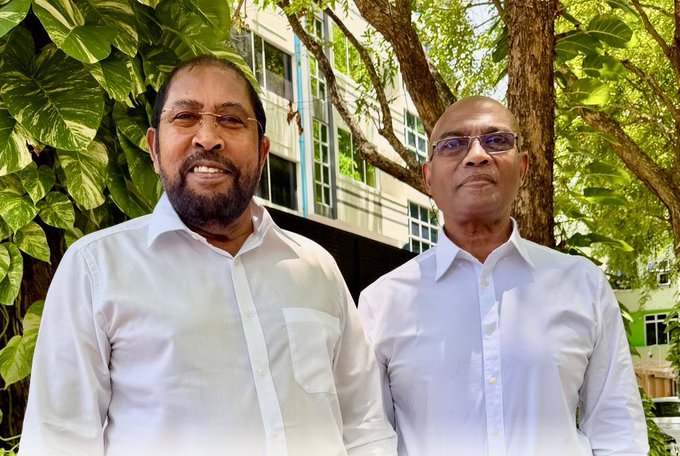
Qasim was named Asia’s Best Entrepreneur Philanthropist 2026 at the ACE Icons Awards. He was not there to collect it. His son, Umar Arkaan Qasim, accepted on his behalf, with the Maldives High Commissioner to Malaysia, Dr Mariyam Shabeena Ahmed, watching from the audience.
Four other entrepreneurs from across Asia were honoured alongside him — Tan Sri Vincent Tan of Berjaya, N.R. Narayana Murthy of Infosys, Anindya Bakrie of Indonesia, Salahuddin Qasim Khan of Bangladesh. Tun Dr Mahathir Mohamad was given the title Father of Entrepreneurship Development. It was serious company.
Awards in this region are handed out generously. This one, arguably, is different — because the work it cites was done in a country of roughly half a million people, where a single act of generosity can bend an entire generation.
Consider Villa College. When it opened its doors in January 2007, a university degree was a plane ticket most Maldivian families could not buy. Young people who wanted one went abroad, if they could afford it, and many never came back.
Qasim started the college with a deliberately modest ambition: to make education affordable for Maldivians, not to filter them out. It is now the country’s leading private higher education provider, running everything from A Level and certificate programmes to diplomas, bachelor’s degrees and master’s degrees — business, pharmacy, teaching, psychology, IT, hospitality — on campuses that reach far beyond Malé, into atolls where higher education once meant leaving home for good.
This year, 1,237 students graduated from it. Read that number slowly. Many of them, by every account of these ceremonies, were the first in their families to wear a graduation gown.
Qasim himself has been asked what the Villa Foundation achieved that he is proudest of. His answer was not the resorts or the shipping routes. It was training people — building the human resource of the country, sector by sector, nurse by nurse, teacher by teacher.
The Foundation funds medical treatment abroad for those who cannot pay, scholarships for higher education, and welfare work that rarely makes headlines because it happens quietly, one household at a time. Long before the Aasandha scheme existed, he was arranging treatment in India for sick Maldivians who knocked on his door, at his own expense. That habit predates every award.
There is a nickname, “Burumaa Qasim”, that Maldivians use, and it carries affection rather than irony. A biography published in his honour — A Story of Success and Struggle — traces the arc from Maamigili orphan to the country’s wealthiest businessman, and it does not soften the struggle.
He has also been a politician — a parliamentarian for Maamigili, a finance minister, a presidential contender — and politics has brought critics as well as admirers. That is honest to record. But even his sharpest opponents tend to make an exception when the subject turns to Villa College, or to the student standing in an airport queue with a Foundation letter in hand. In the Maldives, where almost everything of consequence must be imported — fuel, vegetables, expertise — Qasim’s wager has always been that one of these things can be grown at home.
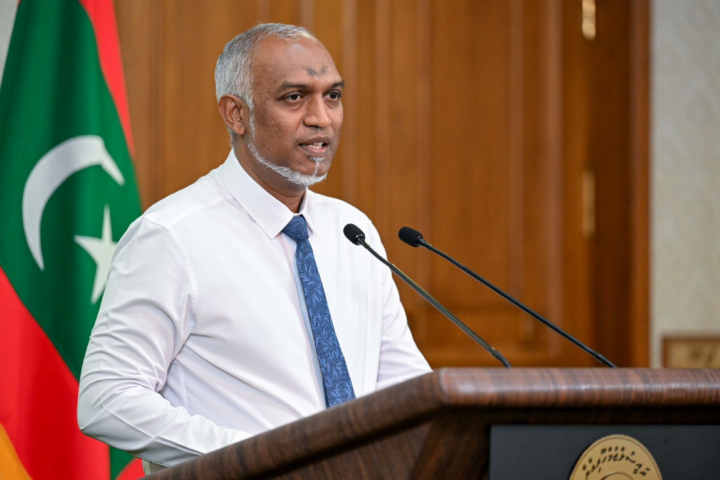
The state has marked the work in its own way. In July 2025, President Dr Mohamed Muizzu conferred on him the Order of the Distinguished Rule of Izzuddin, one of the highest honours the country gives.
The award citation in Putrajaya spoke of long-standing contributions to business and philanthropy across healthcare, education and social welfare. Official words. What they describe, in practice, is simpler: a man who was given nothing at the start, and who has spent five decades making sure the next ones are given something.
Seventy-five years old now. Still at it.