News Desk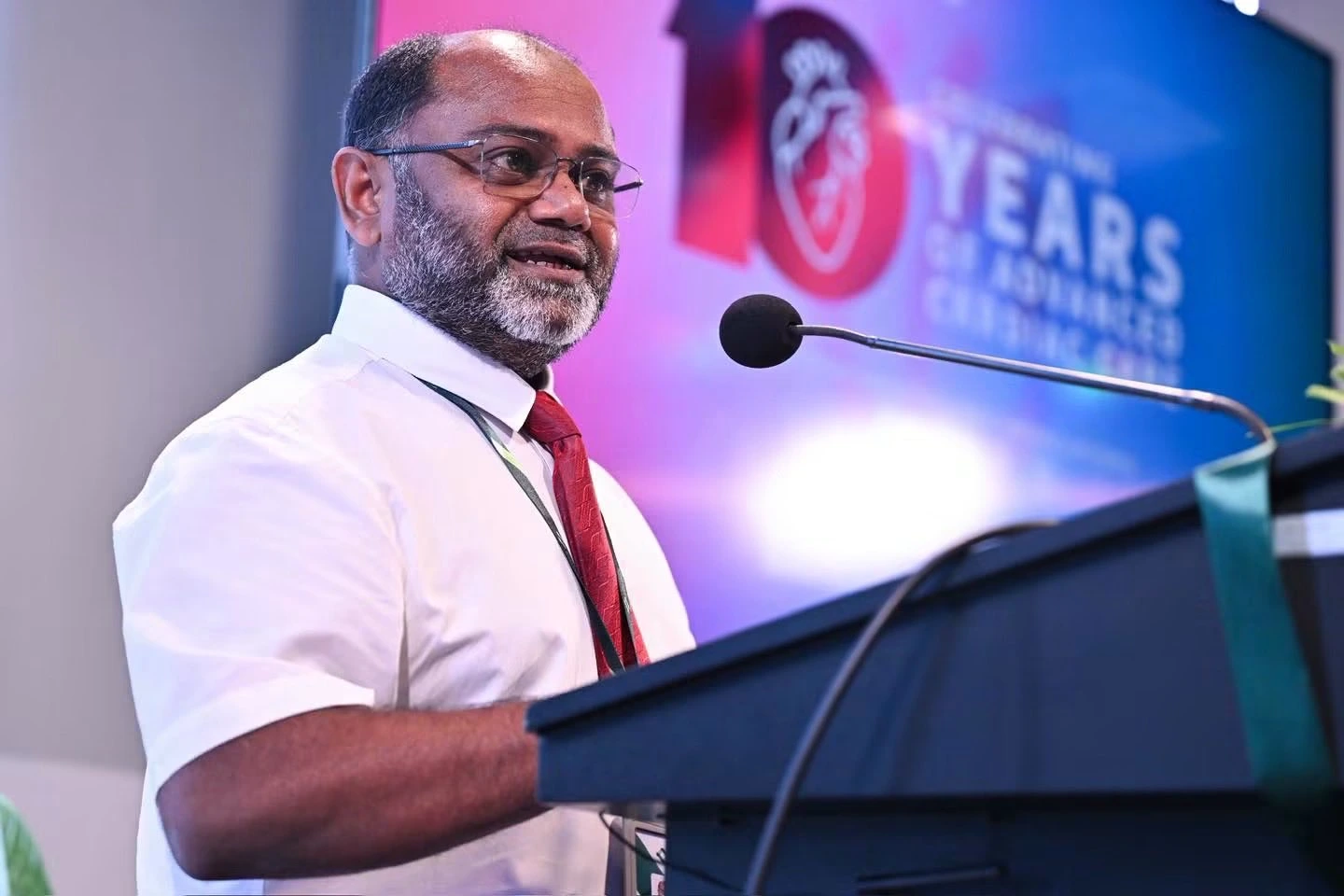
MALE’ — There is a particular kind of quiet heroism that the Maldives does not quite know how to celebrate. It does not involve a ribbon-cutting with a minister in the frame. It does not generate a press release. It happens at odd hours, in scrubs, sometimes after a fishing trip has been abandoned in a hurry.
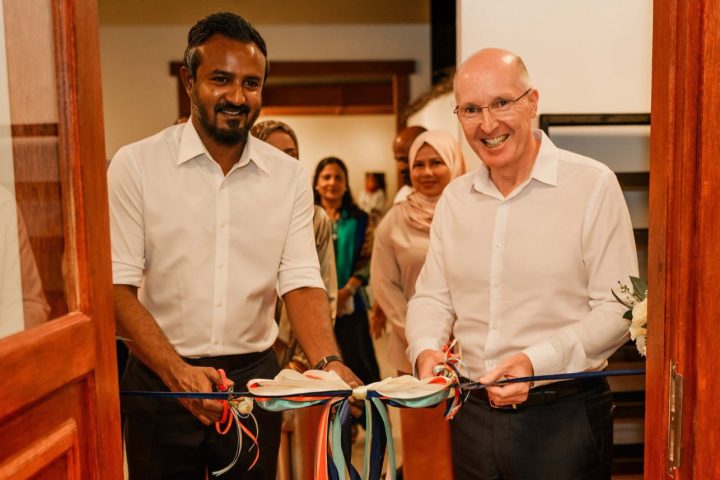
Yesterday, the National Cardiac Centre at IGMH turned ten. There was a small ceremony. A few speeches. No fanfare to speak of. And yet what has been built inside that building over the past decade represents one of the more remarkable and underreported achievements in this country’s recent history.
Ten years ago, a Maldivian with a serious heart condition had, broadly speaking, one option: leave. Get on a plane to Colombo or Bangalore or Bangkok, navigate a foreign health system, wait weeks for a consultation, spend money the family may not have, and hope the answer that eventually comes back is worth the journey. Many made that trip. Some did not make it at all.
Today, the cardiologists are here. And they are Maldivian.
“I say this with great pride,” Dr Miqdad Shareef told those gathered at the anniversary ceremony. “Every cardiologist working at this centre today is Maldivian.”
It is a sentence worth sitting with. A small island nation of fewer than half a million people, stretched across 800 kilometres of Indian Ocean, has trained and retained a full complement of its own cardiac specialists. They did not leave for better salaries elsewhere, though they could have. They stayed.
The centre opened on 5 June 2016, the first facility in the Maldives dedicated specifically to cardiac care. In the early years, even basic diagnostic tests required sending samples or scans abroad and waiting, sometimes for weeks, for results to return. The delay was not merely inconvenient. In cardiology, time is muscle. Every hour between symptom and treatment is tissue dying.
That wait is largely gone now. Tests are run here. Results come back the same day. Procedures that once required medical evacuation are performed in Male’. Dr Miqdad described one that would have seemed implausible to Maldivian patients not long ago: holes in the heart closed without surgery, non-invasively, by Maldivian hands, in a building ten minutes from where most of them live.
The geography of the Maldives makes all of this more significant than it might appear on paper. An archipelago with nearly 186 inhabited islands, spread across a vast ocean, faces a problem that most healthcare systems do not: distance is not inconvenient here, it is potentially fatal. A chest pain in the far south, a heart attack in the northern atolls, a sudden arrhythmia on an island with a nurse but no doctor and no airport with a scheduled flight until morning. The existence of a capable cardiac centre in Male’ does not solve every piece of that puzzle. But it anchors the system in a way that was simply not possible before.
There is a story being told around Male’ these days, the kind that spreads person to person rather than through any official channel. A man felt chest pain. He was taken to Hulhumale’ Hospital. The initial checks were done quickly and a decision made: IGMH, now. An ambulance moved. On the other side, a young cardiologist had been preparing for an afternoon on the lagoon, gear packed, the water waiting. He heard the emergency call. He left the gear and went to stand at the door.
The stent was placed. The man recovered. He tells the story to whoever will sit still long enough to hear it, not because he is bitter or traumatised, but because he is genuinely astonished, in the best possible way, by what happened to him in his own country.
This astonishment is itself telling. Maldivians have absorbed, over many years, a quiet assumption that serious medicine happens somewhere else. That the real doctors are in India, in Sri Lanka, in Singapore. That local care is for the minor things, the fevers and the fractures, and that anything that truly matters requires a ticket and a bag.
A generation of Maldivian doctors trained to this level and working at home changes what the country believes about itself. It changes what families assume when someone falls ill. It changes the conversation about whether Maldivian medicine is something to be trusted or merely tolerated while you save up for a flight abroad.
“The cardiovascular services available to patients in the Maldives today represent a very significant easing of the burden for sick people,” he said. The centre’s growth over ten years, he added, has brought about a fundamental change in the national health system.
These doctors do not hold press conferences. Their names do not appear in the political columns. No scandal attaches to a successful stent placement. There is no party affiliation in a cardiac catheterisation laboratory, no faction in a resuscitation room.
And so they work, largely uncelebrated in the way that the Maldives celebrates things, which is to say they are not celebrated at all in the public square. The tenth anniversary passed with a modest gathering and a few honest words.
The hearts, though, keep beating. And in a country where so much of the public conversation is about who gets credit for what, the people doing the most important work are often the ones not asking for any.