 News Desk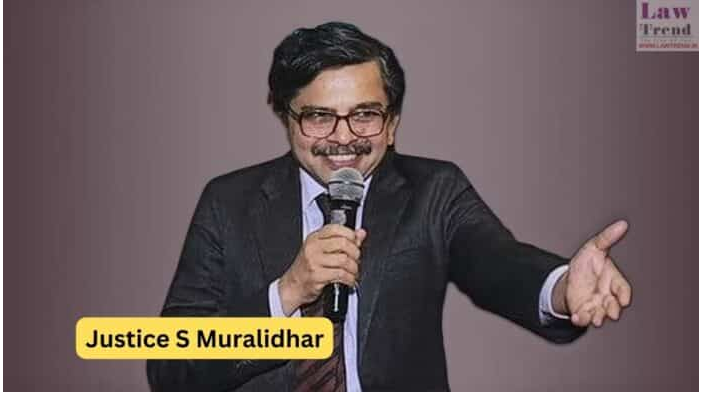
NEW DELHI — The world is talking about Justice S. Muralidhar again, and for good reason. In late November, the United Nations named the former Chief Justice of the Orissa High Court as Chair of its Independent International Commission of Inquiry on the Occupied Palestinian Territory and Israel. It is a rare distinction for an Indian jurist, placing him at the centre of one of the UN’s most closely watched investigations into human rights violations.
For India, his appointment is more than symbolic. It signals global recognition of the country’s judicial tradition and underscores how conscience-driven judges can shape international discourse.
Muralidhar’s journey began not in the marble halls of the judiciary but in the cramped offices of legal aid groups. As a young lawyer, he worked with NGOs defending slum dwellers, victims of industrial disasters, and communities left behind by modernization. His early cases were less about prestige than principle: ensuring that the poor had access to justice and the voiceless were heard.
Colleagues recall his insistence that law was not an abstract discipline but a lived reality. “He believed that the role of a judge was not merely to interpret the law but to ensure justice for the most vulnerable,” one former associate said. That conviction would shape his judicial philosophy for decades.
Appointed to the Delhi High Court, Muralidhar quickly became known for judgments that blended legal rigor with moral clarity. He was part of the bench that advanced the cause of personal liberty, reinforcing India’s commitment to equal rights. He also ruled in cases of communal violence, holding institutions accountable when political winds urged silence.
Perhaps most striking was his refusal to bend under pressure. His tenure as Chief Justice of the Orissa High Court further cemented his reputation as a jurist unwilling to compromise on principle.
His landmark judgments ranged from insisting on institutional accountability in cases of communal violence to underscoring the urgent need to balance development with sustainability in India’s growth story. Each case was more than a legal milestone; it was a moral statement.
Internationally, Muralidhar has been hailed as a “judge of conscience,” a jurist whose decisions resonate in democracies grappling with diversity, dissent, and rule of law. His example has been cited in global forums as evidence that judicial independence is not a luxury but a necessity.
“From the streets of India to the corridors of international law, his journey reflects the power of principled resistance,” one observer noted.
At the heart of his career lies a simple but profound belief: judges must uphold constitutional morality over political expediency. In a democracy as vast and diverse as India’s, that belief is both radical and essential. His judgments remind citizens that the measure of democracy lies not in the strength of its majority but in the protection of its minorities.
Muralidhar’s career is inseparable from India’s larger story — a nation balancing democracy, diversity, and development. His rulings on minority rights and civil liberties are defining moments in India’s legal history, offering lessons in judicial courage.
As India continues to navigate its democratic aspirations, his legacy stands as a beacon. His journey affirms that conscience-driven justice is not only possible but essential — and that India, through jurists like him, can offer the world a model of judicial courage rooted in constitutional values.
“Justice Muralidhar has always stood as a judge of conscience, reminding the judiciary of its moral compass,” a colleague reflected.
His story is not just about one man’s career. It is about the enduring possibility of justice in India — and the global resonance of a judge who believed that law, at its best, is the language of conscience.