News Desk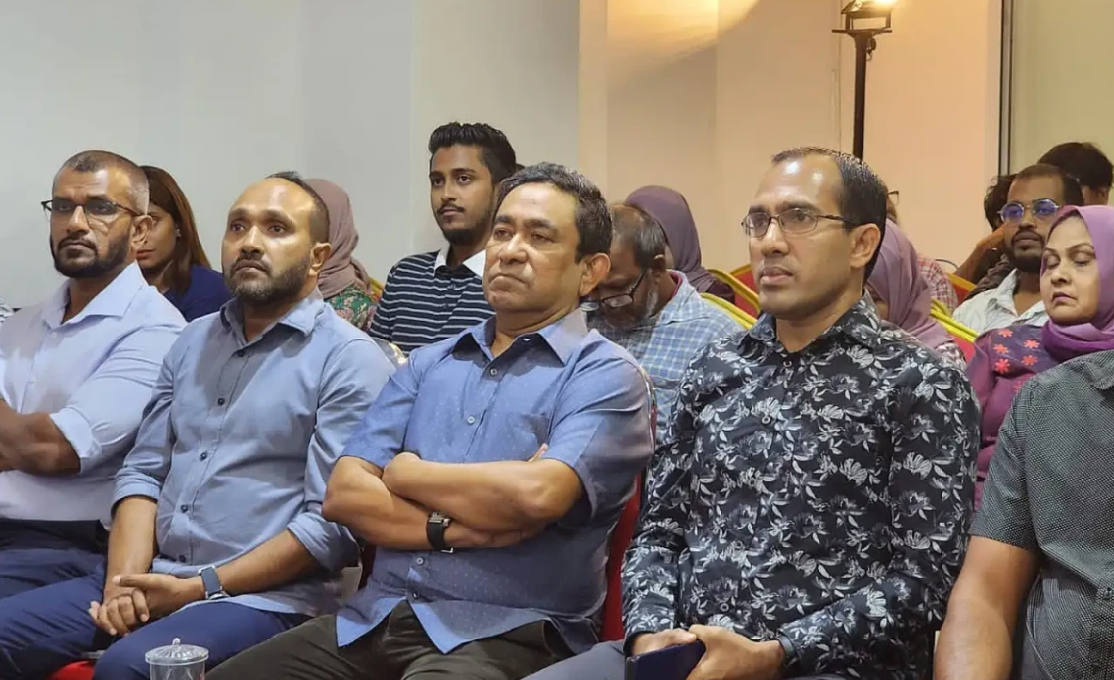
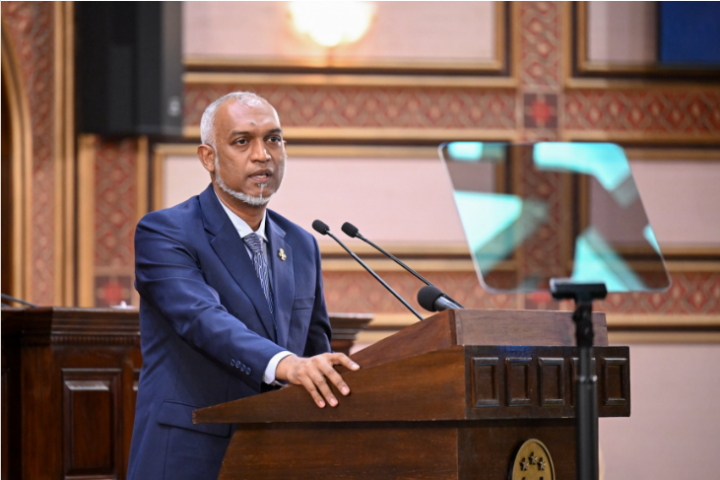
MALÉ — Abdulla Yameen knows better than anyone in Malé that loyalty here ends where power stops. When legal cases sidelined the former president after his loss, his Progressive Party of Maldives (PPM) didn’t hang around. Dr Mohamed Muizzu took over the president’s office, pulled the PPM’s ground team and conservative voters straight into his own People’s National Congress (PNC), and left Yameen with an empty shell.
Yameen is now trying to pull off a comeback with a new outfit, the People’s National Front (PNF). He has about 3,000 core members on paper, but his real headache is convincing ordinary conservative voters to leave a sitting president and come back to him.
He took a shot at fixing that during a town hall meeting in Malé. He spent part of the night bashing the opposition Maldivian Democratic Party (MDP)—calling their platform “lip service” and warning that their reform agenda brings “immense hardship.” Nothing new there. The surprise came when he turned to Muizzu.
“Now they are making comparisons again,” Yameen told the crowd. “Saying the only way forward is back to Ibrahim Mohamed Solih. No, I tell you, anytime of the day, anytime of the year, I would choose Muizzu over the MDP.”
It reads like a white flag, or maybe forgiveness for the protégé who left him behind, but Yameen isn’t being generous. The men now running Muizzu’s government—and leading the attacks on Yameen—are the same ministers, strategists, and aides Yameen brought into politics during his own presidency. He knows who they are, and he knows how fast loyalty flips in the Maldives when an election comes up.
Yameen isn’t about to go to war with Muizzu yet because he knows where his old voters went. They backed Muizzu’s PNC because Muizzu had the office, the state resources, and the best shot at keeping the liberal MDP out. If Yameen attacks Muizzu directly today, he just pisses off the exact people he needs to win back.
So Yameen is playing it simple. He took his usual shots at the MDP, accusing them of messing with the courts through the Judicial Service Commission, driving instability, and trying to force Western ideas onto an Islamic country. “Today they might call themselves democratic by name, but that is not democracy,” he said.
By setting up the choice as Muizzu versus the MDP, Yameen gives his old supporters permission to stay where they are for now without cutting ties with him. He gets to remind them that he built the conservative movement they’re voting for, while keeping the door wide open for Muizzu’s people to talk to him again later.
Nobody in Malé thinks Yameen is backing down. He’s forty years into this game. He knows economic troubles or political hits will eventually shake Muizzu’s government, and when that happens, he wants his PNF sitting right there—not as a rival, but as the only real option left for conservatives when the power shifts.