News Desk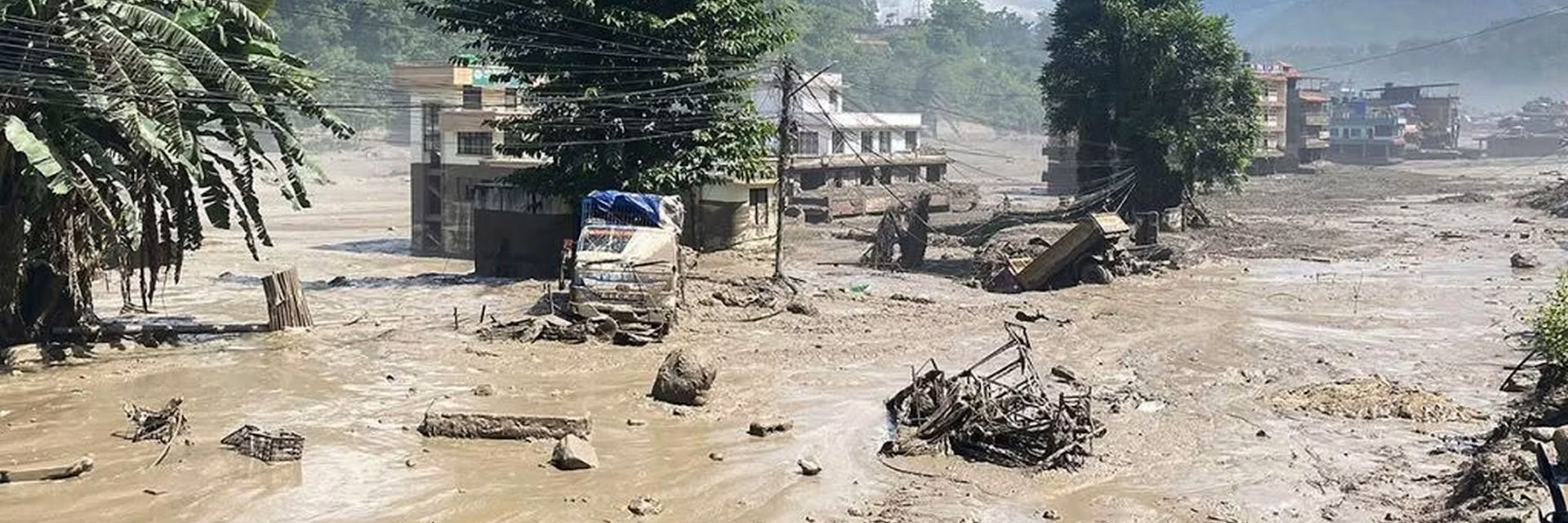
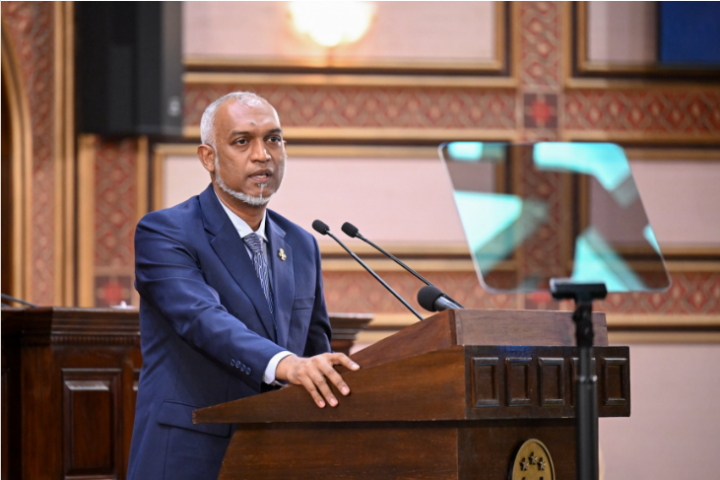
President Dr Mohamed Muizzu has officially sent condolences to Nepali Prime Minister Balendra Shah following catastrophic flooding in Nepal, expressing deep sorrow over the loss of lives, destroyed livelihoods, and widespread devastation.
In his official message, President Muizzu extended sympathies on behalf of the Maldivian government and its people, wishing a quick recovery to the injured and praising the ongoing efforts of emergency responders working tirelessly on the ground in Nepal.
Describing the sheer force of the catastrophe, The Guardian characterized the disaster as a “tsunami from the sky,” highlighting how a colossal wall of water and debris dropped from the mountains and swept away entire settlements in minutes.
Yet for thousands of Nepali expatriates living and working across the Maldives, official letters offer little comfort as they scramble to reach loved ones back home.
Members of the local Nepali community expressed growing frustration over the distinct lack of institutional support during this disaster. During past international crises, local telecom giants Dhiraagu and Ooredoo Maldives routinely stepped in to offer subsidized call rates, free minutes, or streamlined connections to help migrant workers reach affected zones. This time around, no such communications lifeline has been extended.
Nor has there been any public drive or national telethon—a mainstay of Maldivian solidarity during regional disasters—to rally support for the Nepali diaspora.
“We feel a painful indifference,” said one Nepali worker living in Malé, who has struggled to get updates from family back home. “Our people help build this country every single day, but when our own homes are underwater, we are left to suffer in silence.”
With thousands of Nepali citizens currently residing in the Maldives, community members continue to lean on one another for support, holding out hope that broader Maldivian society and local corporate bodies will step up to ease their burden during this tragedy.
Update on the disaster:
On August 26, 2026, a massive torrent of water, mud, rocks, and ice tore through the Lhende Khola river valley and the Trishuli River basin, triggering the worst natural disaster to hit Nepal since the devastating 2015 earthquake.
Over 469 deaths have been confirmed in Nepal alongside 3 deaths in Tibet, while more than 1,300 individuals remain unaccounted for, including numerous foreign tourists and pilgrims. Unlike typical monsoon landslides, this event was triggered by a high-altitude glacial collapse and debris flow rather than normal seasonal rain.
The resulting mudflow destroyed vital international trade ports, bridges, and highways along the Nepal-China border, turning the catastrophe into an unusually complex cross-border crisis. Search and rescue operations are currently underway with thousands of military and police personnel using helicopters and drones—recently pulling hundreds of trapped workers from a hydropower project tunnel—while authorities warn of a potential second wave of flooding caused by an unstable, rising lake formed behind a blocked river near the border.