News Desk

What began as a fierce domestic debate over real estate and land rights in the Indian Ocean has rapidly spilled into a volatile digital battlefield across the Middle East and East Africa.
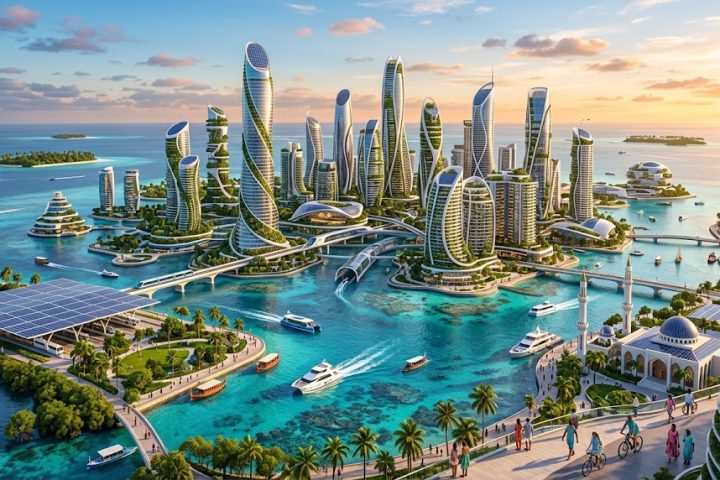
At the centre of the storm is RasMale’, an ambitious multi-billion-dollar urban development project near the capital, Malé. On 21 September 2026, the government of the Maldives signed preliminary commercial terms with Eagle Hills, an Abu Dhabi-based real estate development firm chaired by Emirati tycoon Mohamed Alabbar.
Under the proposed arrangements, Eagle Hills would develop approximately 500 hectares of reclaimed land into luxury waterfront properties, marina facilities, and commercial districts. In exchange, the developer committed to constructing around 5,000 social housing units for Maldivians, while paying the government a 10 per cent revenue share under 99-year usufruct arrangements. Yet inside the Maldives, a muted opposition at the local level and fierce resistance online caused the issue to spill abroad.
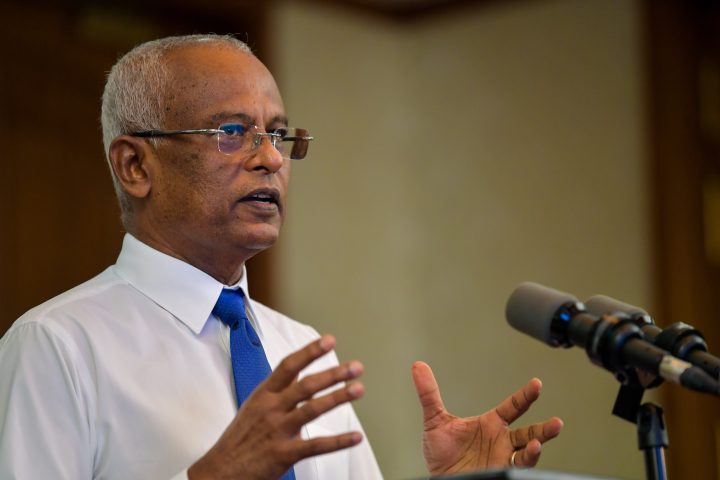
Former Vice-President Mohamed Jameel Ahmed’s local criticism made the rounds on social media, as he proclaimed that Maldivian faith, sovereignty, and land rights were “not for sale” to foreign developers. However, over the past 48 hours, what was initially a debate on transparency and land tenure has undergone a radical transmutation online. A detailed analysis of public posts on X reveals that the narrative has been hijacked by regional political feuds, online influence accounts, and geopolitical commentary spanning the Gulf, North Africa, and the Horn of Africa.
An examination of the digital network surrounding hashtag campaigns, such as #EagleHillsOut, highlights how quickly local opposition can be co-opted by broader international rivalries.
A substantial portion of the posts framing the investment deal as an act of Emirati imperial expansion originate from handles written in Arabic. Accounts such as @Khafaya_UAE1 and @wsm2230—which frequently publish commentary hostile to United Arab Emirates foreign policy—swiftly weaponised the Maldivian opposition’s statements. They framed the commercial deal alongside conflict zones in Yemen, Sudan, and Algeria, portraying the RasMale’ venture as part of a wider narrative of regional destabilisation by Abu Dhabi.
Other commentators from Saudi Arabia and the broader Gulf region, including accounts displaying pro-Saudi handle identifiers like @MohamedAlosh5 (“from the sons of Najd”), seized upon the controversy to project anti-Emirati sentiments, painting the state’s commercial ventures abroad as universally unpopular.
Simultaneously, the geopolitical discourse attracted commentary from accounts linked to African regional friction. Handle @FishatsionAster, an account focused on Horn of Africa politics, weighed in with accusations targeting the UAE’s role in African regional stability, illustrating how accounts with distinct geopolitical agendas piggyback on trending anti-UAE hashtags regardless of geographic context.
Particularly striking within the Maldivian context is how the domestic opposition’s critique has been weaponised using anti-Zionist rhetoric. Several accounts—such as @ahusan_m and @xt_mo_x—have framed the entry of Eagle Hills not merely as a commercial lease, but as a gateway for Israeli or foreign influence in a 100 per cent Muslim nation. This occurred despite explicit assurances from the Maldivian government restricting foreign ownership caps and excluding Israeli entities.
Amid the commentary, pseudo-analytical profiles like @drhossamsamy65—an account operating under the persona of a double-doctorate political commentator—have structured the debate into polished summaries, driving public polls on whether the RasMale’ agreement should be published before final execution. While these accounts present themselves as neutral observers, their curation explicitly fuels an anti-UAE agenda and serves to amplify local political polarisation to an international audience.
In tandem with the social media backlash, local media reports and political commentary in the Maldives have frequently attempted to link India to the developing controversy. Opposition outlets and local commentary have drawn implicit connections between the current administration’s foreign policy manoeuvres, regional power dynamics, and Indian strategic interests in the Indian Ocean.
However, official records and independent briefings indicate that India’s involvement in the Eagle Hills RasMale’ deal is non-existent. The project remains strictly a bilateral commercial arrangement between the Maldivian government and a private Abu Dhabi real estate firm. The attempts to tie New Delhi and Abu Dhabi to the controversy reflect the sensitive nature of Maldivian domestic politics, where major infrastructure projects are habitually viewed through the prism of Indian and Chinese regional rivalry.
What the digital fallout over Rasmalé demonstrates is the speed with which a national discourse on economic development can be weaponised on the global stage. For President Dr Mohamed Muizzu’s administration—committed to attracting the substantial foreign investment required to advance key national infrastructure and drive economic growth—the challenge extends beyond commercial negotiation, as legitimate local debate over economic policy is swiftly co-opted into broader international narratives.