 News Desk
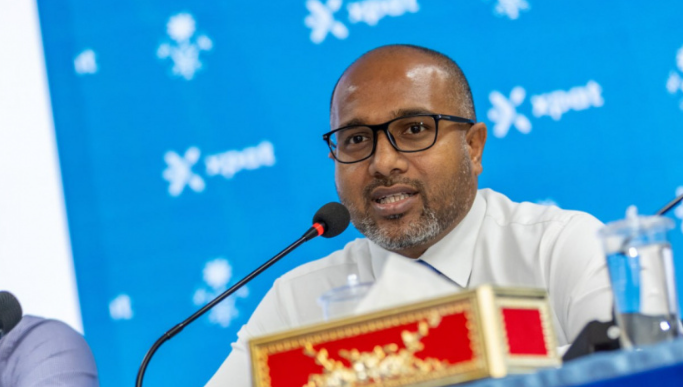
Sarvash Adam, who resigned from the Pension Office board as the representative for private businesses, has issued a sharp warning over the government’s proposed MVR 2.4 billion “dual‑currency” bond. He says the Maldives Monetary Authority cannot explain why the transaction will not increase inflation or expand the money supply.
The Finance Ministry wants the pension fund to invest in a bond that pays returns in both Maldivian rufiyaa and US dollars. The Pension Office says the plan will build foreign exchange reserves inside the fund without buying dollars from the market. It also argues that the deal will convert short‑term Treasury bills into longer‑term bonds, raising yields and extending portfolio duration.
Sarvash says these arguments are technically correct. He agrees the structure can generate dollar returns. But he stresses that the core problem lies elsewhere.
“This is not a market transaction” speaking to Sun, Sarvash said the deal would be acceptable if it were a normal market operation. He argues that the involvement of the central bank changes everything.
He says the MMA would be issuing new money to support the transaction. That increases the money supply. He describes this as “money printing.” He warns that such a move raises inflation risks and expands the circulation of Maldivian currency at a time when liquidity is already high.
He says the transaction should not be executed through the secondary market. He believes the structure introduces unnecessary economic risks.
Sarvash says the MMA has repeatedly argued for contractionary monetary policy. He notes that the economy is not in crisis. It is not a COVID‑era situation. Demand is strong. There is no need to inject more liquidity.
He says the central bank cannot explain why it is suddenly shifting toward an expansionary stance. He argues that the move contradicts the MMA’s own public guidance.
He warns that inflation could rise if the money supply expands further. He says the MMA has not provided a clear strategy to mitigate these risks.
“This is about raising money for the budget,” Sarvash said, arguing that the real motive behind the transaction is fiscal pressure.
He believes the government is seeking new financing for the budget. He argues that the state should instead reduce spending and limit borrowing.
He says fiscal and monetary policy must be coordinated. He warns that expansionary fiscal policy combined with expansionary monetary policy will worsen economic shocks. He says the current risk level is already high.
Wave of resignations signals deep internal conflict. The dispute has triggered a series of high‑level exits. Pension Office Chairman Dr. Ahmed Inaaz stepped down. Sarvash resigned soon after. Chief Financial Officer Hawa Fajwa also left her post. The Chief Executive Officer of the Pension Administration Office, Sujatha Haleem, has now tendered her resignation after the office finalized the controversial bond deal with MMA. Their departures reflect strong opposition to the government‑driven plan.
Despite the resignations, the Pension Office board approved the transaction on Monday. The decision has sparked widespread public dissatisfaction.