 News Desk
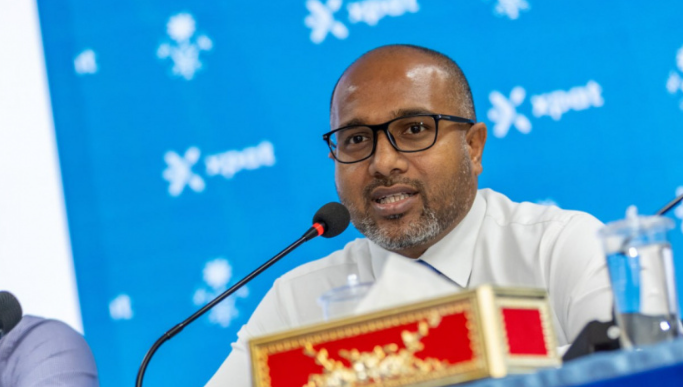
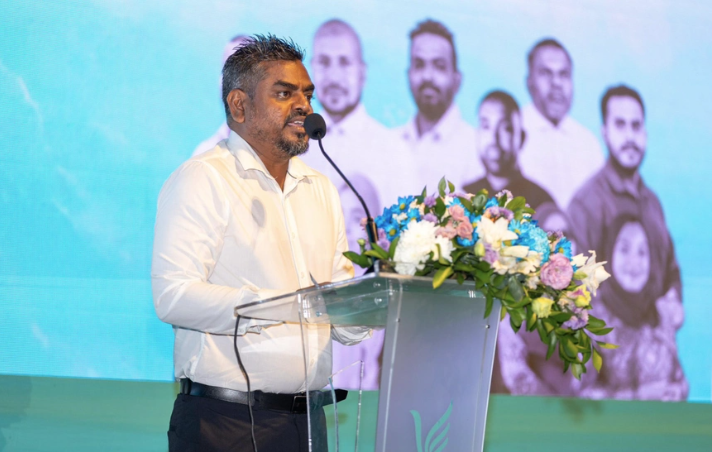
MALE’, Maldives — Abdulla Shahid, the leader of the Maldivian Democratic Party (MDP), has condemned the recently passed Maldives Media and Broadcasting Regulation Bill, labeled the “Media Control Bill” by the opposition, as an unconstitutional assault on fundamental rights, particularly media freedom, arguing that it violates key articles of the Maldivian Constitution and fails to meet the stringent standards for restricting freedoms.
“This bill is unconstitutional,” Shahid declared, pointing to Articles 27, 28, and 29 of the Constitution, which guarantee freedom of expression, freedom of the press, and freedom of learning and teaching, respectively. He further invoked Article 16, which stipulates that any restriction on these rights must be justified either by adherence to Islamic tenets or by alignment with democratic norms globally accepted. “No Maldivian is obliged to follow a law that strips away fundamental rights beyond necessity,” he asserted, challenging the government’s rationale for the bill.
Shahid, a former Speaker of the Maldivian Parliament and President of the United Nations General Assembly for the 76th session, has leveraged his extensive diplomatic and legislative experience to challenge the “Media Control Bill,” arguing it unconstitutionally restricts fundamental rights.
Shahid’s critique comes at a time when the ruling People’s National Congress (PNC), holding a supermajority in the Parliament, passed the bill through despite widespread opposition. The bill, submitted by Abdul Hannan Abubakr, a parliament member closely affiliated with the government, has been met with fierce resistance from journalists, civil society, and international watchdogs. Human Rights Watch, in a recent statement, warned that the legislation could “silence independent media amid an escalating crackdown on basic rights,” urging the authorities to withdraw it.
The Maldives Journalists Association has been vocal in its opposition, arguing that the bill would revert the country to a pre-democratic era by dismantling self-regulatory frameworks established post-2008. Members have expressed grave concerns that the vague provisions of the bill would push journalists into self-censorship, a sentiment echoed by many in the media community.
MP Meekail Naseem, the sole MDP member on the parliamentary committee reviewing the bill, criticized the secretive nature of the committee’s proceedings, suggesting that the ruling party was aware of the bill’s contentious nature. “They are proceeding in secret because they also know that what they’re doing is seriously wrong,” Naseem said, after being expelled from a committee session.
Internationally, the bill has drawn scrutiny. The 2025 World Press Freedom Index ranked the Maldives 104th, a significant drop from 72nd in 2021, reflecting growing concerns over media freedom. Elaine Pearson, Asia director at Human Rights Watch, remarked, “President Muizzu has been chipping away at human rights since taking office in 2023, with media freedom being first in the crosshairs.” She called on the government to abandon its “thinly disguised attempts to quash dissent.”
The debate over the “Media Control Bill” underscores a deeper tension in the Maldives between the government’s push for regulatory control and the opposition’s defense of democratic principles. As the nation watches, the outcome of this legislative battle could redefine the landscape of media freedom in the archipelago, with ramifications for its democratic credentials on the global stage.