 News Desk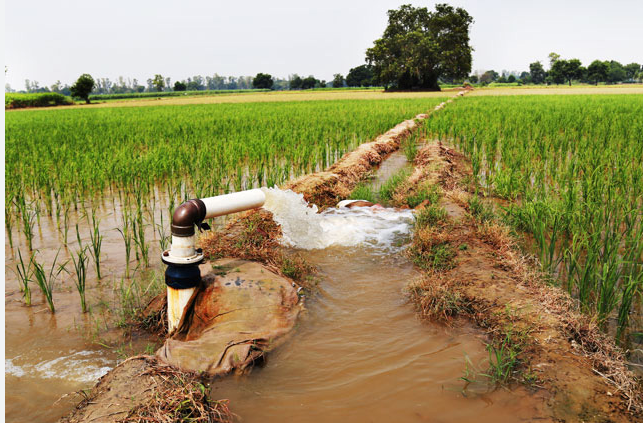
Pakistan’s groundwater crisis has entered a phase that can no longer be described as a distant warning. It is unfolding in real time, reshaping the country’s landscape, its economic foundations and, increasingly, the daily lives of millions.
What was once a nation abundant with 5,000 cubic metres of water per capita at independence now struggles with less than 1,000 cubic metres—a threshold that classifies it as water-scarce.
This fall is not just a statistic; it is the trajectory of a national emergency.
The severity of the crisis is sharpened by the growing mismatch between extraction and recharge.
Pakistan withdraws roughly 65 cubic kilometres of groundwater annually, far exceeding the natural recharge rate of 55 cubic kilometres. A 10 cubic kilometre deficit each year is not an abstraction but a continuous gouging of the country’s hydrological reserves.
Cities like Lahore now lose about a metre of groundwater every year, a pace that suggests not gradual decline but a headlong plunge toward depletion. Such losses accumulate quietly, beneath the surface and beyond sight, but the consequences are beginning to surface in unmistakable ways.
Blame is often placed on rapid population growth, but this alone does not explain the scale of the crisis. The unchecked proliferation of tubewells—estimated at 1.5 million and mostly unregulated—has fundamentally altered the country’s water balance.
Farmers, industries, and households drill deeper each year, chasing vanishing aquifers. The absence of oversight has created a race to the bottom, where individual survival instincts collectively undermine national security.
This decentralised, unregulated extraction has made water governance nearly impossible, leaving the state incapable of enforcing limits even as the crisis accelerates.
Agriculture, which consumes about 90% of Pakistan’s water, sits at the centre of the problem. Yet the sector’s vast consumption is matched only by its inefficiency.
Traditional flood irrigation persists across millions of acres, draining groundwater at a rate faster than nature can replenish it.
Even more alarming is the continued cultivation of water-intensive crops like sugarcane and rice—choices that defy hydrological logic in a country edging toward depletion.
These crops are not planted because they suit the climate or the water table; they survive because the political economy of Pakistan’s agricultural elite demands it.
Sugar mill owners, rice exporters and influential landlords wield enough power to shape cropping patterns that drain the country’s aquifers while enriching a narrow slice of society.
Distorted electricity subsidies further fuel the problem. Cheap or unmetered electricity for tubewells encourages relentless pumping with little regard for the long-term consequences.
Water pricing is equally irrational, recovering only a sliver of operational costs and sending a clear message that water, however scarce, is effectively free to waste. In such a setting, there is no incentive for conservation, and every incentive for overuse.
The economics of groundwater use in Pakistan are structured around short-term extraction rather than long-term sustainability, ensuring the crisis deepens year after year.
For millions of Pakistanis, the consequences are immediate and visceral. Over 80% of the rural population relies on unsafe drinking water. Nearly 60 million people are exposed to arsenic contamination—one of the highest concentrations of at-risk populations anywhere in the world.
As aquifers decline, the concentration of contaminants rises, turning essential water sources into threats to public health. In some regions, groundwater is not just scarce—it is toxic.
Communities that once depended on shallow wells must now dig deep or buy water at prices that are unaffordable for many households, creating a divide between those who can pay for clean water and those who cannot.
The public health implications are severe. Waterborne diseases already account for a significant proportion of illness in Pakistan, and the decline in groundwater quality only sharpens this burden.
Children in particular face heightened risks, with unsafe water contributing to stunting, malnutrition, and preventable disease outbreaks. Hospitals in water-scarce regions report predictable surges in disease patterns tied directly to seasonal water shortages and contaminated supplies.
The crisis is no longer confined to rural backwaters; it has crept into cities where residents find taps running dry or producing undrinkable water.
Economically, the implications are equally troubling. Agriculture remains the backbone of Pakistan’s economy, employing millions and shaping the country’s export profile.
As groundwater declines, so too does the reliability of agricultural output. Small farmers—those without the capital to drill deeper or invest in costly pumping equipment—face the highest risks.
Their fields dry first. Their wells fail earliest. And their livelihoods collapse long before national statistics catch up. The rural economy is already showing signs of strain, with falling yields and rising input costs squeezing households into debt cycles they cannot escape.
Food security, long treated as an abstract policy concern, is increasingly in question. With water tables plunging, the country’s ability to sustain wheat, rice and cash crops over the long term is under threat.
A nation of more than 240 million people cannot afford instability in its food supply, yet the current water trajectory points toward precisely that.
Already, shifts in groundwater availability are altering cropping calendars and reducing yields. If the trend continues—and all indicators suggest it will—the consequences for food prices, rural employment, and national stability will be profound.
Politically, water scarcity introduces new sources of tension. Provincial disputes over canal systems and river allocations have already become fixtures of Pakistan’s internal politics.
As groundwater reserves shrink, competition over remaining sources will intensify—between provinces, between urban and rural areas, and between agricultural and industrial sectors.
The politicisation of water, already visible in policy debates and local conflicts, risks becoming a destabilising force that compounds the country’s governance challenges.
The crisis also highlights a deeper structural issue: Pakistan’s longstanding inability to align policy decisions with hydrological realities.
For decades, water management has been shaped by short-term political considerations rather than scientific understanding or national interest.
The influence of entrenched agricultural lobbies, combined with a regulatory vacuum, has produced a system that encourages over-extraction, discourages efficiency, and punishes sustainability.
Even as experts warn of irreversible consequences, the country’s institutional inertia has locked it into a dangerous cycle of depletion.
Groundwater, once treated as an invisible and inexhaustible resource, is now revealing its limits. Pakistan’s aquifers are finite, and many are centuries-old reserves that will not recover within any human timeframe.
As the country’s water tables fall, the illusion of abundance evaporates, exposing a nation that has built its agricultural system, its economy and its public health infrastructure on a foundation that is crumbling beneath it.
There is no mystery about where the current trajectory leads.
Lower water tables mean higher pumping costs, increased contamination, declining agricultural productivity, and worsening public health outcomes.
They mean water conflicts that grow sharper, communities that grow more desperate, and an economy increasingly vulnerable to shocks.
Pakistan’s groundwater crisis is not approaching; it has already arrived. And with each passing year, the country sinks deeper into a hydrological deficit that threatens its stability from the ground up.