News Desk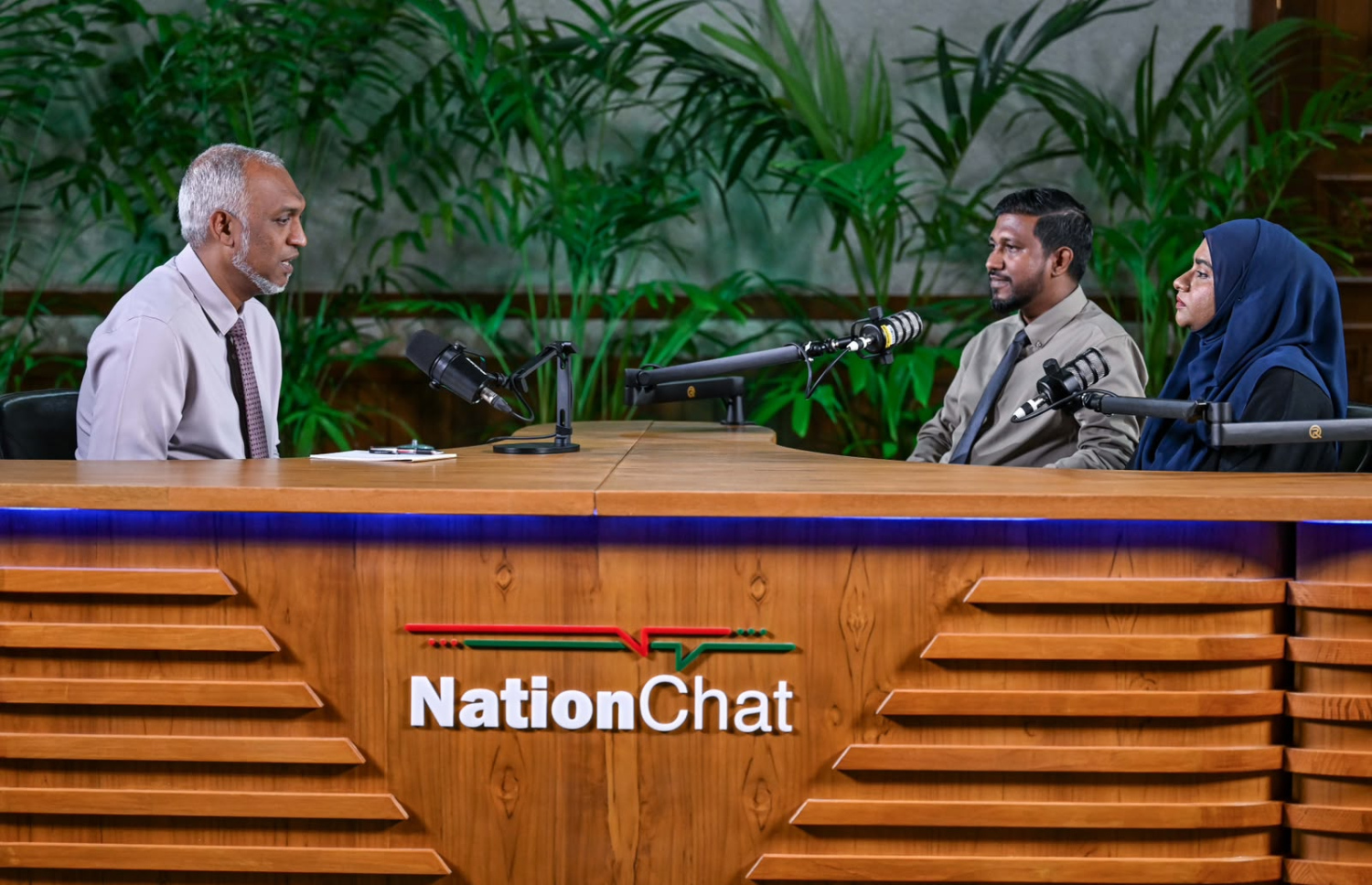
President Dr Mohamed Muizzu stated that the government will address the black market dollar sales issue through consultation, assuring that the results will be positive.
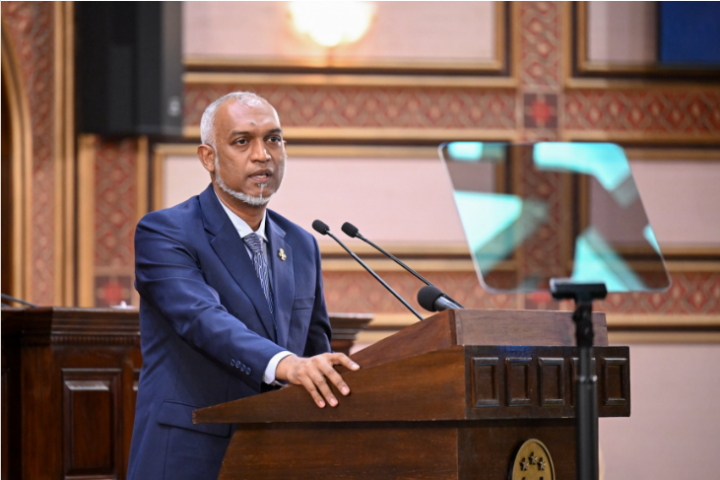
The President made these remarks while answering a question on the state media’s “Nation Chat” podcast.
Dollar Black Market and Economic Outlook
When asked when the dollar black market would finally end given the government’s ongoing measures, the President noted that he did not wish to give a specific date. Highlighting that the black market did not emerge overnight, President Muizzu stated that resolving the issue would take time.
“Rather than giving a direct date, what we can say is that God willing, good progress will be achieved,” the President said.
The President noted that when he assumed office on 17 November 2023, the Maldivian economy was in a deep pit. However, the administration forged ahead while settling debts and fixing economic issues. According to the President, his administration has paid off $1.3 billion in debt over the past two and a half years.
He further highlighted that expatriates working in the Maldives sending foreign currency abroad and the general handling of foreign exchange within the country had become structured in a particular way over time. Therefore, correcting these practices will take time, though necessary steps are being implemented in a structured sequence.
Measures Based on Technical Research
President Dr Mohamed Muizzu affirmed that the government’s measures to resolve the dollar shortage are being implemented following thorough research and consultation, which will produce positive outcomes.
Speaking on the state media’s “Nation Chat” program tonight, the President emphasized that modifications to foreign exchange policies would bring good progress. He noted that despite the dollar black market, the country continues to pay off its debts while improving other areas of the economy.
“We move forward by consulting everyone. The measures we take—whether introducing a law or amending an existing one—are strictly fact-based. We do not act on impulse. Our teams evaluate past practices, technical assessments, research, and how other countries handle these matters,” – President Dr Mohamed Muizzu
The President added that his administration consists of capable individuals in terms of education, technical expertise, and experience, ensuring that reforms are proposed through well-organised structures.
Foreign Exchange Regulations and Expatriate Wages
President Muizzu noted that the dollar black market problem existed long before this administration took office. He highlighted that recent reforms to the Foreign Exchange Act require businesses under Category A to convert 40 per cent of their monthly foreign currency earnings through local banks starting next month.
Additionally, the government recently mandated that salaries for foreign workers must be deposited directly into personal bank accounts registered with MMA-licensed banks to better manage foreign currency flows within the country.
Thilamalé Bridge Quality and Engineering Focus
Addressing questions raised by some parties regarding the quality of the Thilamalé Bridge project, President Muizzu assured that there is no doubt about its structural integrity. He revealed that quality assurance for the project is overseen by the globally renowned firm ‘Arup’—the same company that supervised the Sinamalé Bridge.
With Malé and Vilimalé now connected, the President noted that the entire bridge extending to Thilafushi will be completed and opened to the public within about a year. He added that the administration is placing special emphasis on training Maldivians in engineering and science, noting that whilst many students pursue business and law, national development urgently requires civil, electronic, and mechanical engineers.
Media Responsibility and Responsible Freedom
President Muizzu asserted that writing false news or making irresponsible statements without verifying facts amounts to working against the nation. While every individual enjoys freedom of expression, it must be exercised responsibly with truth.
He noted that in the past, deliberate efforts were made to tear the social fabric for political power—such as throwing fish into island council offices or creating anonymous websites to slander leaders and their families. He stressed that real national development is not just about physical infrastructure; building minds and fostering mutual respect is equally essential.
Legislative Reform and the Majlis
The President affirmed that if an independent member submits a beneficial bill to the Majlis, the government will support it, noting that good ideas are not exclusive to ruling PNC members.
He referenced the recently passed amendment to the Decentralisation Act, introduced by independent Thulhaadhoo MP Abdul Hannan, which grants the Cabinet authority to reclaim lands within council jurisdictions without compensation or prior council consent. The President explained that while he strongly supports decentralisation from years of practical experience, certain councils act unprofessionally by putting political agendas ahead of public service. The government cannot stand by while public services and promises are stalled.
Anti-Corruption Efforts and Asset Recovery
Addressing anti-corruption measures, President Muizzu stated that eliminating corruption completely takes time as it is deeply rooted. However, his administration aims to minimise it through system-wide legal reform.
He criticized previous administrations for setting up commissions purely out of political motives to silence opponents rather than genuine intent. To build a stronger framework, his administration has submitted an Asset Recovery Bill and amendments to the Criminal Procedure Act to the Majlis to effectively reclaim stolen public funds.
Focus on Fulfilling Pledges
President Muizzu stated that he does not waste time worrying about potential opposition candidates for the upcoming presidential election, as his entire focus remains on fulfilling his pledges to the public.
He concluded by noting that steady progress is being made across foreign affairs, social welfare, health, and other sectors alongside his ministers, Majlis members, state company heads, and the general public.