 News Desk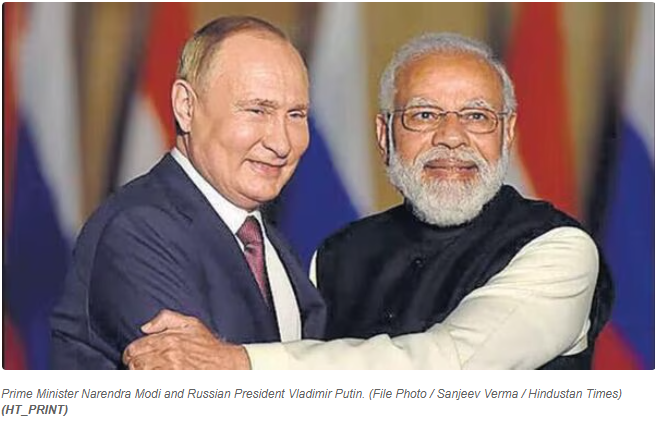
In October 2025, India’s Hindustan Aeronautics Limited (HAL) signed a memorandum of understanding with Russia’s United Aircraft Corporation to co‑produce the SJ‑100, a regional jet branded by Moscow as “sanctions‑proof.” The partnership could eventually see the aircraft manufactured in India, a move aimed at tapping into South Asia’s fast‑growing aviation market.
Russia’s Deputy Prime Minister Vitaly Savelyev has cast the SJ‑100 as the centrepiece of a broader effort to insulate the country’s civil aviation sector from Western restrictions. “No problems,” he declared, insisting that Russia can maintain its fleet with domestically produced parts.
His remarks, shared widely on social media by Sputnik India on 19 November 2025, underscored Moscow’s determination to sever reliance on foreign suppliers after sweeping sanctions were imposed following the 2022 invasion of Ukraine.
The SJ‑100 is a rebranded successor to the Sukhoi Superjet 100, which debuted in 2008 as a joint project with Western firms such as Alenia Aermacchi and Safran. That aircraft depended heavily on imported technology, particularly the Franco‑Russian SaM146 engine. Sanctions cut off access to those suppliers, forcing a redesign under the United Aircraft Corporation. By early 2025, Russia’s PD‑8 engines—developed as a domestic replacement—were delivered for testing.
Progress has been steady, though marked by important milestones and ongoing refinement. In June 2025, an experimental SJ‑100 equipped with PD‑8 engines completed a 6,000‑kilometer flight from Komsomolsk‑on‑Amur to Zhukovsky near Moscow, a demonstration of range and reliability. The aircraft’s maiden flight in its fully domestic configuration followed in September, a symbolic milestone for an industry battered by the loss of more than 76 leased planes to sanctions. Production targets are being recalibrated, with officials emphasizing that the groundwork for 109 import‑substituted aircraft by early 2025 has laid a strong foundation for future deliveries. The PD‑8 engine itself has drawn scepticism. Russian engineers highlight gains in fuel efficiency, with the PD‑8 offering a streamlined design that eliminates the need for a gearbox, positioning it as a modern alternative to Western turbofan engines.
The SJ‑100 partnership is gaining renewed attention during President Vladimir Putin’s state visit to New Delhi on 4–5 December 2025, where the aircraft is being highlighted as part of the broader India–Russia agenda on trade, defence, and technology cooperation. Kremlin officials frame the project as a symbol of “sanctions‑proof” industrial collaboration, while Indian counterparts emphasize its alignment with New Delhi’s push for indigenous aviation capabilities. In an exclusive interview with India Today ahead of the visit, Putin also reaffirmed Russia’s commitment to the S‑400 missile defence deal, stressed the importance of ruble‑rupee trade settlement, and pointed to energy cooperation—including oil, gas, and nuclear—as pillars of the partnership. Together, these initiatives underscore the breadth of the India–Russia relationship, with the SJ‑100 serving as a flagship of industrial collaboration alongside defence and energy projects.
Although not a headline defence deal, the SJ‑100 will be showcased alongside announcements on energy and currency‑settlement mechanisms, reinforcing Moscow’s eastward trade shift and India’s balancing act between Western scrutiny and strategic ties with Russia.
Industry sources suggested that assembly lines in India could be operational by 2027, with the project presented as a flagship of the “Special and Privileged Strategic Partnership.”
The PD‑8 engine stands out as a remarkable achievement, developed in just six years as a direct substitute for the SaM146. Engineers highlight a three percent improvement in fuel efficiency along with compliance with modern environmental standards.
The SJ‑100’s rollout underscores Russia’s narrative of resilience under sanctions. Forecasts of a double‑digit economic contraction after 2022 proved wrong. Instead, GDP grew by 3.6 percent in 2023 and more than 4 percent in 2024.
This momentum has been supported by strong investment in strategic sectors, with military‑industrial output contributing more than 7 percent of GDP. Trade has successfully pivoted eastward, with India and China emerging as critical partners and opening new markets for energy, technology, and aviation.
Economists acknowledge ongoing challenges but also highlight opportunities: labour shortages are driving innovation in automation, inflation is being managed through tighter monetary policy, and parallel import schemes have kept supply chains functioning. The National Wealth Fund, though drawn down, continues to provide a buffer for strategic investment.
Russia’s civilian economy is evolving into a model of self‑reliance. Short‑term growth has been achieved while laying the groundwork for long‑term diversification, with projects like the SJ‑100 symbolizing the country’s determination to build domestic capacity and strengthen partnerships across Asia.