 News Desk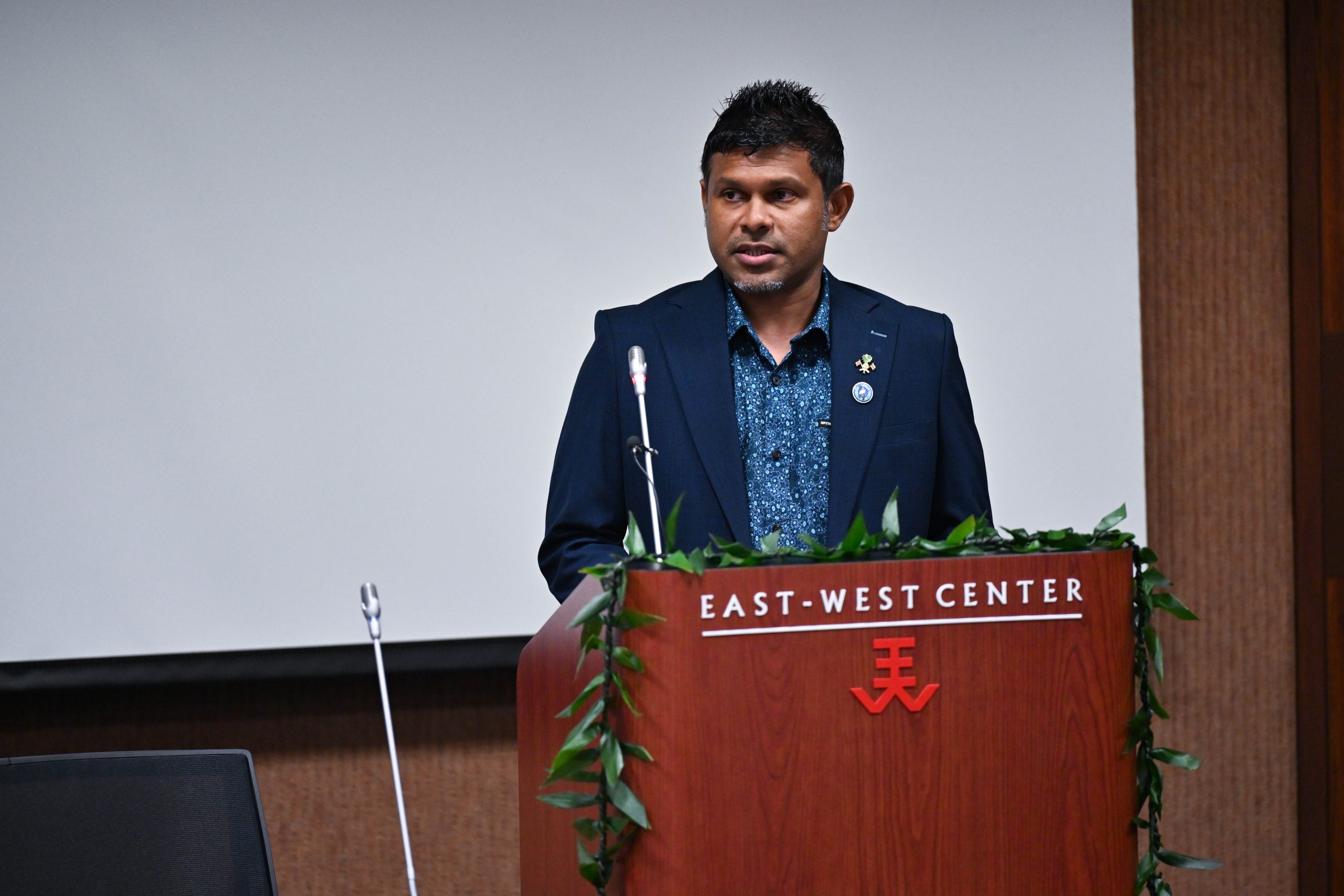
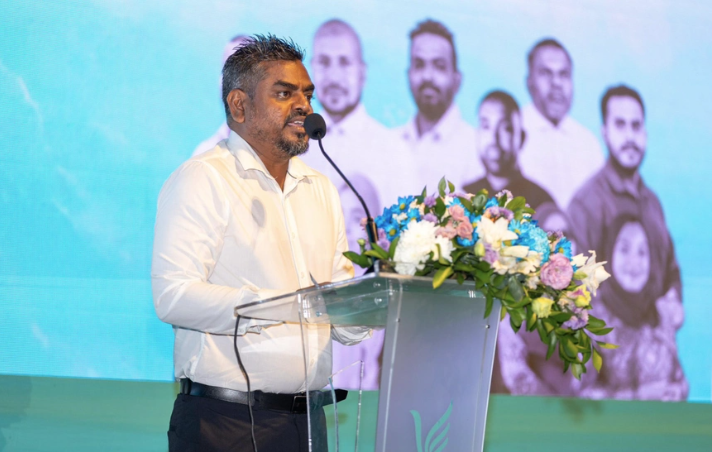
HONOLULU — In a powerful address at the opening ceremony of the Blue Planet Alliance Fellowship Programme on May 19, 2025, Vice President Hussain Mohamed Latheef underscored the existential threat climate change poses to small island nations, calling for innovative solutions and global collaboration. Speaking to a diverse audience of policy experts, utility executives, community organizers, and climate advocates, he emphasized the urgent need for bold action to safeguard vulnerable island communities.
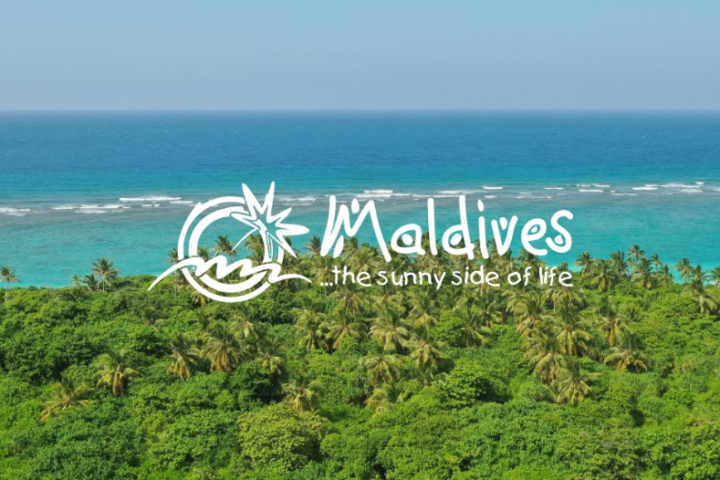
“For us, climate change is not a distant threat but a lived reality,” VP Latheef said, highlighting the intensifying storm surges, coastal erosion, and rising sea levels already reshaping the Maldives’ turquoise waters and coral reefs—vital to its economy and culture. Representing one of the world’s most climate-vulnerable nations, he described the Maldives’ small size, dispersed geography, and limited economic base as unique challenges that demand resilience and ingenuity.
The Blue Planet Alliance Fellowship Programme, hosted in Hawaii, serves as a platform for island nations to share experiences, foster innovation, and amplify their collective voice on the global stage.
VP Latheef praised the initiative as “more than just a programme” but a beacon of collaboration and hope for those on the frontlines of the climate crisis. He urged fellows to prioritize innovative policies and financing alongside technological advancements, noting their potential to influence national policies and global dialogues.
The Maldives has reaffirmed its climate leadership through its Third Nationally Determined Contribution, setting ambitious targets to reduce greenhouse gas emissions, build resilience, and drive sustainable growth. Central to these efforts is the country’s Energy Roadmap 2024-2033, which aims to generate 33% of electricity from renewable sources by 2028. This reflects President Dr. Mohammed Muizzu’s commitment to prioritizing energy transition and reducing reliance on fossil fuels, despite challenges like limited land and financial resources.
On May 21, VP Latheef met with Gwen Yamamoto-Lau, Executive Director of the Hawaii Green Infrastructure Authority (HGIA), to discuss shared challenges and innovative financing models for renewable energy. The HGIA, Hawaii’s pioneering green bank, has leveraged public-private partnerships and inclusive financial tools, such as on-bill financing, to accelerate the state’s transition to 100% renewable energy. These mechanisms allow consumers to repay renewable energy investments through utility bills, bridging gaps between public initiatives and private investment—a model VP Latheef identified as critical for the Maldives’ renewable energy goals.
“Hawaii’s journey offers valuable lessons for small island states like ours,” VP Latheef said, expressing interest in adapting HGIA’s equitable financing approaches to overcome the Maldives’ geographical and economic constraints. The discussions underscored the shared vulnerabilities of island nations and the transformative potential of green financing in addressing climate impacts.
As small island developing states (SIDS) face mounting climate pressures, VP Latheef’s engagements in Hawaii signal a growing momentum for collaborative solutions. The Blue Planet Alliance Fellowship and partnerships like those with HGIA could pave the way for scalable, equitable strategies to ensure a sustainable future for island communities worldwide.