 News Desk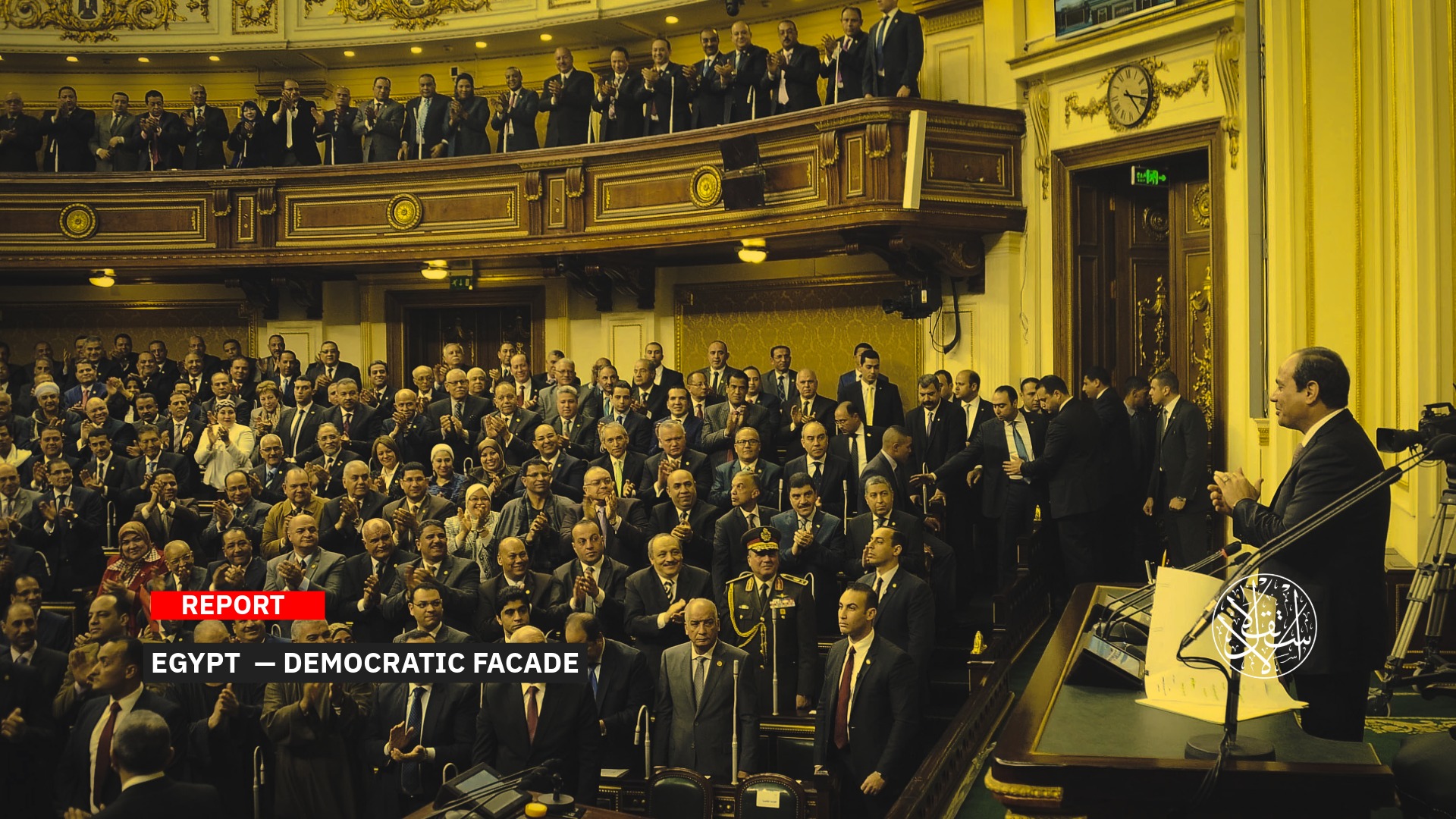
CAIRO — In Naguib Mahfouz’s The Cairo Trilogy, a patriarch’s iron grip over his family mirrors the state’s chokehold on a nation’s spirit, where dissent is smothered before it can breathe. On May 21, 2025, Egypt’s parliament, a stage for President Abdel Fattah el-Sisi’s loyalists, passed an election law that enacts this same suffocation. With gerrymandered districts and byzantine quotas that block opposition voices, the law crafts a legislature destined to applaud the regime’s every decree. In Mahfouz’s Egypt, the people yearned for freedom; in el-Sisi’s, they are handed a script to cheer, as democracy slips into a silent, numb abyss.
Crafted under the leadership of the pro-government Future of the Nation Party, the law imposes a system of absolute closed lists, requiring candidate slates to meet intricate quotas for Christians, workers, farmers, youth, people with disabilities, Egyptians abroad, and women. These rules, while dressed up as inclusive, are a trap. Small opposition parties, already crippled by limited resources, cannot muster the organizational muscle to comply, while regime-backed factions, flush with state support and political money, glide through. As Mohamed Torky of the Conservative Party told Al-Manssa, the law “kills competitiveness,” ensuring a parliament tailored to el-Sisi’s vision, with no room for genuine dissent.
The law’s redistricting further tilts the scales. Electoral constituencies, redrawn using dubious demographic data, allocate seats unevenly—some districts with half a million voters get just two seats, while smaller ones receive four. This gerrymandering, billed as a “scientific” adjustment, entrenches the ruling elite’s dominance. The Democratic Civil Movement, a coalition of opposition parties, condemned the law as a “winner-takes-all” system that “wastes voters’ voices” and enshrines a “monopoly mentality.”
Egypt’s democratic façade has been crumbling for years. The 2014 constitution, enacted post-coup, promised pluralism but delivered parliaments that function as extensions of the executive. The 2015 and 2020 elections produced legislatures with barely a whisper of opposition. In 2023, el-Sisi’s call for a “national dialogue” raised fleeting hopes of reform, but the process stalled, leaving the regime to cherry-pick its preferred outcome: a law that cements control. The result is a parliament not of representatives but of cheerleaders, applauding a president whose grip on power grows ever tighter.
This is not just a local tragedy—it’s a warning. As journalist Mohamed Youssef told local media, the law turns parliament into a “mono-voiced chamber,” echoing the one-party systems of Egypt’s past. Globally, democracies thrive on coalition-building and open competition. In Egypt, the ballot box is a stage-managed prop, its outcomes preordained. Youssef’s question lingers: if the goal is a legislature that merely salutes the president, why hold elections at all? When every hand claps for the regime, democracy doesn’t just falter—it goes numb, leaving a nation silenced and a region’s democratic hopes dimmer still.