News Desk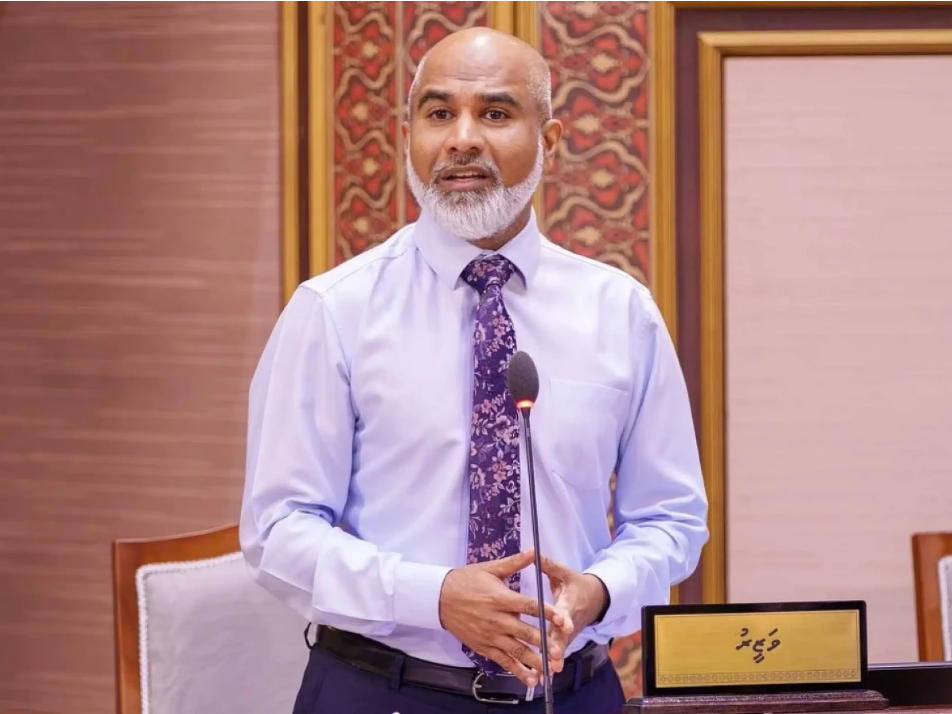
MALÉ, — In the capital of the Maldives, institutional memory tends to vanish alongside its concrete.
For decades, residents here have watched public landmarks put up with great fanfare, only to decay rapidly and face the wrecking ball long before their time. The Educational Development Centre (EDC) The Salaahudeen building, the old Jamaludeen School, the Science Education Centre (SEC), Arabiya School and the Institute for Teacher Education—all built using scarce state revenue or foreign grants—have either been demolished or sit in advanced states of structural failure.
The pattern is stark: while privately financed towers in Malé climb many storeys high and withstand the brutal, salt-laden tropical air, structures built under the purview of the Ministry of Education routinely crumble. For a generation, successive governments treated this structural premature aging as an unexamined cost of doing business. Nobody asked why public concrete rots faster than private concrete. It was simply taken for granted.
That changed on Tuesday in the People’s Majlis, when the Minister of Education and Higher Education, Dr Ismail Shafeeu, explicitly acknowledged the phenomenon, triggering a debate over whether the state is finally addressing a long-ignored engineering crisis or merely playing politics.
Answering questions from lawmakers, Dr Shafeeu admitted that while school infrastructure projects across the atolls are plagued by delays, the government’s primary focus has shifted from speed to structural survival.
“The most important priority for us is that the buildings we construct do not deteriorate rapidly,” Dr Shafeeu said. He pointed directly to past negligence, noting that several relatively young schools have already had to be pulled down and rebuilt from scratch.
His prime exhibit was the Arabiya School building in Malé. Constructed in 2010 during the first Maldivian Democratic Party (MDP) administration, the multi-storey facility developed massive structural cracks and was declared unsafe just a decade after completion, forcing an emergency evacuation of students.
“You all know what happened to the Arabiya building,” the Minister said, attributing its failure to a total lack of project supervision during the construction phase. “The President’s instruction has always been that when we spend the public’s money, we must guarantee proper quality.”
The statement has split local observers. On one hand, Dr Shafeeu’s critique identifies a real, documented failure in Maldivian public works. For years, government contracts were awarded through opaque bidding processes to poorly supervised subcontractors, resulting in shoddy concrete mixes, inadequate steel reinforcement, and virtually non-existent routine maintenance.
On the other hand, the political utility of his statement is unmistakable. By specifically isolating the 2010 Arabiya project, Dr Shafeeu targeted the current opposition’s historical record while deflecting frustration over his own ministry’s slow pace in delivering new school buildings in the islands.
Infrastructure in the Maldives has always been the primary currency of political campaigns. By framing project delays not as bureaucratic inefficiency but as a deliberate choice to ensure quality, the current administration is attempting to turn a vulnerability into a virtue.
Whether Dr Shafeeu’s remarks signal a genuine overhaul of state engineering standards or merely a convenient shield against parliamentary pressure remains to be seen. But for Malé’s residents, accustomed to the sight of scaffolding and premature ruins, the diagnosis itself is a rare admission: the state’s buildings are failing, and the public is paying for them twice.