News Desk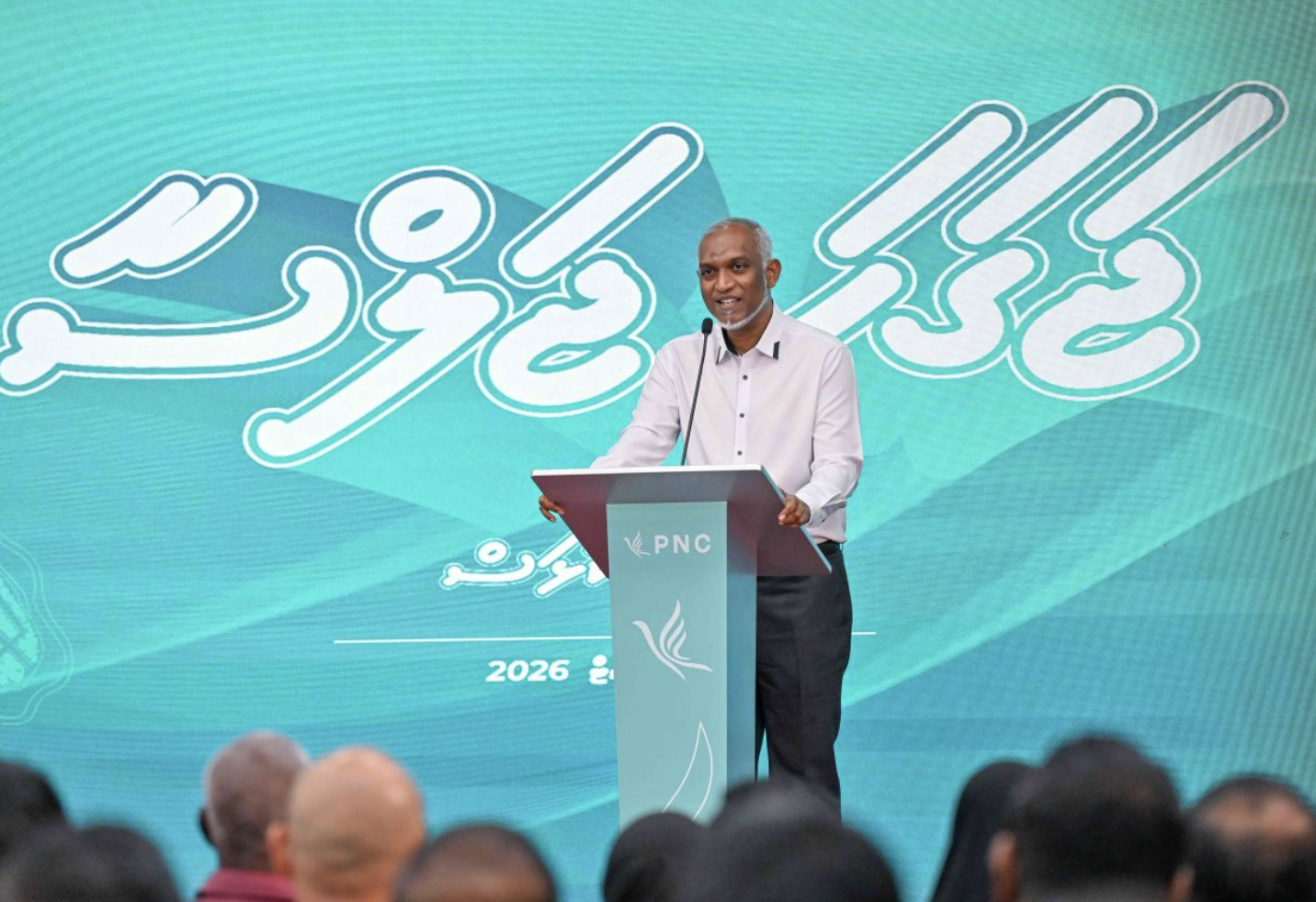
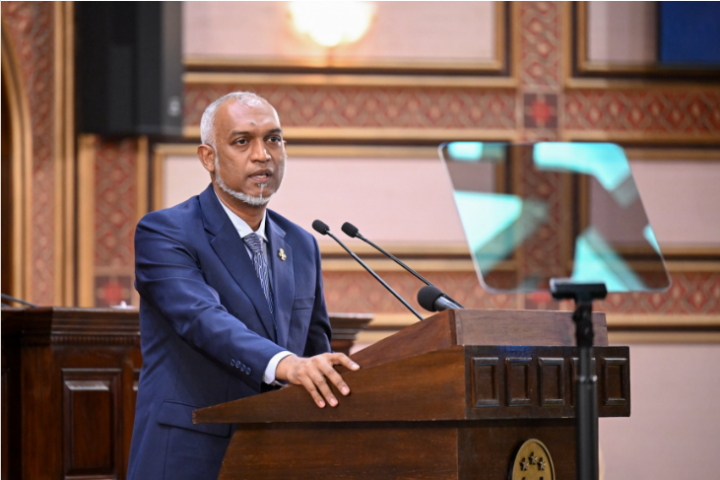
UKULHAS — Long regarded as a formidable stronghold of the Maldivian Democratic Party (MDP), this low-lying island in Alif Alif Atoll played host on Wednesday to a formidable projection of political realignment. While President Dr Mohamed Muizzu’s official itinerary centered on delivering a keynote address at a conference for auditors of Small Island Developing States (SIDS), the ruling People’s National Congress (PNC) converted the evening hours into a high-octane campaign rally.
The event underscored a concerted push by the administration to cement its footprint in traditional opposition territory, spearheaded locally by Sports and Youth Minister Abdulla Rafiu, whose rising political capital has earned him the president’s full confidence.
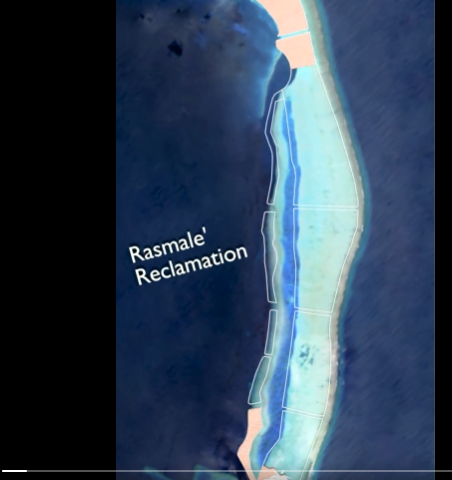
Yet, beyond local infrastructure pledges—including a commitment to expand land reclamation and fast-track coastal protection—the podium served as a platform for an uncompromising ideological offensive against both the opposition and former political allies.
The Rhetoric of National Sovereignty and State Consolidation
Addressing the gathering, President Muizzu framed his administration’s trajectory around the pursuit of enduring stability and structural reform, casting the PNC’s governance as an exercise in prioritizing national interest over political expediency.
“If citizens prioritize national interests, there will be no room in the Maldives for ideologies that seek to destabilize and destroy the nation,” Muizzu stated, emphasizing that his administration aims to dismantle cycles of political retaliation. He cautioned the public to remain vigilant against economic and security vulnerabilities inherited from past administrations, arguing that sustainable development requires difficult, often unpopular decisions.
Echoing this sentiment, Fisheries Minister Ahmed Siyam launched a sharp critique of the opposition’s handling of the economy, dismissing opposition concerns over foreign exchange rates as disingenuous. Siyam placed the onus of the country’s past monetary expansion squarely on the 19th Parliament, noting that the suspension of the Fiscal Responsibility Act and the mass printing of currency during the COVID-19 pandemic occurred under the stewardship of former Speaker Mohamed Nasheed.
This may mark the first time former President Nasheed has been directly implicated by senior ruling party figures in the controversial currency-printing saga of the previous administration. Nasheed is increasingly finding himself in the crosshairs of the PNC’s rhetorical salvos following his assumption of the chairmanship of the MDP.
Direct Salvos and the Fracturing of Past Alliances
The most politically explosive moments of the evening, however, involved direct attacks on former President Abdullah Yameen, signaling a definitive severance of past political partnerships. Speaker of Parliament Abdul Raheem Abdulla launched a scathing critique of Yameen’s tenure, contrasting the current administration’s judicial independence with what he characterized as the systematic imprisonment of political rivals during Yameen’s presidency.
A striking irony hung over the proceedings as Abdul Raheem delivered his critique: during Yameen’s presidency, Abdul Raheem was a fixture on the podiums, staunchly defending and cheering on the administration’s most heavy-handed actions against the judiciary, or occupying the front-row premium seat to applaud them.
“When we came to power, anyone who might have run for office was in jail,” Abdul Raheem remarked, asserting that President Muizzu has not detained a single political opponent since taking office. He further targeted figures aligned with Yameen’s inner circle, including former officials Dr. Mohamed Jameel Ahmed and Mohamed Maleeh Jamal, questioning their credibility in critiquing current governance.
The narrative was amplified by MP Ibrahim Shujau, who sought to reframe the structural legacy of Yameen’s administration. Shujau asserted that the substantive architectural and infrastructural achievements attributed to Yameen were driven primarily by then-Housing Minister Muizzu, while pointing out that Yameen was busy playing cards.
Strategic Implications
Wednesday’s rally on Ukulhas illustrates the PNC’s aggressive strategy to consolidate electoral gains outside traditional power centers ahead of the 2028 cycle. By fusing announcements of targeted local development projects with a unified rhetorical campaign that brands the opposition as economically reckless and ideologically destructive, the ruling party is seeking to institutionalize its dominance in regions long viewed as impregnable to outside political forces.