News Desk
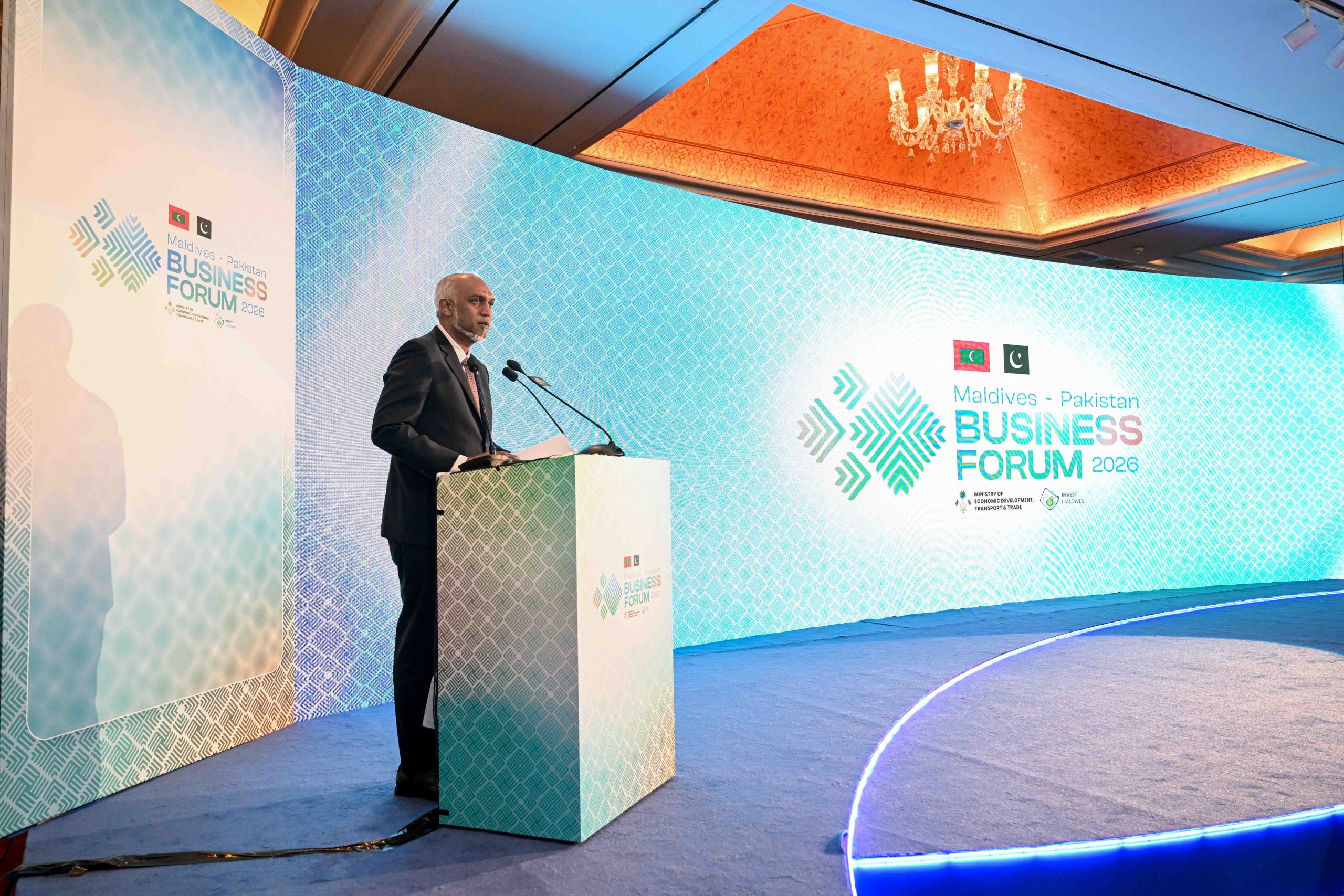
For decades, foreign policy in the Indian Ocean Region was widely analysed through a binary framework, wherein small island nations were viewed as either aligning with a dominant regional power or maintaining strict non-alignment. However, recent shifts across South Asian archipelagos highlight an increasing emphasis on multi-vector engagement aimed at diversifying commercial and diplomatic ties. The Muizzu administration’s current approach reflects this trend, seeking to leverage broader economic partnerships to mitigate external supply and fiscal vulnerabilities.
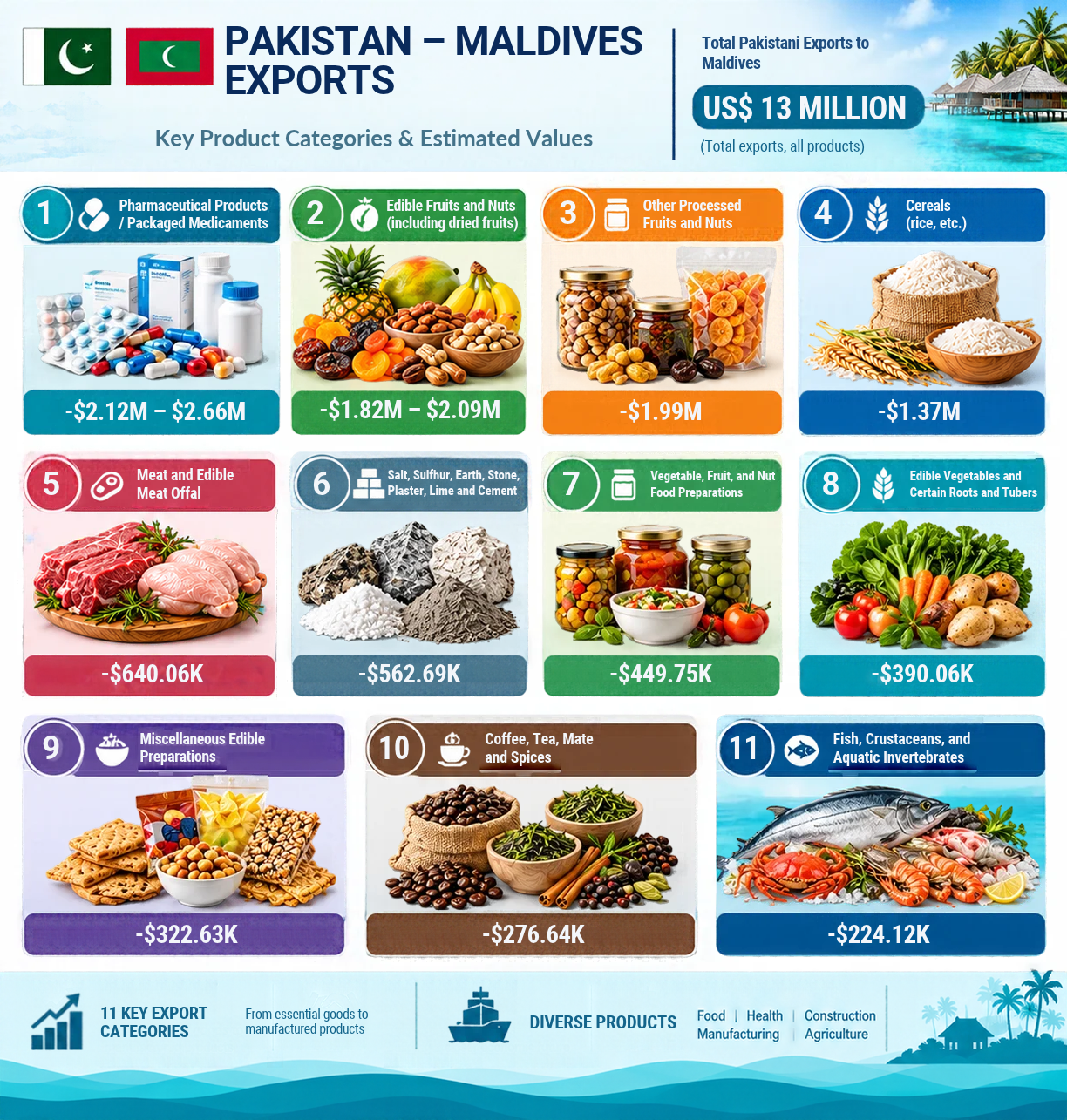
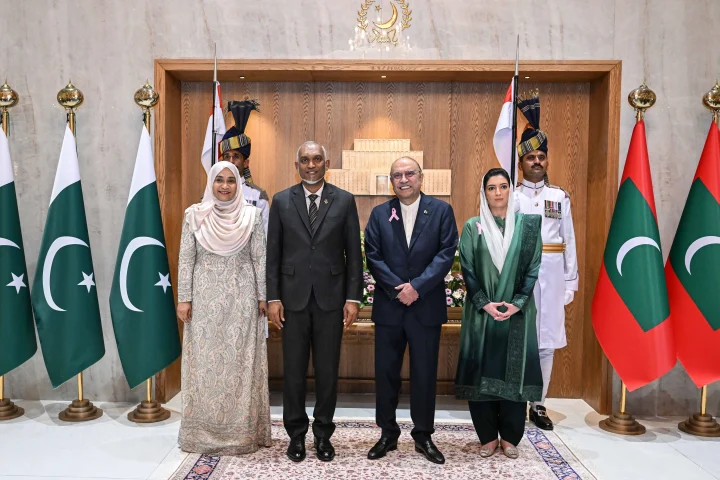
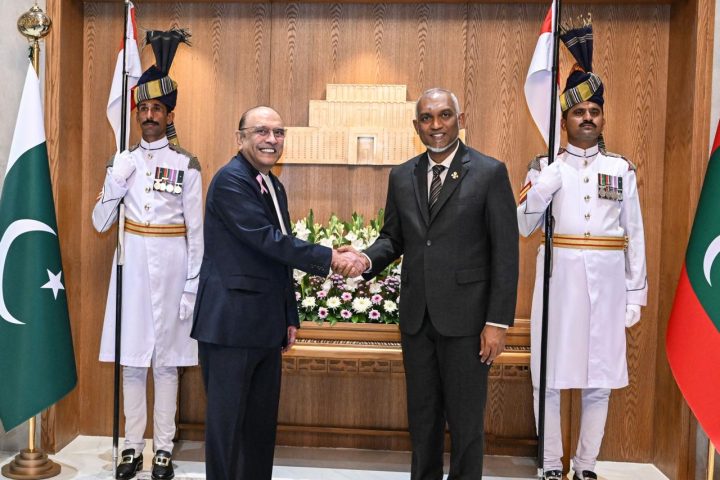
Nowhere is this shift clearer than in Malé. When Maldivian President Dr Mohamed Muizzu addressed business leaders in Islamabad on 22 October 2026, the backdrop was steeped in six decades of shared Islamic heritage and political solidarity. But beneath the familiar fraternal rhetoric lay a calculated economic imperative: elevating bilateral trade with Pakistan from a negligible baseline of roughly $13 million to $200 million within two years.
This ambitious target is not merely an exercise in summitry. It reflects a deliberate strategy by the Muizzu administration to operationalize its “Maldives First” doctrine. Facing volatile commodity markets, heavy fuel import burdens, and shifting regional dynamics, the Maldives is using trade diversification to construct economic insulation. For regional and global partners, Malé’s engagement in Islamabad underscores how island nations in critical maritime corridors are actively broadening economic cooperation to safeguard national growth.
To understand Malé’s strategic calculus, one must look past geopolitical posture to the structural vulnerabilities of an island economy. The Maldives imports nearly all of its essential goods, making supply chain disruptions an immediate threat to national stability. In Islamabad, President Muizzu explicitly reclassified food security from a commercial concern to a matter of national defence.
As President Muizzu emphasised during his address:
“For the Maldives, food security is not merely a commercial consideration. As an island nation, resilient supply chains are a matter of national security.”
To address this vulnerability, the administration called for joint ventures in cold-chain logistics, temperature-controlled storage, and climate-adaptive agriculture, moving beyond mere bilateral trade to deep supply-chain integration:
“Pakistan’s agricultural sector already serves our market. But we should move beyond a conventional buyer-and-seller relationship. We welcome partnerships in cold-chain logistics, temperature-controlled storage, modern food processing and climate-adaptive agricultural technology.”
At the same time, the administration is confronting an unsustainable fiscal drain: the import of foreign diesel to power island energy grids. By reaffirming a target to derive 33 per cent of national electricity from renewable sources by 2028—a quadrupling of current capacity—Malé is framing the green energy transition not as an environmental luxury, but as a fiscal necessity to preserve foreign exchange reserves.
Highlighting the renewable energy transition at a foreign business forum in Pakistan serves several deliberate strategic, fiscal, and diplomatic purposes:
- Attracting Capital Beyond Conventional Energy Firms: By reframing clean energy from an environmental cause to an “economic and fiscal necessity,” President Muizzu signaled to international markets that renewable projects in the Maldives are backed by state urgency and sovereign priority. In Pakistan, this appeals directly to independent power producers, engineering procurement firms, solar/wind developers, and resort-scale commercial operators seeking reliable high-return yields through off-grid hybrid systems.
- Leveraging Industrial Equipment and Expertise: Rather than seeking state-level financial bailouts, the invitation targets Pakistan’s private manufacturing base for electrical equipment (cables, transformers, switchgear) and experienced green energy developers—drawing on regional engineering expertise and private-sector solar and wind developers to supply cost-effective micro-grid infrastructure and technical equipment.
- Positioning the Maldives for Islamic Green Finance (Sukuk): Developing renewable infrastructure requires significant capital. By raising clean energy alongside Islamic finance, President Muizzu invited Pakistani financial institutions and Shariah-compliant funds to collaborate on Green Sukuk (Islamic green bonds) and structured micro-grid financing.
- Mitigating Shared Foreign Exchange Strain: Both the Maldives and Pakistan face severe macroeconomic pressures from foreign oil imports. By explicitly stating that fuel imports drain “hundreds of millions of dollars each year,” President Muizzu established common ground with Pakistani business leaders, demonstrating how curbing diesel imports protects currency stability and guarantees the long-term repatriation of profits for foreign investors.
- Signaling Policy Stability for FDI: Publicly recommitting to the 33 per cent target before a foreign head of state offers institutional guarantees to private developers that Maldivian power purchase agreements and green investment frameworks will remain protected across political cycles.
Crucially, the Maldivies is seeking to overcome the demographic constraints of its domestic market. By pitching foreign investors on an integrated consumer base—combining 500,000 residents with two million annual high-spending international tourists—Malé is recasting itself as a premium consumer gateway rather than a micro-market.
The Limits of Transactionalism: The Karachi vs. Dubai Dilemma
Yet translating diplomatic intent into commercial reality faces formidable operational hurdles. Historically, bilateral trade between Pakistan and the Maldives has stalled due to high freight costs, foreign exchange constraints in both capitals, and missing direct transport corridors.
Geographically, Karachi holds a decisive advantage over conventional Middle Eastern hubs:
- Distance & Time Metrics: Karachi sits at roughly 2,434 km (1,314 nautical miles) from Malé, compared to Dubai’s 3,038 km (1,640 nautical miles). A direct flight to Karachi takes roughly 3 hours and 15 minutes (saving a full hour over Dubai), while a direct sea voyage at 14 knots takes 3.9 days from Karachi versus 4.9 days from Jebel Ali.
- Direct Sourcing vs. Re-export Markup: While Dubai operates as a high-cost re-exporter, Pakistan is a primary producer of agricultural produce, pharmaceuticals, and construction materials. Direct sourcing minimizes intermediate trading markups, reduces spoilage for perishable fresh goods, and eliminates circuitous 12-hour transit flights for business travel.
Despite these geographic realities, geography alone does not create trade. Dubai continues to dominate Maldivian supply chains due to its massive shipping feeder networks and daily wide-body aviation density. Karachi has historically lacked dedicated liner services running fixed schedules and frequent cargo flights.
Without guaranteed, scheduled transport lines, Maldivian importers default to Dubai despite the longer distance and higher unit costs. The planned launch of direct flights between Malé and Karachi by national carrier Maldivian, alongside calls for direct maritime trade routes, represents a direct effort to unlock this natural geographic proximity.
The Anatomy of Strategic Risk in Multi-Vector Diplomacy
While a multi-vector foreign policy offers small states strategic flexibility and reduced single-source dependence, it introduces structural vulnerabilities that require delicate statecraft to navigate. For the Maldives, pivoting simultaneously toward Islamabad, Beijing, and Ankara while managing relations with traditional security partners in New Delhi and Washington is fraught with diplomatic hazards.
- The Peril of Zero-Sum Regional Interpretations: In the Indian Ocean Region, commercial and economic diversification initiatives inevitably intersect with broader regional maritime security frameworks. Ensuring that commercial partnerships remain transparent and distinct from defense architecture is essential for maintaining regional equilibrium. The risk for Malé is that routine trade diversification prompts economic friction, informal trade friction, or diplomatic hesitation from traditional development partners.
- The Asymmetry of Emergency Capital vs. Commercial Pledges: Multi-alignment functions effectively during stable economic periods. However, during macroeconomic crises, commercial MOUs signed at business forums offer long-term promises but zero immediate liquidity. During macroeconomic adjustments or liquidity squeezes, commercial memoranda offer long-term development prospects, whereas immediate foreign exchange stability relies on sovereign bilateral support mechanisms, such as central bank currency swaps and credit lines.
- Institutional Strain and Bureaucratic Absorption Capacities: Multi-alignment is administratively expensive. Managing simultaneous, highly technical bilateral frameworks across multiple capitals frequently causes “institutional overreach.” When a small civil service attempts to negotiate maritime corridors with Pakistan, implement free trade agreements with China, and maintain regional security arrangements simultaneously, the administration risks implementation bottlenecks, unfulfilled promises, and diplomatic fatigue among partners.
- The Entanglement of Domestic Politics and Foreign Policy: In small democracies, foreign policy vectors are frequently politicised across electoral cycles. Sudden shifts between “India First,” “China-leaning,” or broader Islamic solidarity frameworks create sovereign risk for international investors. Foreign firms investing in long-term infrastructure—such as renewable energy grids or pharmaceutical supply chains—require regulatory predictability across decades, not just five-year presidential terms.
The Diplomatic Imperative
For President Muizzu’s administration, the central challenge of its “Maldives First” doctrine is ensuring that diversification does not morph into alienation. To successfully maintain a multi-vector stance without provoking regional friction, Maldivian statecraft must adhere to three core principles:
- Strict Transparency: Maintaining clear, open communication channels with traditional security partners to reassure them that commercial ties with nations like Pakistan or China do not compromise regional maritime security agreements.
- Decoupling Commerce from Security: Ensuring that economic partnerships remain strictly commercial, avoiding military or intelligence entanglements that could disrupt the regional balance of power.
- Execution over Ambition: Focusing civil service energy on delivering a few high-impact, operationally viable corridors—such as the direct Malé–Karachi air route—rather than signing dozens of non-binding memoranda that strain state capacity.
Multi-alignment is not merely the act of opening new doors; it is the art of ensuring that opening a new door in one capital does not cause a critical door to be slammed shut in another.
The New Indian Ocean Realism
The proceedings in Islamabad offer a wider lesson for contemporary statecraft. The traditional playbook of international diplomacy—relying on historical goodwill, shared identity, or ideological affinity—is losing its potency among middle and small states.
As President Muizzu remarked during his address:
“A mature economic partnership is not defined merely by what one country can sell to another. It is defined by what we can build, scale, and achieve together.”
For major powers competing for influence in the Indian Ocean, the implication is straightforward: enduring influence will not be bought with diplomatic platitudes, but earned through tangible economic infrastructure, supply chain integration, and market access. Malé has made its terms clear. The rest of the region will have to adjust accordingly.