News Desk
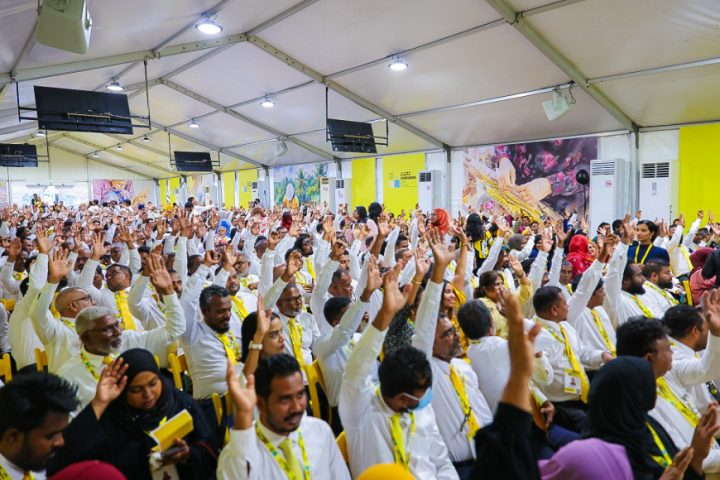
Inside the legislative chamber of the People’s Majlis on 27 October, the official agenda was a technical amendment to the Tax Administration Act. The proposed measure, introduced by Funadhoo MP Mohamed Mamdhooh of the ruling People’s National Congress (PNC), would require businesses appealing an assessment by the Maldives Inland Revenue Authority (MIRA) to first deposit 50 per cent of the disputed sum at the Tax Appeal Tribunal.
However, as opposition lawmakers highlighted local shortages of essential medicines and warned against legislative instability, the debate expanded into a broader confrontation over state spending, patronage, corruption, and public trust.
Intervening from the chair, the Speaker of the People’s Majlis and Chairperson of the PNC, Abdul Raheem Abdulla, offered a vigorous defense of the administration of President Dr Mohamed Muizzu.
“Different people do different things,” Abdul Raheem told the chamber. “What some people do is line their own pockets and enrich their own companies. What [others] are doing is saving and getting the economy back on its feet after the country was bankrupted by those who sought personal enrichment.”
He added that tax revenues were being deployed to stabilize a nation left insolvent by former leaders: “Because those funds were spent in that direction, we got a nation today that is safe and intact.”
Yet a factual examination of the Speaker’s claims—alongside his own political trajectory and the Maldives’ historical performance on corruption indices—presents a far more complex picture of systemic governance challenges across successive regimes.
Fact-Checking the Speaker’s Defense
Claim 1: “The current administration is saving an economy bankrupted by predecessors who enriched themselves.”
- The Reality: While past administrations accrued substantial public debt through state-owned enterprise (SOE) mismanagement, the practice of utilizing public institutions and SOEs for political financing and off-budget expenditures has persisted across political lines.
- The Record: Opposition MPs Mohamed Ibrahim (Kudoo) and Hussain Ziyad (Fittey), both from the Maldivian Democratic Party (MDP), argued during the session that despite rising tax extraction, everyday citizens face acute shortages of basic necessities, including essential medicines under the state health scheme. Rather than an immediate structural turnaround, observers note that state enterprise reform remains stagnant.
Claim 2: “Tax dollars are being spent transparently to repair state finances.”
- The Reality: Civil society organizations, including Transparency Maldives, point out that state procurement systems remain vulnerable to non-competitive bidding and executive influence.
- The Record: On Transparency International’s Corruption Perceptions Index (CPI), the Maldives recorded a score of 38 in 2024 and 39 in 2025 (out of 100, where 0 is highly corrupt). This places the country consistently below the global average (~43), indicating that institutional safeguards and procurement transparency have yet to show measurable improvement.
Scrutiny Over Personal Wealth and Political Feuds
While Speaker Abdul Raheem positions himself as a champion of public integrity against past excess, his own financial standing has drawn public allegations from his former political mentor, former President Abdulla Yameen Abdul Gayoom.
Once key allies within the Progressive Party of Maldives (PPM), the two broke ranks following political realignments. Speaking at public gatherings organized by his party, the People’s National Front (PNF), Yameen openly questioned the origins of Abdul Raheem’s private wealth:
“Having wealth may allow someone to win an election and secure a seat in Majlis… [He] exploited his influence for illicit gain,” Yameen claimed, pointing specifically to the acquisition of high-end real estate, including luxury Rehendhi flats in Malé, during and after his tenure in office.
In response, Abdul Raheem turned the accusation back on the former president during PNC gatherings, citing the grand corruption scandals that marked Yameen’s presidency:
“It ended because justice was not established. It ended because of cruelty. It ended because of fraudulence. It ended because the wealth of the nation was misappropriated and gulped down,” Abdul Raheem—who occupied the front row in Yameen’s rallies where his many outbursts went public during the state of emergency—said. “The debt this government is paying off was not taken by us… We paid off the debt that President Yameen, Ibrahim Mohamed Solih, and others took.”
Historical Context: Corruption Across Presidential Eras
The debate over political self-enrichment sits atop a five-decade record of financial scandals involving State-Owned Enterprises (SOEs):
Maumoon Abdul Gayoom (1978–2008)
-
- FPID Scandal (1990): The Fisheries Projects Implementation Department under STO saw millions of dollars embezzled. Key figures were later acquitted, and the entity was dissolved in 1993, with duties shifted to MIFCO. Furthermore, key documents held by state institutions vanished. And those involved are highly respected in the society.
- Air Maldives Collapse (2000): Air Maldives, a venture initially established in partnership with the PLO, folded after accumulating $69.2 million in losses amid gross mismanagement.
- MNSL & Villingilivaru: Maldives National Shipping Limited sold Villingilivaru island in 1990 for tourism development without handing over the proceeds to the state. The company declared bankruptcy before the debts could be recovered.
Mohamed Nasheed (2008–2012)
-
- MNBC Uplink Loan: Out of a $3 million loan raised by the Maldives National Broadcasting Corporation for an uplink project, audit reports revealed only $127,000 (~15%) was spent on infrastructure, with 85% diverted to operational expenses and salaries.
- MECL Irregularities: Maldives Entertainment Company Limited was liquidated following severe accounting discrepancies between company expenditures and bank withdrawals.
Abdulla Yameen Abdul Gayoom (2013–2018)
-
- MMPRC Scandal: The largest embezzlement scheme in Maldivian history, where $79 million (~MVR 1.2 billion) in acquisition fees from leasing 59 islands and lagoons was siphoned through the state tourism board. Investigations confirmed 37 islands and 12 lagoons were leased fraudulently. Most funds remain unrecovered.
Ibrahim Mohamed Solih (2018–2023)
-
- Fenaka Corporation: Special audits showed Fenaka awarded MVR 2.2 billion in contracts between 2021 and 2023, with MVR 1.3 billion handed out without competitive bidding to politically connected figures.
- Road Development Corporation (RDC): Unexplained transfers totaling MVR 161 million were logged in 2022–2023, including MVR 14 million deposited directly into private personal accounts. RDC swung from an MVR 34 million profit in 2022 to a net loss of MVR 229 million by 2024.
Dr Mohamed Muizzu (2023–Present)
-
- SOE Mergers: Facing mounting SOE debt, President Muizzu announced plans to dissolve Fenaka and RDC, absorbing their functions into STELCO and MTCC. However, critics note that merging or shuttering entities without pursuing forensic financial tracing leaves past misdeeds unpunished.
- RasMalé Reclamation: Concerns and questions over the massive RasMalé land reclamation project and what followed loom on the horizon.
Performance on the Corruption Perceptions Index
A tracking of the Maldives on Transparency International’s CPI (where 100 is cleanest) illustrates how the country has fared across different administrations:
- Ibrahim Mohamed Solih (2018–2023): Recorded a score of 43 in 2020 following the enactment of whistleblower protections and mandatory asset disclosures, though the score tapered to 39 by the end of his term due to slow judicial prosecutions (Average: ~38.2).
- Dr Mohamed Muizzu (2023–Present): Has maintained a score around 38–39, remaining below the global average as civil society calls for stronger oversight over state-owned enterprises and procurement (Average: ~38.5).
- Abdulla Yameen (2013–2018): Re-entered the index in 2016 at 36, dropping to 31 by 2018 amid the fallout of the MMPRC scandal and centralized executive oversight (Average: ~33.3).
- Mohamed Nasheed (2008–2012): Recorded a score of 23 in 2010 during early democratic transition friction, institutional gridlock, and weak law enforcement (Average: ~25.2). Notably, President Nasheed should be credited for introducing the modern tax regime that Speaker Abdul Raheem was debating in the Majlis.
(Note: Dr Mohamed Waheed Hassan’s 2012–2013 tenure was omitted from the index by Transparency International due to insufficient data availability during the political transition).
The Cycle of Exploitation and International Standards
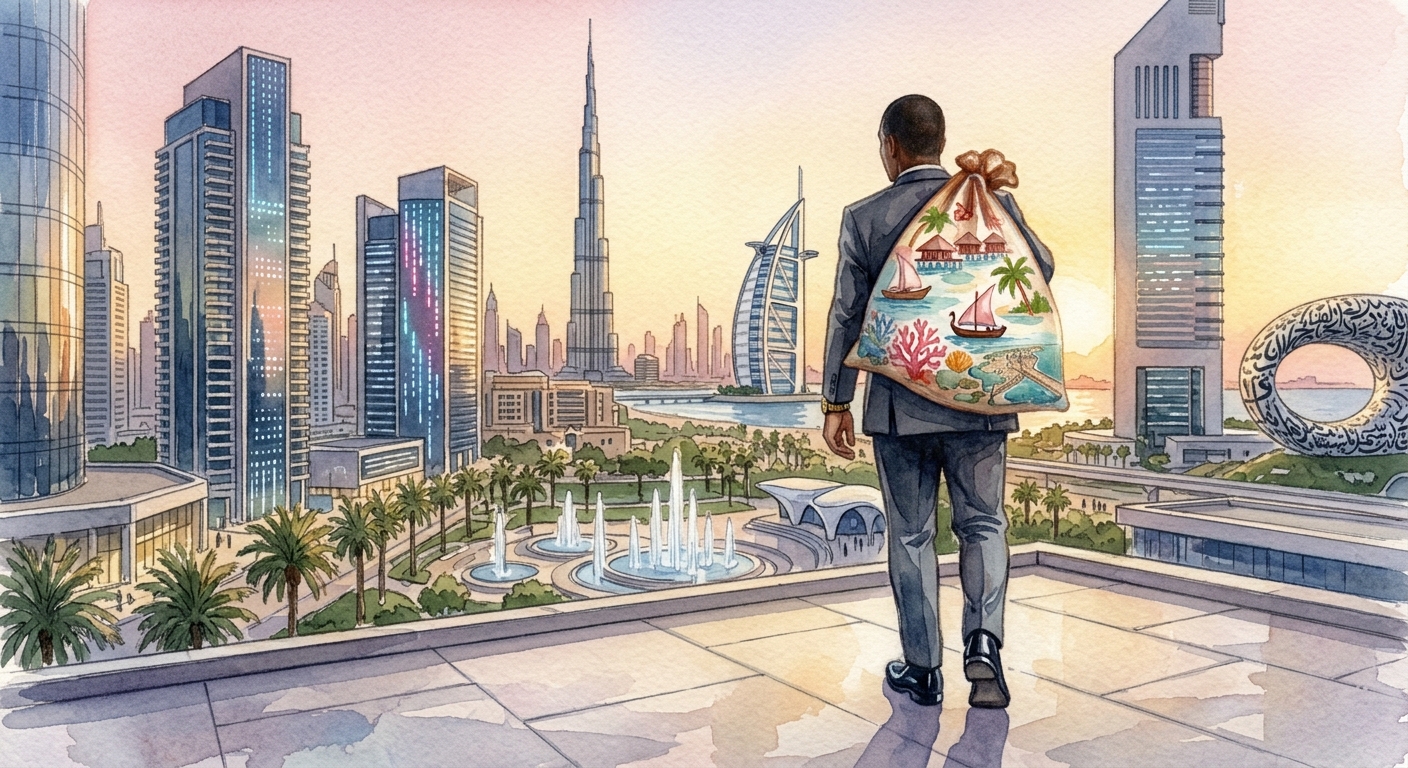
The practice of using public enterprises for political campaign financing—effectively putting public resources on sale during election cycles—continues to hamper structural reform in the Maldives and remains an ongoing menace for the country.
When SOEs accumulate unsustainable losses, governments routinely opt for corporate liquidation or mergers. While framed as fiscal consolidation, this approach transfers unpaid debts onto the state budget, leaving taxpayers to foot the bill while those who profited retain their wealth.
International bodies such as the United Nations Convention Against Corruption (UNCAC) advocate for systemic alternatives:
- Forensic Audits: Mandating independent, forensic financial tracing before any state entity is dissolved or merged.
- Civil Asset Forfeiture: Codifying legal powers to seize unexplained wealth, luxury properties, and bank accounts linked to corrupt officials, regardless of criminal conviction delays.
- Personal Director Liability: Enforcing individual criminal and civil penalties against corporate executives and board members to prevent corporate closure from serving as a shelter against personal liability.
Until such legal frameworks are enacted, parliamentary debates over tax revenue and fiscal salvage will continue to be met with skepticism by a public enduring both high taxation and recurring service shortages.