News Desk
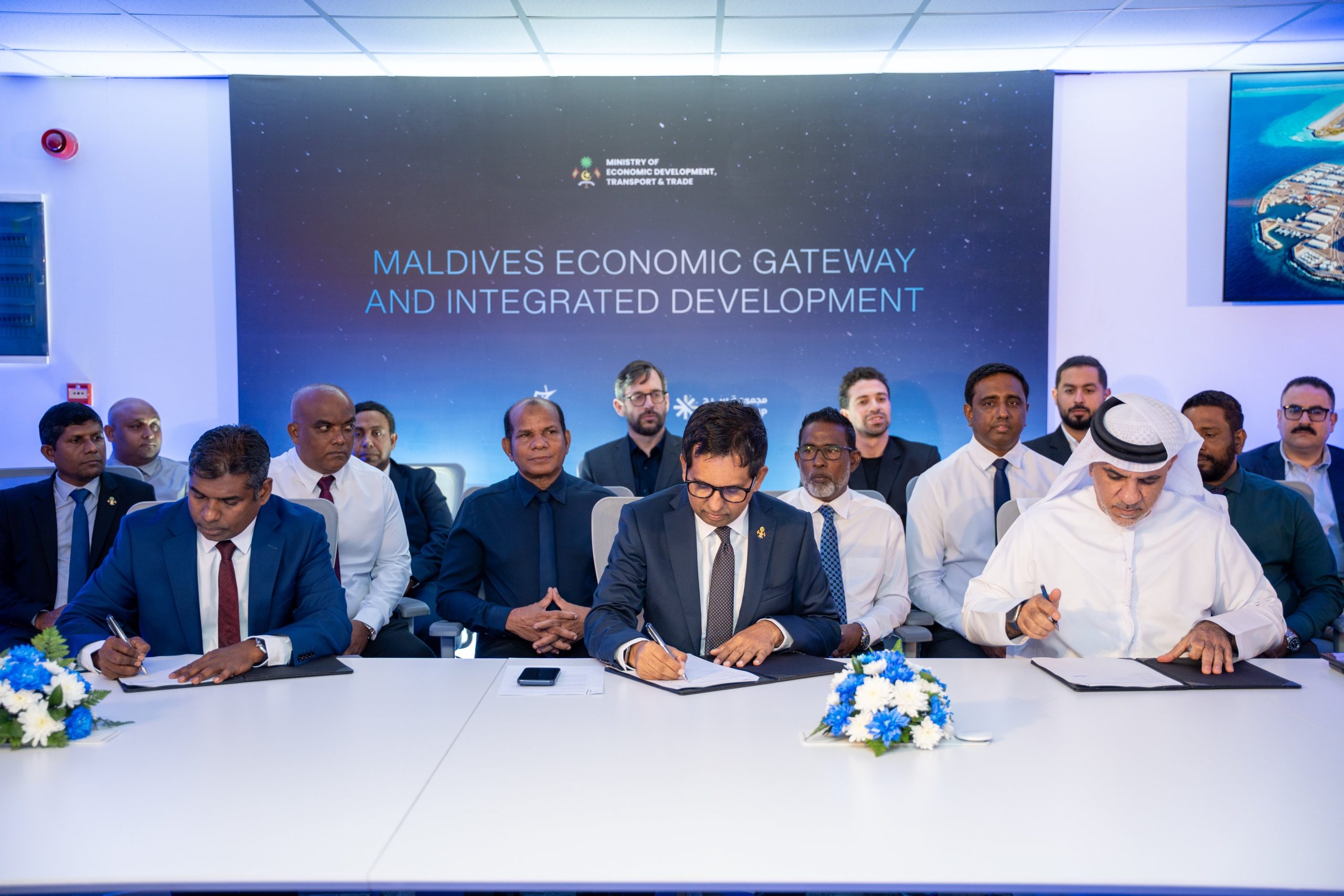
The government and the State Trading Organisation signed an agreement on Monday with SERH Group, an Abu Dhabi company, to build an international port at Ihavandhippolhu, the northernmost atoll, next to one of the busiest shipping lanes in the Indian Ocean. It is the fourth foreign partner named for the project in less than three years. The economic ministry did not say what it will cost, how much land it will take, or whether anyone else was asked to bid.
The agreement was signed by Economic Minister Mohamed Saeed, STO’s managing director, Shimad Ibrahim, and Ahmed Ibrahim Ali Mohamed Al Muthawa, SERH’s chief executive for port and industrial city development. The ministry said the Maldives Economic Gateway and Integrated Development Project would now move from planning to physical work. It described a commercial port for transshipment and logistics, zones for fuel bunkering, ship repair and industrial services, and commercial, retail and tourism facilities, with housing for local and foreign workers.
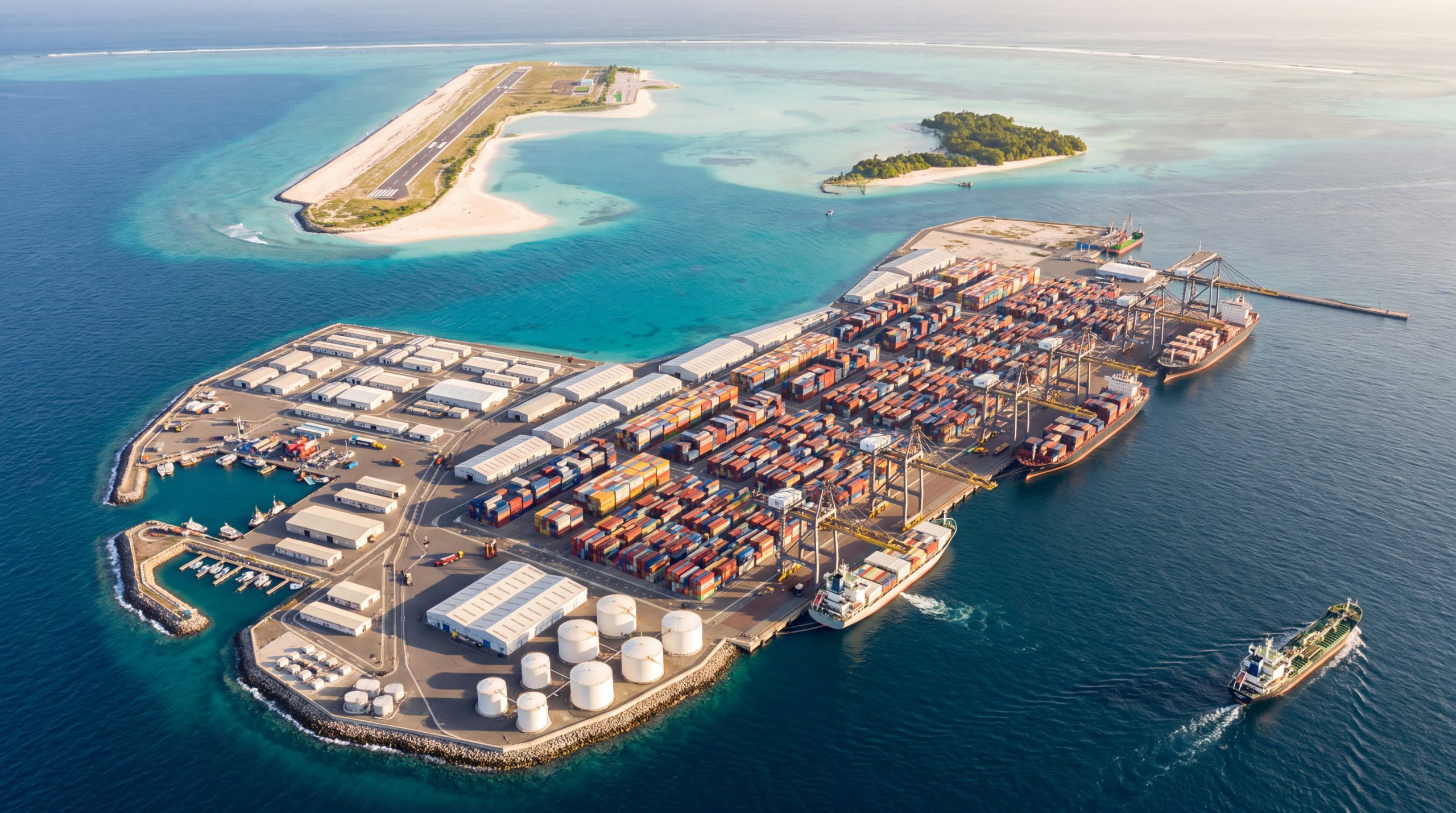
The location is the attraction. Ihavandhippolhu sits beside the Eight Degree Channel, which separates the Maldives from India’s Minicoy island and carries the east-west traffic between the Gulf and Southeast Asia. STO has said more than 300 vessels pass the atoll each day, and the lack of services for them there has long been a complaint. The government wants to sell fuel, repairs and crew changes to some of them, and eventually handle their cargo.
SERH is not a port operator. It was known as Al Dhafra Technical Services until it was relaunched under its current name last year by Sheikh Hamdan bin Zayed, and it grew out of the merger of two Emirati co-operative societies founded in 1976 and 1981. Its work is oil and gas services, logistics, marine support and manpower for Abu Dhabi’s energy sector. It has a five-year, 2 billion dirham agreement to supply machinery to the national oil company, ADNOC, and a logistics partnership with a unit of AD Ports Group. Nothing in its published record points to a transshipment port built or run. Projects of this kind normally rely on outside financiers and specialist contractors for dredging and terminal operations. The announcement names none.
Ihavandhippolhu has been a promise for longer than most Maldivians can remember. President Abdulla Yameen announced the “iHavan” project at an investment forum in Singapore in 2014 and passed a Special Economic Zones Act that year to support it. It was to include a transshipment port, an airport, a yacht marina and tourism. Consultants were hired and Saudi investors visited, but nothing was built. President Ibrahim Mohamed Solih’s government also announced a transshipment port there and did not start it. The economic minister who promoted iHavan in 2014 was Minister Saeed.
Under President Dr Mohamed Muizzu the project has had several partners. In January 2024, the cabinet named a new state company, Maldives Industrial Development Free Zone, as master developer. In March, STO signed a term sheet with the energy trader Vitol to develop bunkering at the atoll. In May, Saeed signed a memorandum with Dubai’s IFZA free zone authority, and said a full agreement would follow in four to five months. In November that year, the master developer signed a framework agreement with Singapore’s Capital Asia Investments, and officials said a deal worth $100 million would follow within six months. This March, President Muizzu renamed a state company Maldives Economic Gateway Development Limited to coordinate the work. The announcement on Monday does not say what became of the earlier agreements.
The deal also fits a wider pattern. SERH is the second large Abu Dhabi company to sign with the government in as many months, after Eagle Hills, which is to receive 500 hectares at Rasmalé. In the space of weeks, the government has committed two of its largest development projects to Emirati partners.
The port raises questions beyond cost. On 14 October, the government declared an “absolute policy” against letting any foreign party conduct maritime security, military or otherwise, over Maldivian waters or its sea lanes, and said no part of the territory would be placed under foreign operational surveillance. A commercial port is not a security arrangement. But a harbour beside a major shipping lane involves customs, coastal monitoring, port security and fuel storage, and the agreement’s terms on who controls them have not been made public.
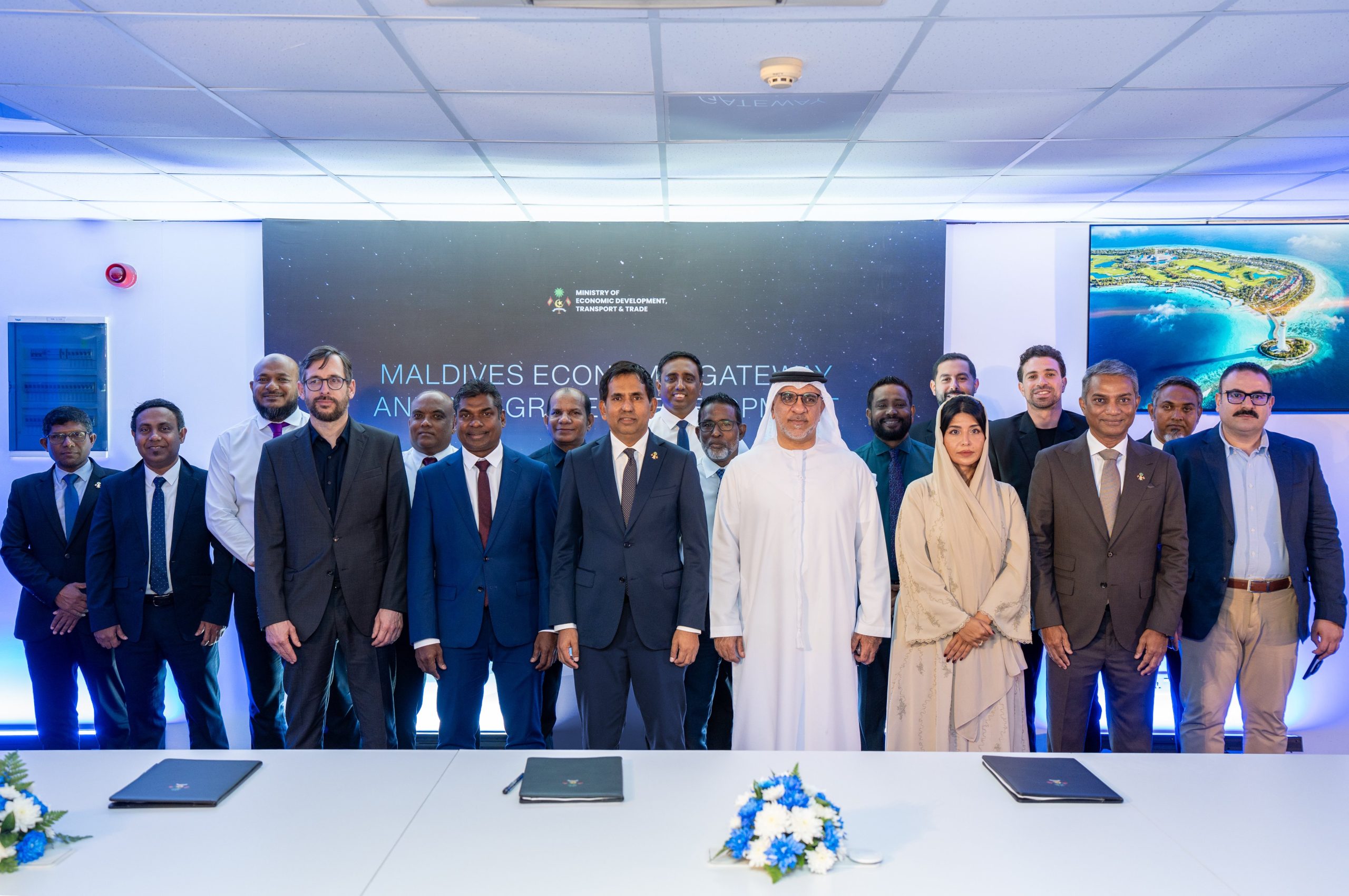
The ministry did not disclose the project’s value, land area or terms, or say whether it was put to tender.
The ceremony drew more than the three signatories: Economic Minister Mohamed Saeed, STO managing director Shimad Ibrahim and SERH’s chief executive for port and industrial city development, Ahmed Ibrahim Ali Mohamed Almutawa, who came with a delegation from the UAE.
Ruling People’s National Congress lawmakers from northern constituencies were there too, along with Mohamed Ali Janah, the president’s principal adviser on trade and investment.
The ministry’s announcement did not describe any role for Janah in the agreement, and nothing in it suggests that he or his companies have a stake. His presence drew notice all the same.
He is one of the country’s largest builders and resort developers, chairs the construction, marine and investment group HARIM, and is a shareholder in Maldives Premier Bank, according to the bank’s website.
He has also spoken openly about the Gulf’s growing place in the Maldivian economy. Last year he told Arabian Business that “UAE will be holding the largest portfolio” in the luxury island market within five years.