News Desk
Sharp divisions within the opposition Maldivian Democratic Party (MDP) over the government’s flagship Rasmalé development have come into the open, with former President Mohamed Nasheed defending foreign direct investment against nationalist pushback and Malé Mayor Adam Azim conceding that party resistance to the project stems largely from partisan distrust rather than opposition to the venture itself.
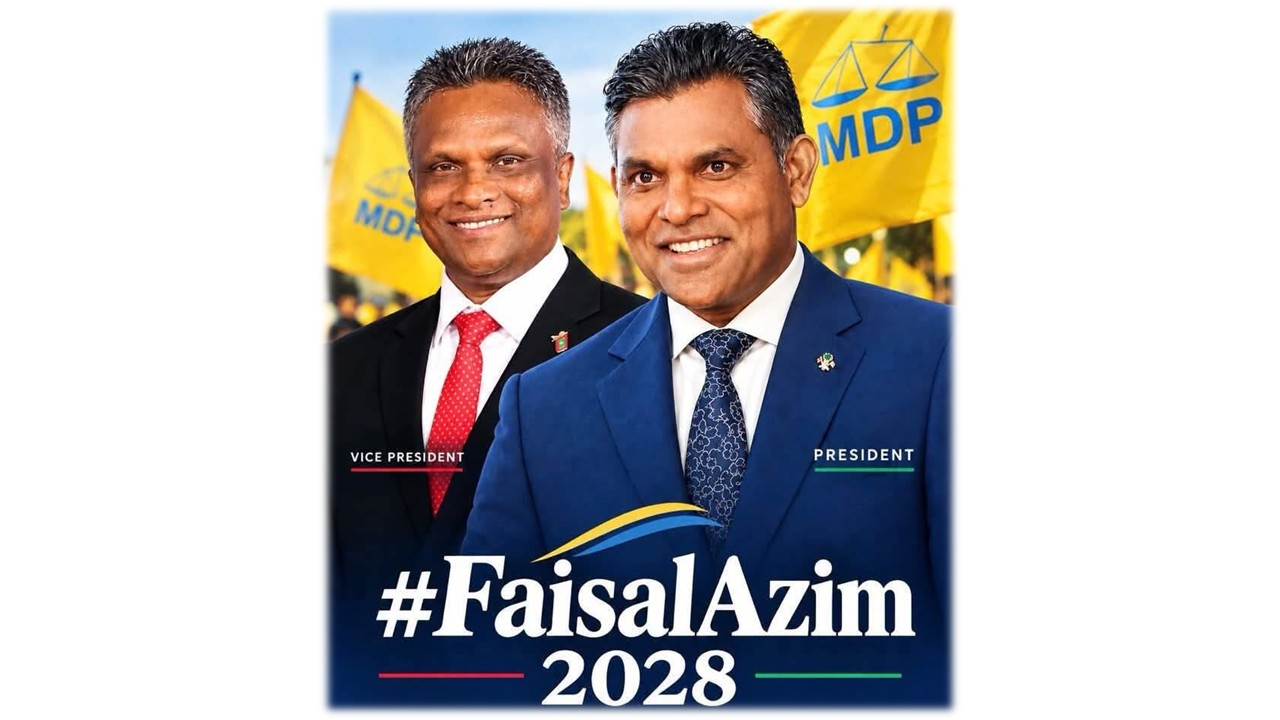
Azim’s remarks also carry weight within the MDP’s internal succession battle ahead of the 2028 presidential election. In October, former Vice President Faisal Naseem entered the party’s presidential primary with Azim as his declared running mate—a ticket that has publicly claimed the backing of former President Solih against rival primary contenders including former Chairperson Fayyaz Ismail, former party President Abdulla Shahid, and South Hulhumalé MP Dr Ahmed Shamheed. By framing resistance to Rasmalé around trust in Nasheed and Solih rather than blanket opposition to foreign-led development, Azim appeared to be navigating both the party’s competing factions and the campaign’s need to distinguish its stance from hardline nationalist rhetoric.
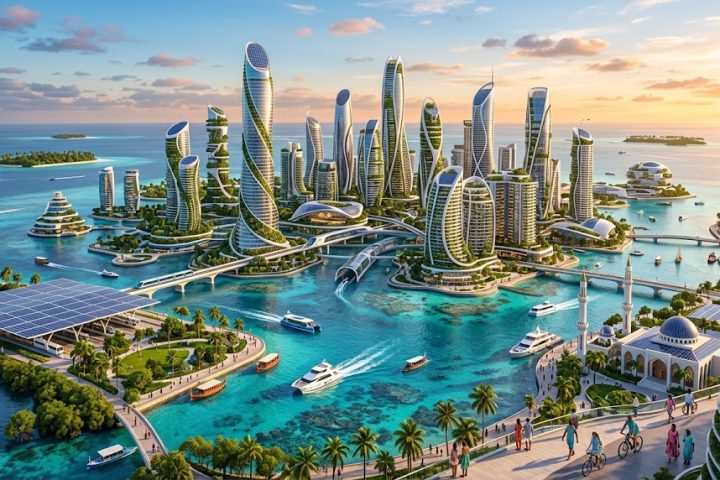
The statements, delivered over the weekend as nationalist groups escalate campaigns against the UAE-based developer Eagle Hills’ “Maldives Waterfront and Marina” project, underscore a growing ideological and tactical rift inside the country’s largest opposition party.
In a post on X, Nasheed—who serves as the MDP’s chairperson—argued that post-colonial nations that achieved rapid economic progress did so by welcoming foreign direct investment (FDI) rather than retreating into protectionism. Citing Singapore and South Korea, he said foreign capital had strengthened their economies and bolstered their sovereignty rather than eroding it.
“Foreign direct investment has not affected the independence or sovereignty of Singapore or South Korea,” Nasheed wrote in Dhivehi. “On the contrary, their economies grew stronger, giving them the capacity to protect their independence and secure their standing on the international stage.”
He added that successful economies ensured foreign investment moved beyond raw resource extraction toward domestic production and value creation. In accompanying remarks backing the Eagle Hills venture at Rasmalé, Nasheed criticised elements within his own party, warning that xenophobia and hardline nationalism run counter to the MDP’s founding principles.
Hours later, during a meeting of the MDP’s National Council on Sunday night, Malé Mayor Adam Azim offered a candid assessment of why party figures are mobilising against the multi-billion-dollar reclamation and urban development project south of the capital.
Azim said his objection was rooted in who is overseeing the deal rather than the merits of the project itself, stating he would have backed the exact same initiative had it been executed under an MDP administration.
“If this were something done by President Nasheed, or something done by President Solih, I would have said yes wholeheartedly—I trust them,” Azim told the council, referring to former Presidents Mohamed Nasheed and Ibrahim Mohamed Solih.
His remarks were swiftly seized upon by ruling People’s National Congress (PNC) figures as proof that opposition resistance to Rasmalé is politically motivated. PNC Parliamentary Group Leader Ibrahim Falah accused the opposition of opposing the venture purely out of political envy over President Dr Mohamed Muizzu securing an investment of that scale.
The internal friction comes as opposition factions—including figures aligned with the MDP and former President Abdulla Yameen’s People’s National Front (PNF)—have sought to rally public opposition to the Rasmalé land allocation. While organisers of a recent joint rally claimed turnout reached 6,000, opposition media analyses indicated the crowd numbered fewer than 600.
For the MDP, the contrasting positions of Nasheed and Azim highlight an awkward balancing act: reconciling the party’s long-standing pro-market, FDI-friendly economic platform with the political imperative of opposing the Muizzu administration’s signature infrastructure programme.