 News Desk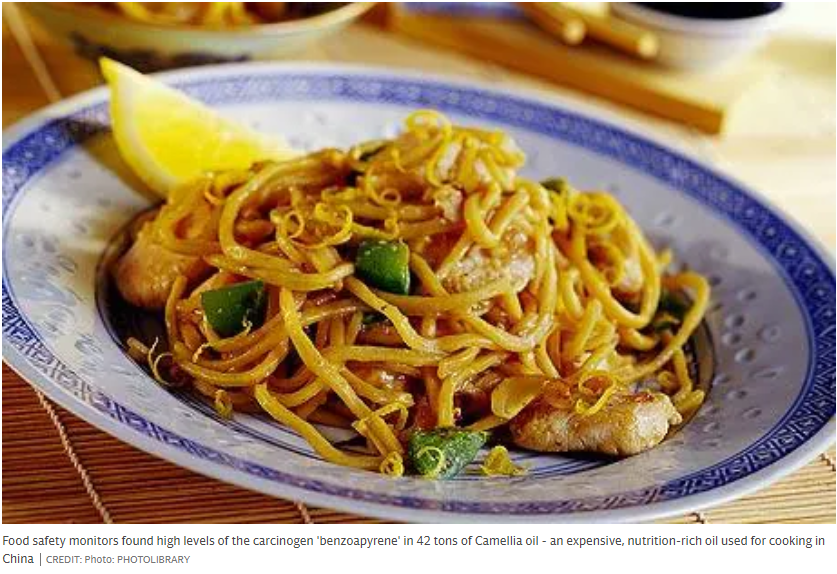
In Chongqing, a viral video captured a woman in her sixties scooping used oil from a roadside rubbish bin. Dressed in the uniform of a local hotpot restaurant, she ladled the thick liquid into a plastic bucket, prompting immediate outrage online. Was this “gutter oil” destined for the kitchen? The restaurant insisted it was not. Yet the image — a staffer bent over a swill bin, salvaging waste oil — struck a nerve across China.
This is the same country that once proudly marketed itself as a “culinary empire,” with the celebrated slogan A Bite of China symbolizing its rich food heritage. Today, the reality looks far less glamorous. Social media feeds are filled with stories of communal hotpot troughs, skewers dunked into shared sauces, and hygiene lapses that leave citizens uneasy.
The reports emphasize that the real concern is not whether the food is nutritious, but whether it is even safe to consume. The irony is striking: multinational fast-food chains such as McDonald’s and KFC are increasingly perceived as the safest options available to ordinary people, a sharp contrast to China’s once-celebrated culinary reputation.
The last five years have witnessed a series of troubling food safety crises in China, each one eroding public trust and exposing systemic weaknesses. Between 2020 and 2021, reports emerged of vegetables coated with copper sulphate and noodles laced with borax, sparking outrage among parents who feared for their children’s health. In 2022, another scandal unfolded when contaminated soy milk and moon cakes were found to contain widespread chemical additives.
By 2023, investigations revealed that dozens of restaurants in Beijing were operating under a single fraudulent license, with delivery addresses fabricated to mislead consumers. The following year, in 2024, a major edible oil scandal involving Hopeful Grain & Oil Group reignited public anger, showing how corporations with political ties could bypass safety checks. Most recently, in 2025, experts have continued to warn that despite new regulations, enforcement remains weak, corruption is rampant, and consumer trust has sunk to historic lows. Together, these incidents highlight a disturbing pattern: while ordinary citizens are forced into unsafe consumption, CCP stalwarts and top officials remain shielded, often dining in government cafeterias that remain untouched by such scandals. In July 2025, China widened its investigation into a kindergarten lead poisoning scandal in Gansu after tests showed 233 of 251 children in Tianshui had abnormal blood lead levels, prompting the central government to step in with a State Council task force to oversee the probe.
Critics argue that the adulterated food industry has evolved into a lucrative ecosystem that benefits those with political connections. Large state-backed enterprises implicated in food scandals often escape serious punishment, shielded by networks of officials who profit from the system. Corruption manifests in several ways. Licensing loopholes allow multiple restaurants to operate under a single license, a practice tolerated by regulators unwilling to challenge politically connected owners.
Supply chain manipulation ensures that companies with ties to local officials secure contracts for school cafeterias and public institutions, while ordinary citizens are left with unsafe alternatives. Selective enforcement further deepens the divide, as government cafeterias frequented by CCP elites remain untouched by scandals, suggesting stricter oversight in spaces reserved for officials compared to the public sphere. This dual system reinforces inequality, creating a reality where safe food is reserved for the powerful, while adulterated food is left for the masses.
The erosion of trust in food safety has profound social implications. Citizens openly admit that “there is no clean takeaway in Beijing,” a phrase that has become symbolic of broader disillusionment. Many resort to growing vegetables on balconies, while others rely on instant noodles as a safer alternative. The younger generation, critics say, is being forced into “consumption under compulsion” eating unsafe food and then paying the price in hospitals. Even abroad, the problem persists. In the United States, some Chinese products sold in supermarkets carry California’s Proposition 65 cancer warnings, raising alarms among consumers about the export of potentially unsafe goods. This global dimension underscores how the issue is not confined within China’s borders but affects international consumers as well.
Food safety in China is not merely a technical issue,it is deeply political. Analysts argue that the destruction of traditional culture has eroded moral boundaries, leaving profit as the only guiding principle. Without accountability, producers continue to cut corners, knowing that inspections are sporadic and punishments rare. The beneficiaries are clear: entrenched elites who profit from the adulterated food industry while remaining insulated from its dangers. The system thrives on opacity, corruption, and selective enforcement. As long as officials benefit, meaningful reform remains unlikely.
Experts stress that only “strict criminalization of toxic food production” can deter offenders. Suggestions range from prison sentences proportional to the number of victims, to capital punishment for large-scale violations. Yet even these measures may falter without systemic change. The root problem lies in governance: a lack of transparency, accountability, and moral responsibility.
Ultimately, the crisis reflects a deeper truth. Food safety is inseparable from political safety. Without fundamental reforms to China’s regulatory and political system, citizens will continue to scramble for scraps at unsafe troughs, while elites dine securely behind closed doors.