News Desk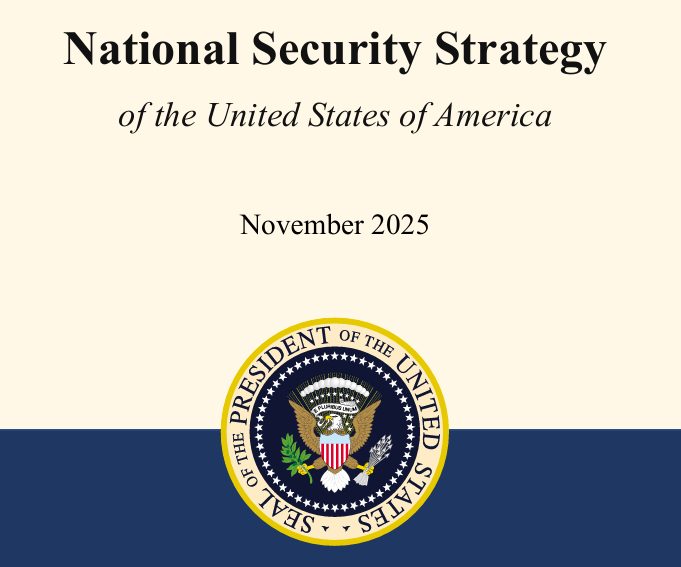
WASHINGTON — The White House on Friday released President Trump’s 2025 National Security Strategy, a document that reads as a deliberate break from the post–Cold War script and a reset of American priorities. Short sentences punch. Longer ones explain. The tone is unapologetic. America, it argues, must put its own survival—cultural as much as military or economic—ahead of open-ended ideological crusades.
At its core is a hierarchy: homeland first, hemisphere second, selective engagement everywhere else. The phrase “flexible realism” appears early and often. So does the idea that culture itself has become strategic terrain.
Europe, the document warns, is undergoing “civilizational erasure.” Mass migration, demographic change, and the weakening of traditional identity threaten the West’s cohesion. The language never quite says “white Christian heritage” outright, yet the implication hangs heavy. Analysts at GovFacts call it the clearest elevation of cultural and religious identity to national-security status in any modern strategy. Culture is not just soft power. It is something to secure.
That framing dovetails with a revived Monroe Doctrine for the 21st century. The Western Hemisphere is recast as a protected zone, a buffer against foreign ideologies, cartels, and uncontrolled migration. One passage groups illegal immigration with narco-trafficking and great-power meddling as equivalent threats to regional order. The remedy: tighter borders, expanded surveillance, unquestioned U.S. primacy. The posture echoes broader governance moves, including reports of a White House Faith Office and deeper policy ties to evangelical networks, which critics say embed Christian nationalist priorities into policymaking.
Migration from Muslim-majority countries receives particularly stark treatment. The strategy stops short of naming Islam as an adversary. Instead it links demographic shifts in Europe to rising instability and cultural decline, and nods to nations that have restricted entry. The pattern will feel familiar to anyone who remembers the 2017 travel ban.
The civilizational packaging is new. Critics describe the undertone as Islamophobic, arguing that human movement is recast as a civilizational danger rather than a policy problem to manage.
Trump’s National Security Strategy: A Transactional Middle East
On other fronts the document is ruthlessly pragmatic. The war in Ukraine should end through negotiation, it declares, and strategic stability talks with Russia are in America’s interest. NATO remains useful, but only if Europe pays its share and expansion stays cautious. In the Middle East and Africa, commitments shrink to energy security, critical minerals, and transactional deals. No more nation-building marathons.
The Indo-Pacific gets the most sustained attention after the homeland itself. Deterring China around Taiwan, reshoring supply chains, choking off sensitive technology, and rebuilding industrial capacity are described in the same breath as traditional military deterrence. Economic tools, the strategy insists, are now hard power.
Three instruments dominate the toolbox: a rebuilt military, weaponized finance and trade, and what the document calls “cultural resilience.” Borders, identity, and faith-linked initiatives move from the domestic column to the security column. Readiness and deterrence outrank expeditionary democracy promotion. Industry, energy, and critical minerals become leverage points, not afterthoughts.
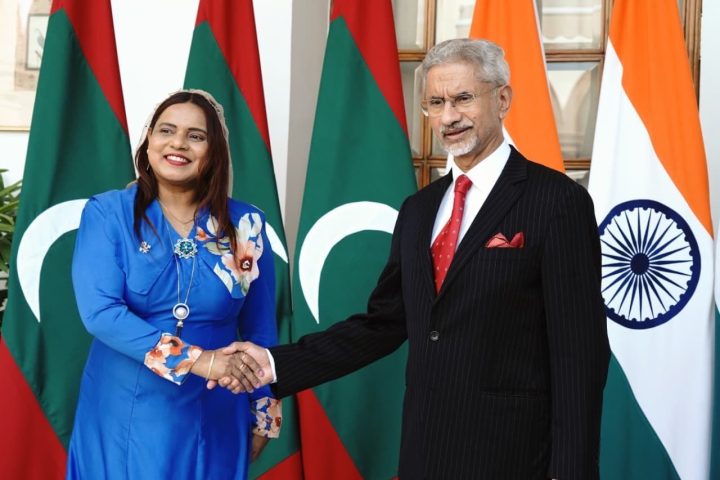
Trump’s National Security Strategy: South Asia Through a Narrow Lens
The internal logic is coherent, even elegant in its austerity. Narrow the aperture. Clarify priorities. Reduce overextension. Yet the trade-offs are immediate. Allies wedded to liberal universalism may balk at the civilizational rhetoric. Neighbours in Latin America may chafe at the revived hemispheric primacy. Talks with Moscow could freeze the fighting in Ukraine but reward aggression in the eyes of Europe’s east.
“In countries throughout the world, mass migration has strained domestic resources, increased violence and other crime, weakened social cohesion, distorted labor markets, and undermined national security. The era of mass migration must end. Border security is the primary element of national security. We must protect our country from invasion, not just from unchecked migration but from cross-border threats such as terrorism, drugs, espionage, and human trafficking. A border controlled by the will of the American people as implemented by their government is fundamental to the survival of the United States as a sovereign republic,” National Security Strategy of the United States of America, November 2025
Securitizing migration and culture may reduce irregular flows. It will almost certainly trigger legal battles, human-rights criticism, and diplomatic friction from Ottawa to Bogotá. Recasting identity as security will test courts and civil society. Economic nationalism may build resilience and leverage. It can also raise costs, drive duplication, and stress global recovery.
What to watch in the months ahead is straightforward. Early executive orders on border surveillance and religious-liberty initiatives will show how seriously the cultural framing is meant. European and Latin American reactions to the Monroe 2.0 language will test alliance cohesion. The pace and terms of any Ukraine negotiations will reveal how much “flexible realism” Moscow is willing to meet halfway. Indo-Pacific coordination on technology controls and supply chain realignment will measure partner buy-in. And courts, Congress, and civil society will decide how far the securitization of identity and immigration can actually go.
The bottom line is blunt. This is a strategy that places the preservation of a particular American and Western identity alongside tanks, tariffs, and microchips as core national interests. Whether that vision stabilizes a rattled world or deepens its fractures will depend less on the document’s spare prose than on the policies—and the backlash—that follow.
Image credit: Screen grab from the White House National Security Strategy (2025) paper.