News Desk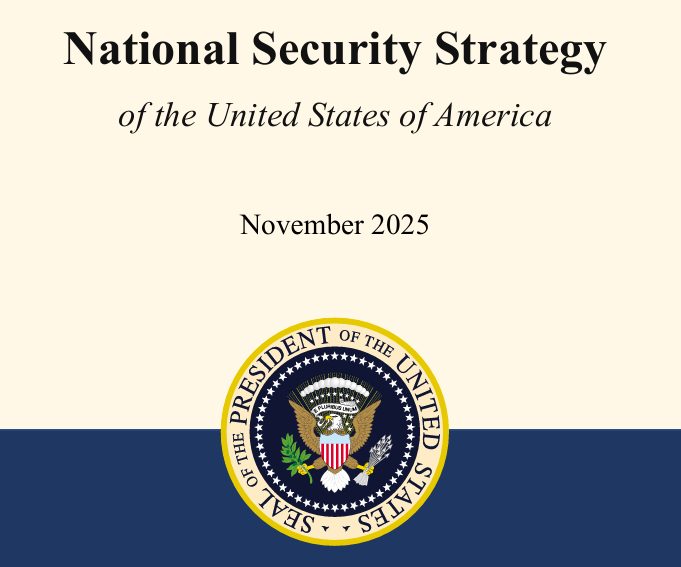
WASHINGTON — In the 2025 National Security Strategy, South Asia is not given its own sweeping chapter. Instead, it appears as part of the Indo‑Pacific frame, filtered through competition with China and the administration’s claim to have brokered peace between India and Pakistan. The tone is pragmatic, even transactional, but the cultural undertones that run through the rest of the document are never far away.
India is cast as a cornerstone of America’s Indo‑Pacific vision. The strategy urges deeper cooperation in defence, technology, and trade, and highlights the Quadrilateral Security Dialogue — the Quad — as a platform for India to contribute to regional stability alongside the United States, Japan, and Australia. Commercial ties are described as essential, with references to joint work in artificial intelligence, quantum computing, and defence technology. The message is clear: India is the counterweight to China, and Washington intends to lean heavily on that partnership.
Pakistan enters the text in a different register. The NSS points to Trump’s claimed success in negotiating peace between India and Pakistan, presenting it as part of his “President of Peace” legacy. The reference is brief but symbolic. It positions Washington as a mediator, even as New Delhi has publicly rejected, on multiple occasions, outside involvement in its disputes with Islamabad. The emphasis is less on long‑term partnership and more on showcasing diplomatic leverage.
South Asia as a whole is treated as a theatre of selective engagement. The region is framed through the Indo‑Pacific lens, with India elevated and Pakistan mentioned mainly as a conflict partner. The broader narrative is stability through limited U.S. involvement, transactional diplomacy, and alignment against China’s influence.
The internal logic is consistent with the rest of the strategy. Homeland first. Hemisphere second. Indo‑Pacific third. South Asia fits inside that third tier, important but not central, useful as a stage for balancing China and demonstrating diplomatic wins.
Comparison Table: U.S. Strategy in South Asia
| Country/Region | NSS Position | Strategic Purpose |
| India | Key Indo‑Pacific partner; Quad cooperation; tech and defence ties | Counterbalance to China; strengthen regional stability |
| Pakistan | Mentioned via Trump’s claimed peace deal with India | Showcase U.S. mediation role; maintain influence |
| South Asia (overall) | Framed through Indo‑Pacific lens; selective engagement |
Stability via India partnership; transactional diplomacy |
The bottom line is blunt. India is elevated as a pillar of U.S. Indo‑Pacific policy, Pakistan is referenced mainly through a claimed peace deal, and South Asia is folded into the larger contest with China. Whether this narrow framing stabilizes the region or leaves gaps will depend less on the NSS prose than on how India, Pakistan, and their neighbours respond to America’s selective engagement.
Image credit: Screen grab from the White House National Security Strategy (2025) paper.
Trump’s National Security Strategy: A Transactional Middle East