News Desk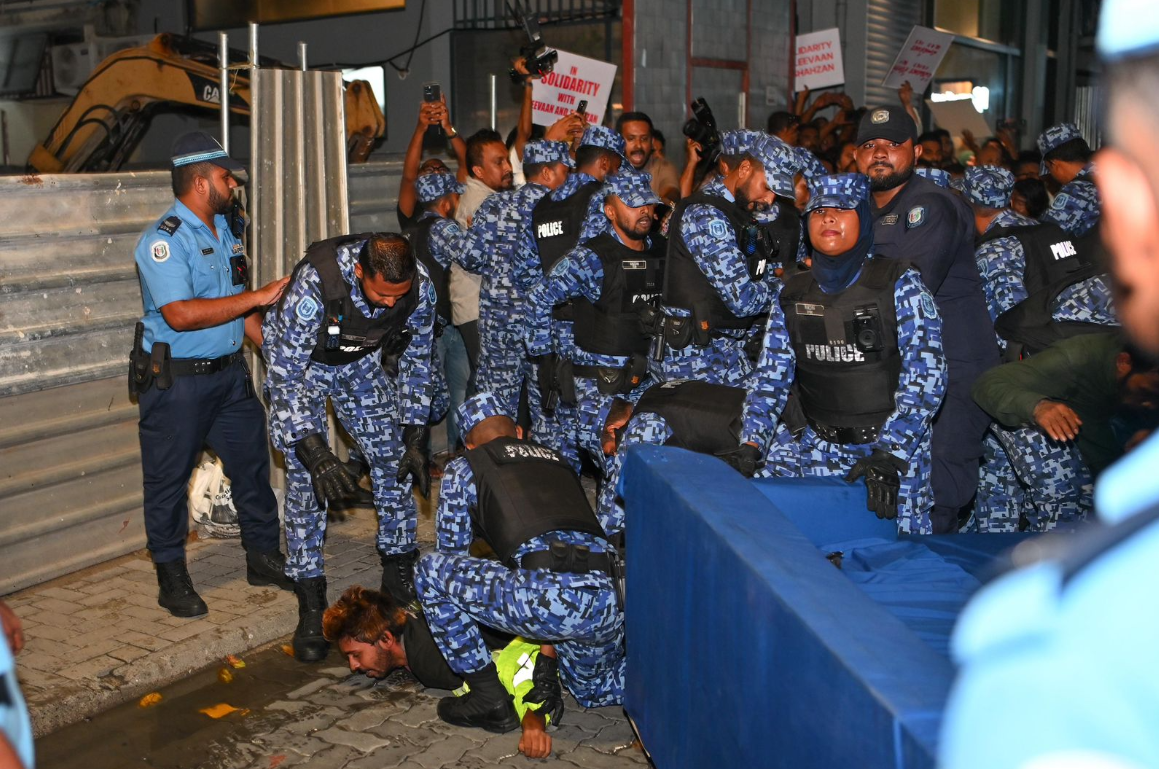
Hundreds of supporters of the Maldivian Democratic Party marched through Male’ last night, demanding the release of two journalists jailed by the Criminal Court for violating a gag order tied to a documentary published by the online outlet Adhadhu.
The protest started from the MDP headquarters on Chaandhanee Magu. Former President Mohamed Nasheed, who is contesting the party’s chairperson post and looking to rebuild his political standing, led the march alongside members of the MDP parliamentary group and former MPs. Nasheed said the protest would continue every night until the two journalists are freed.
It is a setting Nasheed knows well. Street protest was his signature in the years before he won the presidency in 2008, and returning to it now carries a deliberate message about where he sees his political future.
The two journalists at the centre of the case are Leevan Ali Naseer and Mohamed Shahzan, both of Adhadhu. Leevan was sentenced to 10 days in jail for writing about the court’s gag order, which itself prohibited any reporting on or reference to the documentary, directly or indirectly. Shahzan received 15 days for asking a question at a presidential press conference that the court deemed a violation of the same order. The President’s Office has since banned Adhadhu and all its journalists from attending its briefings.
The gag order was issued at the request of prosecutors after charges were filed against Adhadhu CEO Hussain Fiyaz Moosa and editor Hassan Mohamed. Their trial began this week. The Criminal Court had ordered that the documentary not be circulated and that nothing contained in it be referenced in any public forum.
Nine people were arrested the night during the demonstration calling for the journalists’ release. They were charged with obstructing police duties and disobeying orders. Seven men and two women were among those detained.
There were occasional clashes with police during the protest as well.
The Maldives Journalists Association, an independent NGO representing journalists and media workers in the Maldives, has said it will challenge the gag order in court, arguing it fails constitutional and international standards on legality, necessity and proportionality.
The broader question the protests are raising is whether a court order that bars journalists from reporting on the existence of another court order can withstand legal scrutiny. That question is now heading to the courts. In the meantime, Nasheed has found his street again.