News Desk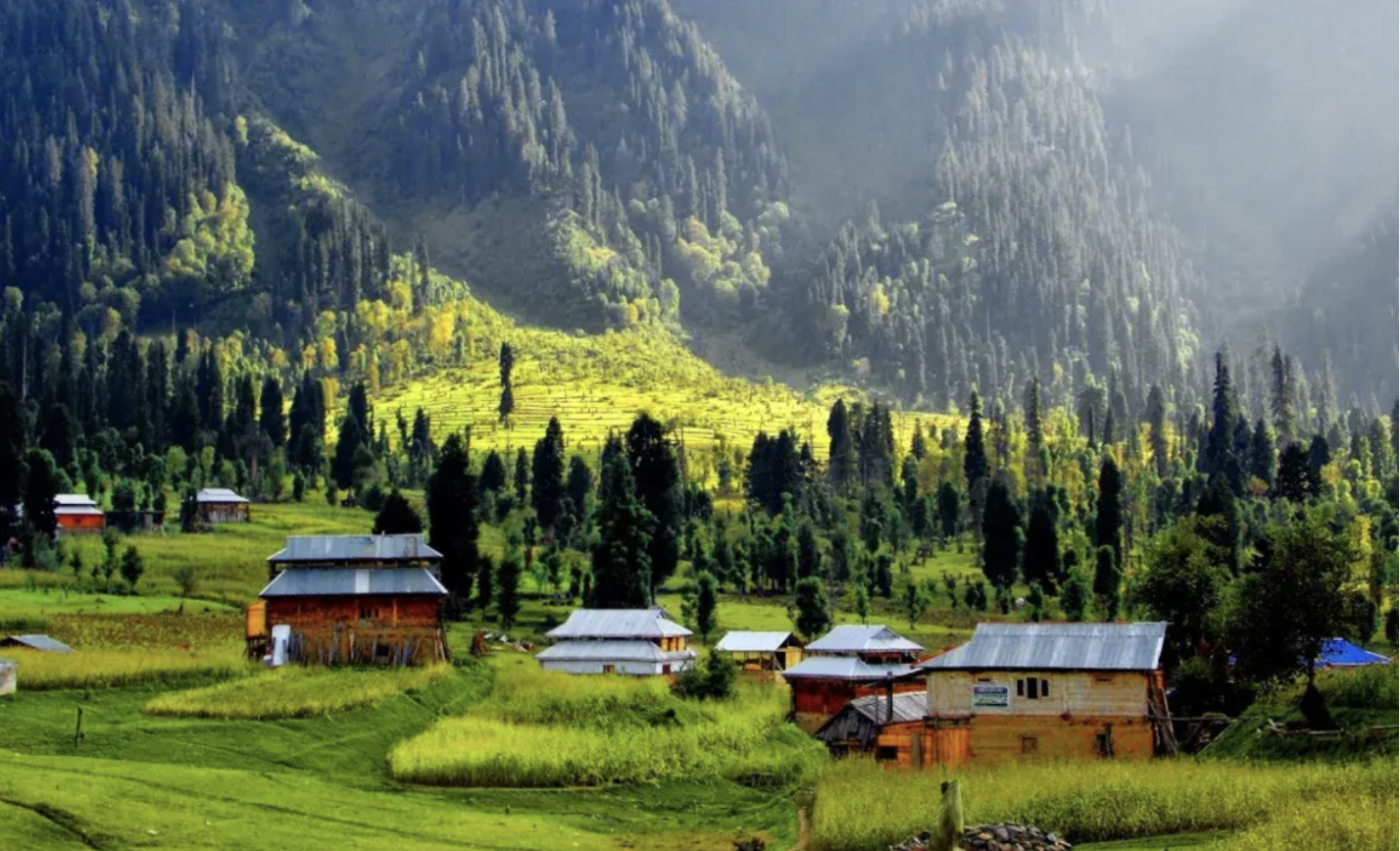
SRINAGAR — Marking seven years since the historic revocation of Article 370, Jammu and Kashmir stands at a fascinating crossroads. While the anniversary on Wednesday brought familiar political friction—with regional parties staging demonstrations and demanding the return of the erstwhile state’s special status—it also underscored a profound narrative of economic revitalisation, institutional reform, and social integration championed by New Delhi.
For the administration and the Bharatiya Janata Party (BJP), August 5, 2019, remains a watershed moment that permanently dismantled decades of discriminatory legislation, firmly binding the region to the national mainstream under the banner of “One Nation, One Flag, One Constitution.”
Financial Inflows & Development Milestones
- Surging Industrial Investment: Industrial investment in the region reached an impressive ₹5,824 crore ($693 million USD) in the 2025–26 fiscal period—nearly thirteen times the average annual figures recorded prior to 2021.
- Enhanced Connectivity & Integration: Enhanced railway connectivity and modernising airports are further knitting the territory closer to the rest of the country.
- Rights for Marginalised Groups: Marginalised groups, including displaced persons from Pakistan-administered Kashmir, have finally secured voting rights and property ownership.
- Cumulative Investment Pipeline: Total industrial investment proposals and committed capital since 2019 have crossed $1.2 billion USD (over ₹10,000 crore), sparking widespread local employment and manufacturing growth.
- Infrastructure Modernisation: Capital expenditure on mega connectivity projects, including expanded airport terminals, all-weather rail networks, and national highway expansions, has received budgetary allocations exceeding $3.5 billion USD over the past seven years.
- Empowerment of Marginalised Communities: Over 1.5 million individuals from previously underserved groups—including West Pakistani refugees, Valmikis, and tribal communities—have gained full property ownership, voting rights, and equitable access to state welfare packages.
- Victims’ Rehabilitation Fund: A dedicated compassionate support package has delivered financial compensation and secure government employment to dozens of terror victims’ next of kin, reinforcing social security and stability across districts.
A Transforming Landscape
Addressing the milestone, Prime Minister Narendra Modi emphasised that the full application of the Indian Constitution has catalysed a wide-ranging transformation across Jammu, Kashmir, and Ladakh. Highlighting the expansion of robust infrastructure, healthcare, entrepreneurship, and educational opportunities, the Prime Minister noted that long-marginalised communities—including women, tribal populations, and refugees—have finally been empowered with foundational rights previously denied to them.
Echoing this sentiment, Lieutenant Governor Manoj Sinha described the 2019 decision as a vital “constitutional correction.” Speaking at a solemn function where he handed over compassionate appointment letters to the next of kin of civilian terror victims, Sinha pointed to a substantial weakening of the local terror ecosystem.
“The people of Jammu and Kashmir have chosen peace over violence, education over indoctrination, and jobs over dependency,” Sinha told reporters.
Divergent Political Voices
Despite the economic momentum, the anniversary also laid bare ongoing democratic debates. Regional outfits, notably the ruling National Conference (NC) and the People’s Democratic Party (PDP), organised peaceful rallies in Srinagar and Jammu, pressing for the restoration of the region’s statehood and constitutional safeguards.
NC leaders, including Education Minister Sakina Itoo and parliamentarians in New Delhi alongside opposition allies, urged the Centre to honour assurances regarding the reinstatement of full statehood following the completion of assembly elections. Chief Minister Omar Abdullah remarked that the path to complete healing remains ongoing, pointing to the unfulfilled expectations surrounding statehood timelines.
Meanwhile, celebrations were vibrant among communities historically sidelined prior to 2019. Members of the West Pakistani refugee and Valmiki communities gathered in Jammu and Samba to unfurl the national flag, distributing sweets and lauding the historic shift that granted them equal citizenship and dignity.
As Jammu and Kashmir enters its eighth year since the constitutional reorganization, the territory reflects a complex interplay of democratic expression: vibrant political discourse on one hand, and a resolute march toward peace, development, and national integration on the other.
While Jammu and Kashmir thrives under a surging economic pulse, increased industrial investment reaching ₹5,824 crore ($693 million USD), and progressive integration with the rest of India, Pakistan-administered Kashmir continues to grapple with severe economic stagnation, systemic neglect, and widespread public protests over basic rights and inflation.