News Desk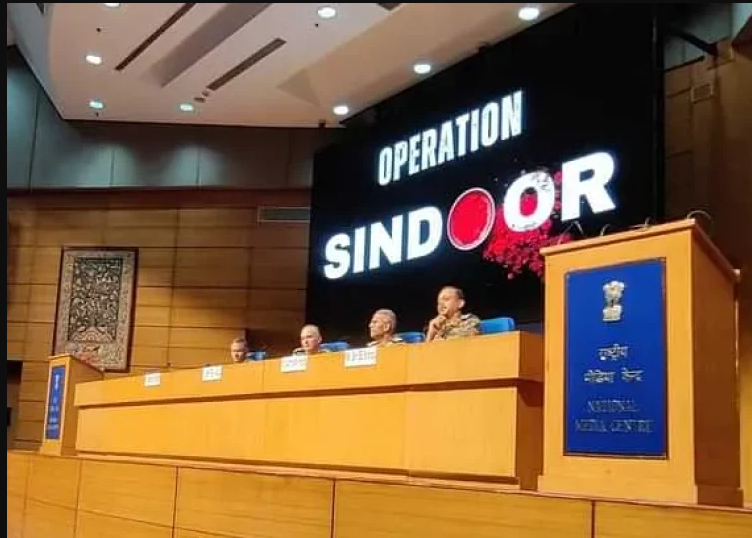
In May 2025, India carried out an outstanding mission called Operation Sindoor, which changed how countries in Asia think about military power and showed weaknesses in China’s advanced weapons during actual combat. According to military expert John Spencer, India demonstrated to the world the true meaning of self-reliance in modern warfare, proving that the vision of “Atmanirbhar Bharat” stands strong even in the heat of battle. The operation was launched after a Pakistan-supported terrorist attack in Pahalgam, Jammu and Kashmir, on April 22, 2025, which killed 26 civilians. In response, India used its own weapons against equipment that China had supplied to Pakistan. Within four days, India destroyed nine terror camps and strongholds using its own weapons like BrahMos missile, Akashteer air defense system, and Harop loitering munition. At the same time, Pakistan’s Chinese-made HQ-9B air defense system performed very poorly.
Operation Sindoor kicked off on May 6-7, 2025, with precision strikes on Pakistan-based militant infrastructure along the Line of Control, involving 125 fighter jets from both sides at standoff ranges. The Indian Air Force achieved air superiority by May 10, targeting Pakistan Air Force (PAF) airbases, AWACS, radars, and defenses with BrahMos and SCALP-EG missiles, forcing a ceasefire. Analysts credit India’s success to its coordinated strategy, integrating advanced electronic warfare and AI-driven targeting to dismantle Pakistan’s defenses.
Pakistan used the HQ-9B air defense system, which China promotes as a top long-range defense system able to stop stealth aircraft, to protect important airbases and cities. Yet during Operation Sindoor, it failed to intercept Indian missiles and drones, suffering heavy losses from Harop drones. This problem happened again in 2026, when HQ-9B air defense system units in Iran, reportedly bought after U.S.–Israel strikes in July 2025, were unable to stop joint American and Israeli attacks on Iran’s Natanz and Fordow nuclear sites, which caused damage to the facilities without any radiation leaks.
The HQ-9B’s back-to-back failures triggered a crisis in Beijing’s defense exports. Chinese firms like AVIC, NORINCO, and CETC saw stock plunges as global buyers questioned reliability, while Indian defense stocks surged 49%. Operation Sindoor emerged as a blueprint for asymmetric warfare, underscoring India’s rise as a regional power and India’s strategic edge in the Indo-Pacific.
Even during Operation Absolute Resolve, Chinese-made defence systems did not work as expected, showing major weaknesses. The JY-27A radar was supposed to spot stealth planes, but U.S. jamming and fake signals confused it, so it couldn’t see the planes coming. Other radars like JYL-1 and JY-11 also failed, which broke down the entire integrated air defence network, since all parts depend on each other to work properly. Because these radars were not functioning, missile systems like HQ-9 and HQ-12, which rely on radar data to track and hit targets, could not even launch. Overall, the failure shows that if the radar and communication systems are disrupted, the whole defence system becomes useless.
China’s HQ-9 air defence system, widely exported to countries like Pakistan, Iran, and Venezuela, has shown significant weaknesses in real combat situations. While it is marketed as a powerful long-range missile defence system, recent conflicts in 2025–2026 revealed that it struggles against modern warfare tactics, especially electronic warfare and coordinated strikes. In Pakistan, it failed to intercept incoming missiles and showed software and integration issues; in Iran, US and Israeli forces quickly destroyed HQ-9 systems during strikes; and in Venezuela, the system failed to detect incoming aircraft altogether. These repeated failures have raised doubts about the system’s reliability, suggesting that its performance depends heavily on how well it is integrated, maintained, and operated, and that it may be more vulnerable than previously claimed.
What impact does that have on China’s future weapons sale? China’s J-10C fighter jet has not become very popular globally because of several concerns. Many countries do not fully trust China politically or prefer to buy weapons from their allies, which limits Chinese sales. Also, the aircraft has had very little real combat history until recently, making buyers unsure about its performance. Another issue is that some versions rely on foreign, especially Russian, engines, which raises doubts about reliability and supply. There are also limits in how far and effectively it can operate compared to top Western jets. Past examples, like Chinese weapons performing poorly in places such as Venezuela, have further hurt confidence. Even during Operation Sindoor in May 2025, Chinese systems like the HQ-9 were tested in real combat, highlighting both their use and scrutiny, as China used the conflict to trial and showcase its equipment. Overall, these factors together make countries cautious about buying Chinese military hardware. That summarises how big of an impact India’s extraordinary performance during Operation Sindoor has had on the reputation of Chinese weapons. In recent years, China had emerged as a top ranker in global defence export industry. However, May 2025 could have been the beginning of an end of Chinese dominance in the industry, and a new beginning for India.