News Desk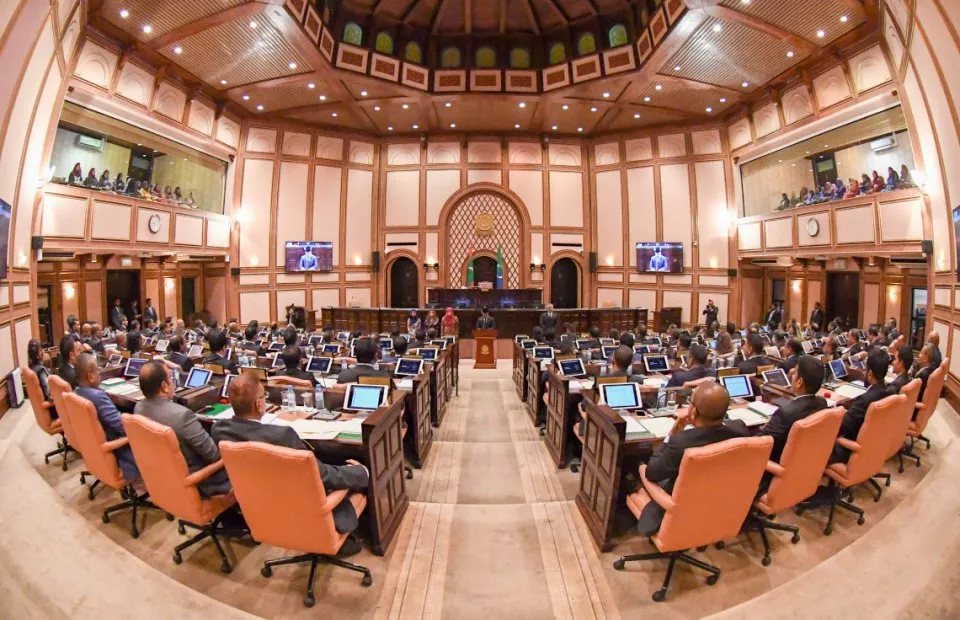
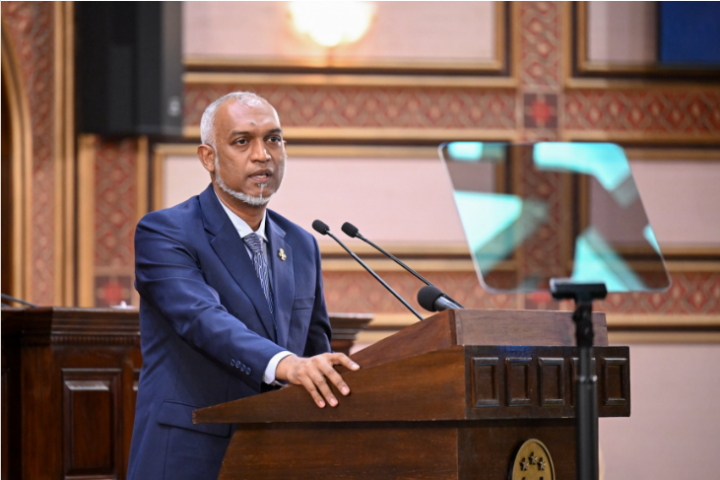
The ruling People’s National Congress submitted a motion to remove Deputy Speaker Ahmed Nazim from office to the People’s Majlis on Thursday, after the party’s parliamentary group collected the required signatures to move the resolution. What started as an internal party dispute is now heading toward a confrontation that could have consequences well beyond one man’s seat.
The PNC held a meeting on Wednesday and decided to proceed. Under House rules, removing the Deputy Speaker requires signatures from at least one quarter of members, which is 24, and a simple majority of members present and voting to approve it. The PNC holds 76 of the 93 seats in parliament. It can clear both thresholds without a single opposition vote.
The signs of trouble had been building for weeks. Nazim was removed from two of the most powerful committees in the House. Party members privately asked him to resign. On Wednesday morning, he was expelled from the PNC parliamentary WhatsApp group, which is administered by President and PNC leader Dr Mohamed Muizzu. That same morning, Nazim was presiding over the Majlis in the absence of Speaker Abdul Raheem Abdullah and was forced to adjourn the session twice after members failed to show up in sufficient numbers to meet quorum. Some members who did attend said they did not want the session to proceed under his chairmanship.
He was elected Deputy Speaker on 28 May 2024 with 80 votes, defeating MDP MP Ahmed Didi who received 12. He previously held the same post during the 17th Parliament and was removed then too.
The motion will not be heard immediately. Parliament voted Thursday to extend its first session to 31 May, with 58 of 69 members present voting in favour and 11 against. The extension was called to complete several government-priority bills, including the Cyber Security Bill, the Personal Information Protection Bill, the National Service Bill and amendments to the Employment Act.
If a no-confidence motion is formally filed, Nazim has 14 days to respond.
The disciplinary question and what comes after
The PNC has not stated publicly why it is moving against Nazim. But if the removal is driven by a disciplinary matter rather than purely procedural grounds, the Ethics Committee of the party would ordinarily be expected to examine it. As things stand, the trajectory points toward escalation. The likely next step, if the party treats this as a disciplinary case, is removal from the PNC itself. And that is where it gets complicated.
Under the Anti-Defection Law, a member who is expelled from the party that fielded them for election can lose their parliamentary seat. Nazim won his seat as a PNC candidate. If the party expels him and moves to strip him of his seat, that question will land in court.
Which brings in a case already sitting in the legal system. Former MP Ali Hussain has filed a case concerning members who switched to the PNC after winning their seats under a different party banner. The argument is that those members should lose their seats under the same anti-defection principles. The Supreme Court has dealt with related questions before, and the central issue now is whether the courts will allow the law to be applied retrospectively to members who crossed the floor before the current legal framework was fully settled. That question has no clean answer yet.
Two seats, several contests
Parliamentary seats are already a live political issue. The Addu North constituency, a seat the PNC holds, is heading to a by-election. A PNC candidate is contesting against a former MDP mayor from Addu, and the race is being watched as a reading of the government’s standing in the south. If Nazim is eventually stripped of his seat, his constituency enters the same kind of contest. Two vacant seats in a parliament where the PNC’s super-majority depends on holding what it has would not be a crisis for the government arithmetically, but the political cost of losing either race in the current climate would be felt.
For now the motion is filed, the clock is running on Nazim’s 14 days, and the session has been extended to the end of the month. Whether this ends with a quiet removal or a drawn-out legal fight over seats and defections depends on how hard Nazim decides to push back, and how far the party is willing to go.