News Desk
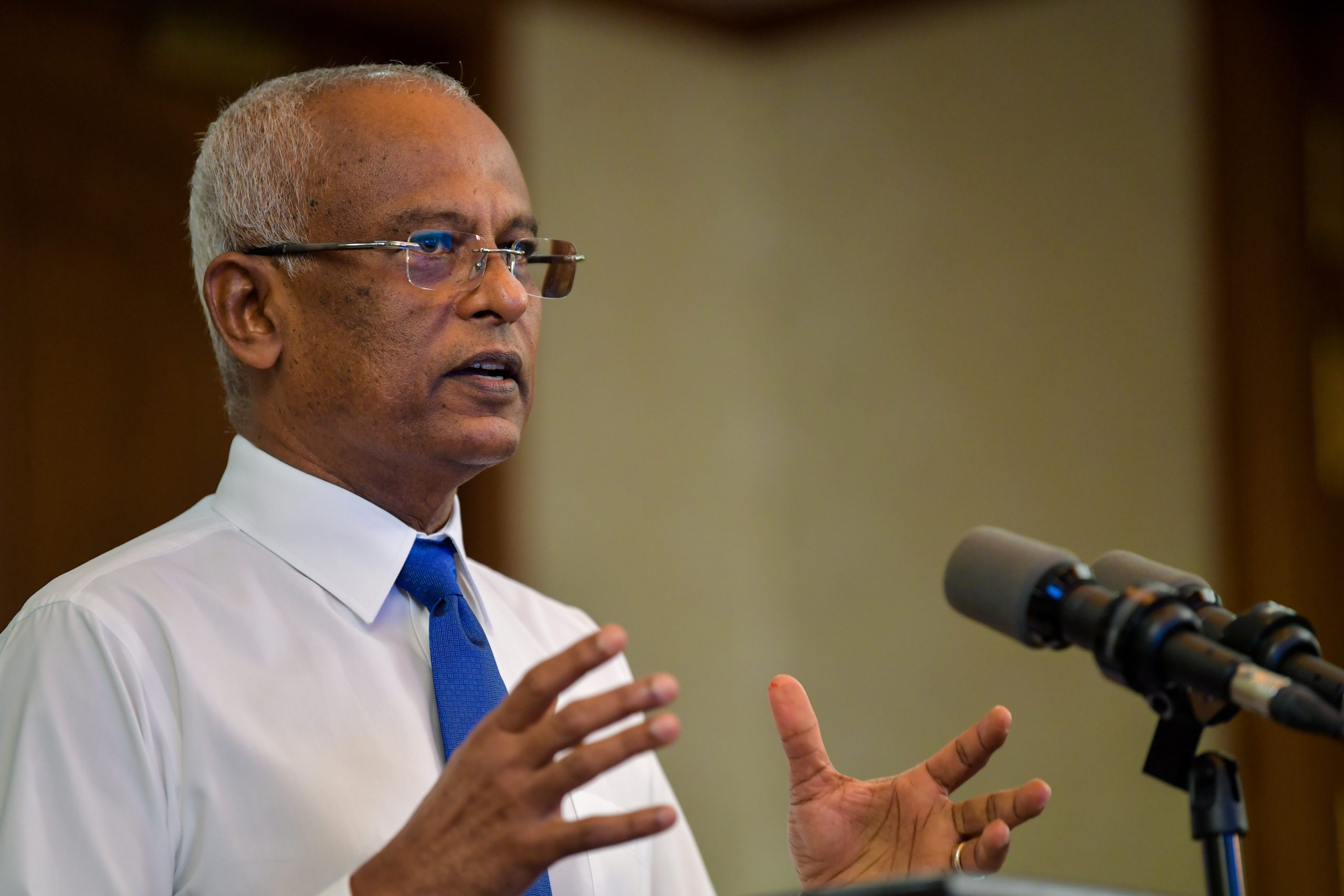
A post on X by former President Ibrahim Mohamed Solih criticising the terms of the real estate agreement has triggered a sharp, asymmetrical online debate, highlighting both partisan hostility and political paralysis surrounding the controversial RasMalé project.
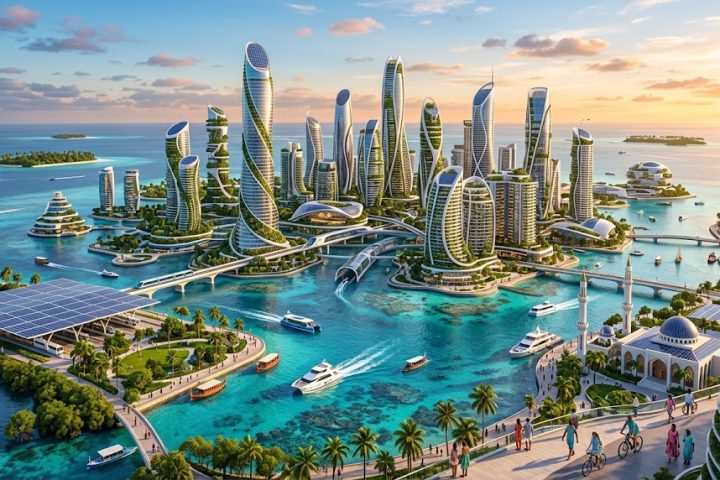
Writing on X, President Solih questioned the commercial rationale of granting 500 hectares of newly reclaimed land at Fushidhiggaru Falhu to the United Arab Emirates-based developer Eagle Hills free of charge. He argued that a sound business deal must provide mutual benefit to both buyer and seller or lessor and lessee. Under the current agreement, he asserted, the public treasury is spending upwards of 700 million dollars to reclaim land that is then handed over to a private foreign developer without direct state revenue, leaving the government required to repurchase 5,000 housing units built on the site. Warning of severe long-term risks to the country, the former president issued a direct plea: “my appeal is to stop this project from proceeding as currently planned.”
Despite the former president’s high-profile status, the public reception to his post over its first 21 hours—garnering roughly 18,100 views, 220 likes, and 24 comments—revealed an arena overwhelmingly dominated by his political opponents rather than a groundswell of public outrage. Ruling party supporters and establishment loyalists moved rapidly to counter his claims, largely bypassing the specifics of the Eagle Hills commercial terms to launch personal and retrospective attacks against President Solih’s own governing record.
Opponents challenged the former president’s financial authority, accusing his past administration of mismanaging state finances and increasing national debt. One commenter retorted, “you sold Fotteyo lagoon for 99 years for just 43 million dollars, printed 8 billion rufiyaa, and bankrupted the nation with 120 billion rufiyaa in debt,” adding dismissively that he should “wear a sarong and stay in the kitchen cooking chicken curry.”
Another commenter, user Afsal Saeed, compiled a six-point list accusing the former leader of being “the person who caused the greatest damage to this nation,” citing actions such as “selling off the sea,” “distributing free land to those close to him,” pardoning convicted figures (former VP Adeeb) in the nation’s largest corruption scandal, waiving resort fines and rent, stealing “from the oxygen machines during Covid,” and printing 8 billion Rufiyaa. Another user similarly asserted that “only a fool would believe that a traitor who distributed land from Hulhumalé, gave away several lagoons, and ceded a large part of our sea is speaking with sincere intentions.”
FACT BOX 1:
Fushidhiggaru Falhu (RasMalé)
- Total Lagoon Footprint: ~1,153 hectares (11.5 km²).
- Reclaimed Land Area: ~1,009 to 1,100 hectares planned.
- Land Concession: 500 hectares (5.0 km²) allocated to UAE developer Eagle Hills.
- Upfront State Revenue Received: $0 in direct acquisition fees.
- State Capital Expenditure: Over $700 million in public funds/commitments for reclamation.
- Housing Component (Hulhumalé): Eagle Hills is proposed to fund/build 5,000 three-bedroom housing units in Hulhumalé estimated at $400 million to $500 million.
- Agreement Details: Key terms remain sketchy and unreleased; while the government claims Eagle Hills will finance the $500 million upfront, details on the exact buyback mechanism, state repayment obligations, or future revenue forfeitures have not been fully disclosed.
Fohtheyo Falhu
- Total Lease Footprint: ~400 to 500 hectares of natural, un-dredged marine area.
- Reclaimed/Built Footprint: ~134 hectares for resort infrastructure.
- Upfront State Revenue Received: $43 million in direct advance acquisition fees paid to the state treasury.
- State Capital Expenditure: $0 in public dredging or engineering costs (all development risks borne by the private developer).
Where defenders attempted to distinguish the RasMalé reclamation from earlier transactions like Fotteyo Falhu, one user countered directly in the thread, arguing that “Fotteyo lagoon is not a place reclaimed with citizens’ tax money” and noting that “43 million dollars was received as an advance acquisition fee for Fotteyo lagoon,” before asking of the current deal, “whose pocket did Eagle Hills pay an advance into?”
FACT BOX 2:
Binveriyaa Housing Scheme (President Solih Tenure)
- Total Residential Plots Issued: 9,003 plots across the Greater Malé Region for local citizens.
- Hulhumalé Allocation (Phase 2 & 3): 1,351 plots totaling ~25 to 26 hectares (~0.26 km²).
- Gulhifalhu Allocation: 2,219 plots totaling ~42 hectares (~0.42 km²).
- Giraavarufalhu Allocation: 5,433 plots totaling ~100 hectares (~1.0 km²).
- Total Combined Footprint (All 9,003 Plots): ~168 hectares (~1.68 km²).
- Recipients & Beneficiaries: Distributed free of charge to eligible Maldivian citizens for private family residential housing.
- Comparative Scale: The total land footprint of all 9,003 residential plots given to citizens combined (~168 hectares) equals roughly one-third of the single 500-hectare (5.0 km²) concession granted to Eagle Hills at RasMalé.
Meanwhile, visible support for President Solih within the online thread remained sparse. Outside of general praise from individual loyalists, one supporter commended him by writing, “Thank you, President Ibu. President has always been someone who worked for reform. Don’t end this with just this tweet; finding ways to prevent these things from happening in the future is very important.” To this, MDP activist and councillor Khadeeja Mohamed replied with a single word of assurance: “kuraane” (he will do it).
Other commentary highlighted growing internal frustration with the primary opposition party’s restraint. User Lami Mohamed summarized the dilemma facing both the public and the opposition, writing, “In this small land of ours, there is no land left for our children to live in… Muizzu has sold off and exhausted the land for an endless 99 years. This must be stopped.” Turning the critique inward toward the Maldivian Democratic Party, the user added that “MDP is caught with its tail trapped; there is no leader to take the initiative.”
The digital exchange offers a snapshot of the broader political dynamic surrounding RasMalé: while economic and sovereignty concerns over long-term foreign land allocations persist, the debate remains constrained by intense partisan counter-messaging and an opposition struggling to project unified momentum.