News Desk
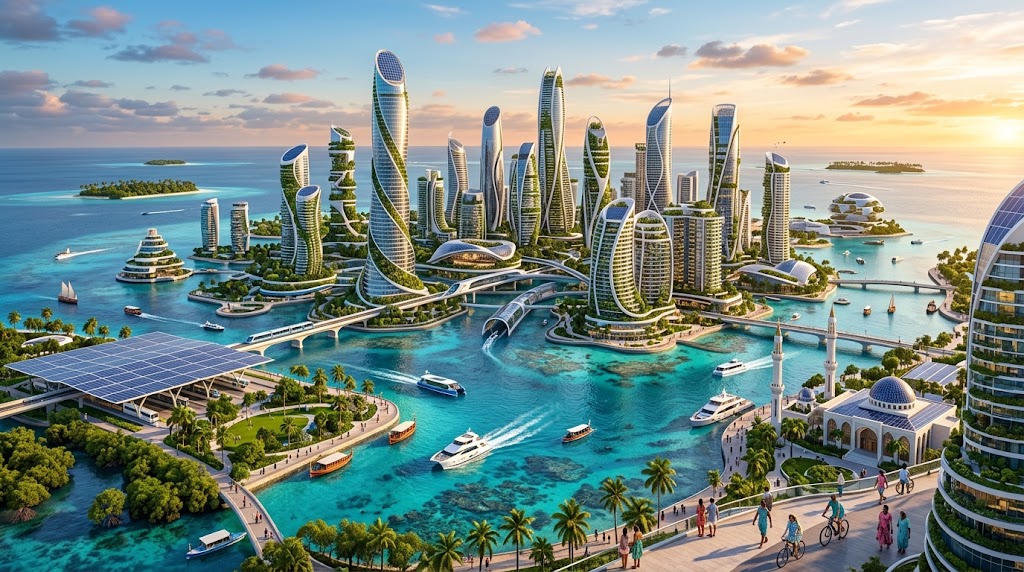
The other day, a friend called to ask whether President Muizzu was actually winning the narrative on RasMalé. My initial reaction was to wonder: is there anyone out there even trying to beat it?
Inside the quiet, air-conditioned cafés that line the cramped alleyways of Malé, the political conversation rarely matches the fiery rhetoric emanating from the majlis.
While opposition leaders wage an intense campaign against President Dr Mohamed Muizzu’s flagship eco-city project, RasMalé—framing a multi-billion-dollar partnership with Abu Dhabi developer Eagle Hills and its chairman, Mohamed Alabbar, as a moral misstep—the strategy appears to be missing its mark among ordinary citizens.
The opposition has largely built its case on Alabbar’s corporate track record and geopolitical affiliations, seeking to rally public outrage around pro-Palestinian sentiment and foreign influence. Yet on the ground, a widening gap has emerged between high-decibel political messaging and public pragmatism.
The contrast was on display recently during a conversation in Malé with two young Maldivian professionals—both Gen-Z graduates who returned home after earning first-class undergraduate and master’s degrees from top Western universities.
When asked about the reclamation and development deal in Fushidhiggaru Lagoon, the first young man offered a swift critique: “The deal itself is okay for the future of the nation, but the party behind it is wrong.”
Pressed on why a domestic land development was tied to party politics, he pointed directly to foreign policy: “Because of our pro-Palestinian stance and activism, and Mohamed Alabbar’s pro-Israeli affiliations.”
A short time later, a young woman of the exact same academic demographic offered a response that underscored the limits of the opposition’s outreach. When asked if she intended to apply for a plot of land in RasMalé, she looked up and asked: “What is RasMalé?”
Her question highlighted a growing reality in the capital: a significant portion of the electorate operates entirely outside the daily news cycle, unexposed to political social media channels and indifferent to the commentary filling evening television broadcasts.
Aligning with Marshall McLuhan’s media theories on sensory overload and information environments, the dynamic illustrates how citizens actively filter political communication: for individuals like her, the partisan debate is simply tuned out as noise.
This media selectivism points to a central challenge facing the opposition. In a society where social and family circles encompass diverse personal and political views, critics have struggled to explain why an international investor’s personal affiliations should outweigh long-term economic arguments, such as housing relief, job creation, and municipal revenue.
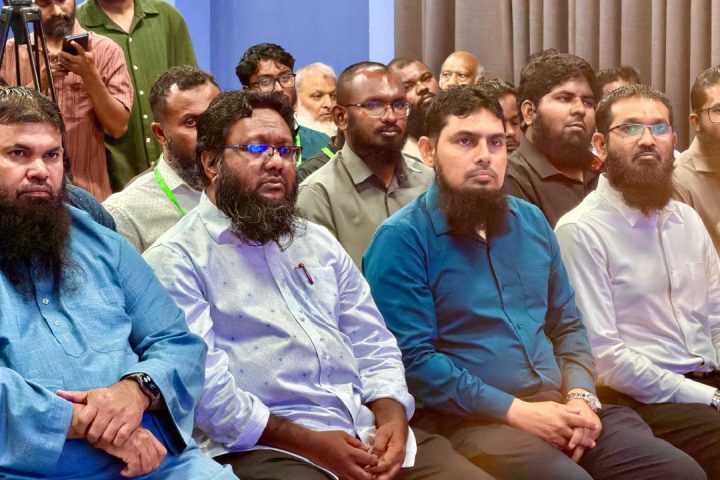
At the same time, opposition factions have appeared fragmented, lacking a unified domestic alternative. Religious figures remain divided over the project, while critics remain heavily focused on a single foreign policy agenda—even as Israeli citizens with dual nationality continue to visit Maldivian islands without public friction.
By relying on single-issue moral framing while the administration focuses on tangible housing and urban expansion, the opposition risks alienating voters looking for practical solutions to Malé’s overcrowding. For now, President Muizzu continues to hold the advantage in the narrative debate, leaving his opponents searching for a strategy that resonates beyond their own core supporters.