News Desk
The government has submitted a bill to Parliament that would define defamation as a civil offence and cap what courts can award in damages, the latest turn in an argument over reputation law that has passed between the country’s main parties for 17 years.
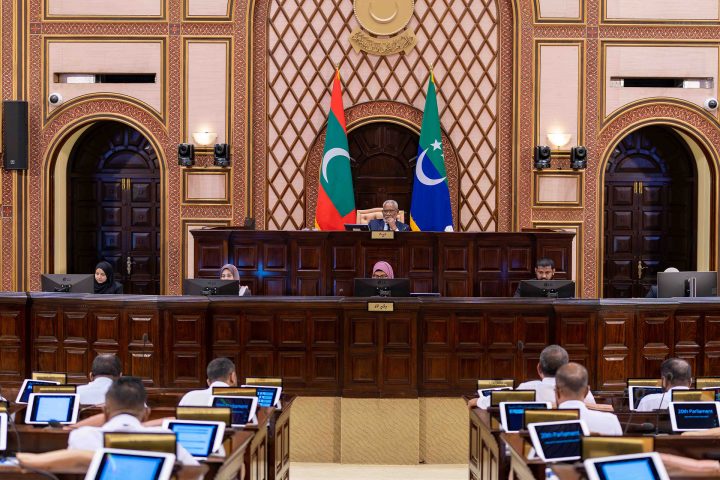
The Bill on the Right to Protect Reputation and Name was submitted by Mohamed Ismail, who represents Vilimalé. Its first reading is scheduled for Monday’s sitting.
Under the bill, a statement would be defamation if it is untrue and harms a person’s reputation and dignity. That covers speech, writing, drawings, cartoons, broadcasts and online posts. Facts, and opinions shared in good faith on the basis of facts, would not count. The law would apply to individuals, companies, registered media, online news outlets and social media users, and to statements made abroad that damage a Maldivian’s reputation.
Compensation for financial loss would be capped at 500,000 rufiyaa, about $32,000, and penalties would run from 50,000 to 500,000 rufiyaa. Courts could reduce the amount if the defendant apologised or corrected the statement.
A plaintiff would first have to send a written notice giving the other side a chance to withdraw or amend the statement, or to apologise. Cases would have to be filed within a year, and courts would be expected to finish them within six months.
Statements made by MPs in the chamber and in committees would be immune, as would statements in court and tribunal hearings and accurate reporting of them.
The Attorney General’s Office would have 30 days after the law takes effect to publish regulations.
A long argument
In November 2009, under President Mohamed Nasheed of the Maldivian Democratic Party, Majlis voted to decriminalise defamation, repealing penal code provisions that carried exile, house arrest or fines. A United Nations rapporteur welcomed the change.
It was reversed seven years later. In August 2016, Majlis passed the Protection of Reputation and Good Name and Freedom of Expression Act under President Abdulla Yameen.
The bill had been put forward by Ahmed Nihan, the parliamentary group leader of Yameen’s Progressive Party of Maldives. It allowed fines of up to 2 million rufiyaa and jail terms of three to six months for failing to pay.
Embassies of the United States, Britain and several European countries, along with the UN and the European Union, warned that it would damage free speech, and journalists protested outside Majlis.
In 2018 the government used the law to fine media outlets that published material critical of Yameen, Human Rights Watch reported.
President Muizzu was a minister in Yameen’s government at that time. The People’s National Congress, which he now leads, was formed in 2019 after a split in the Progressive Party.
After Ibrahim Mohamed Solih of MDP beat Yameen in the September 2018 election, Parliament repealed the law in November by 38 votes to 13. The repeal bill was submitted by Abdulla Shahid, then a joint opposition MP. Solih had promised it during the campaign.
His government said in October 2020 that it was drafting a civil defamation bill that would not target the media. The Maldivian Democratic Party also had its own record. In 2022, its government passed an Evidence Act that lets courts order journalists to disclose sources, and Solih signed it despite a petition from 158 journalists asking for changes. He promised to amend it two months later.
Under Muizzu, the fight shifted to the media itself. Majlis passed the Maldives Media and Broadcasting Regulation Act on 16 September 2025, and he ratified it two days later.
The UN human rights office said it gave the new commission “intrusive powers” to investigate, fine media workers and revoke licences.
The Maldives Journalists Association said it would take legal action, and the main opposition party joined protests that continued for weeks.
The government said the law was meant to prevent false information and to set out journalists’ rights and responsibilities.
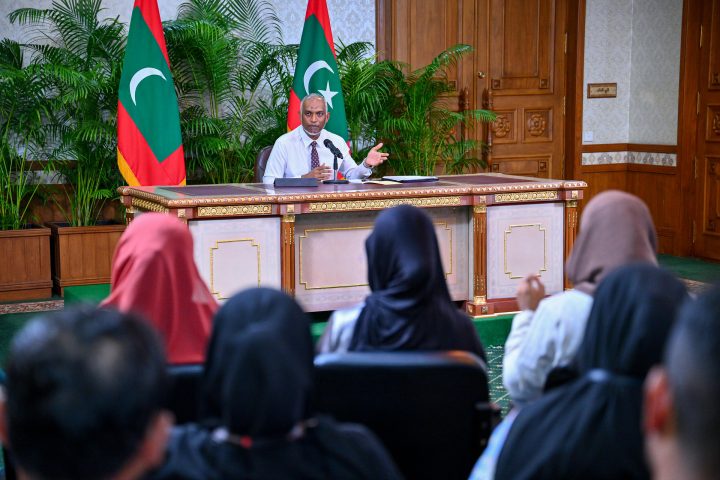
In December, Muizzu told residents in Malé that his government would not restrict press freedom within recognised journalistic limits, but that freedom of expression did not extend to defamation or attacks on a person’s dignity.