News Desk
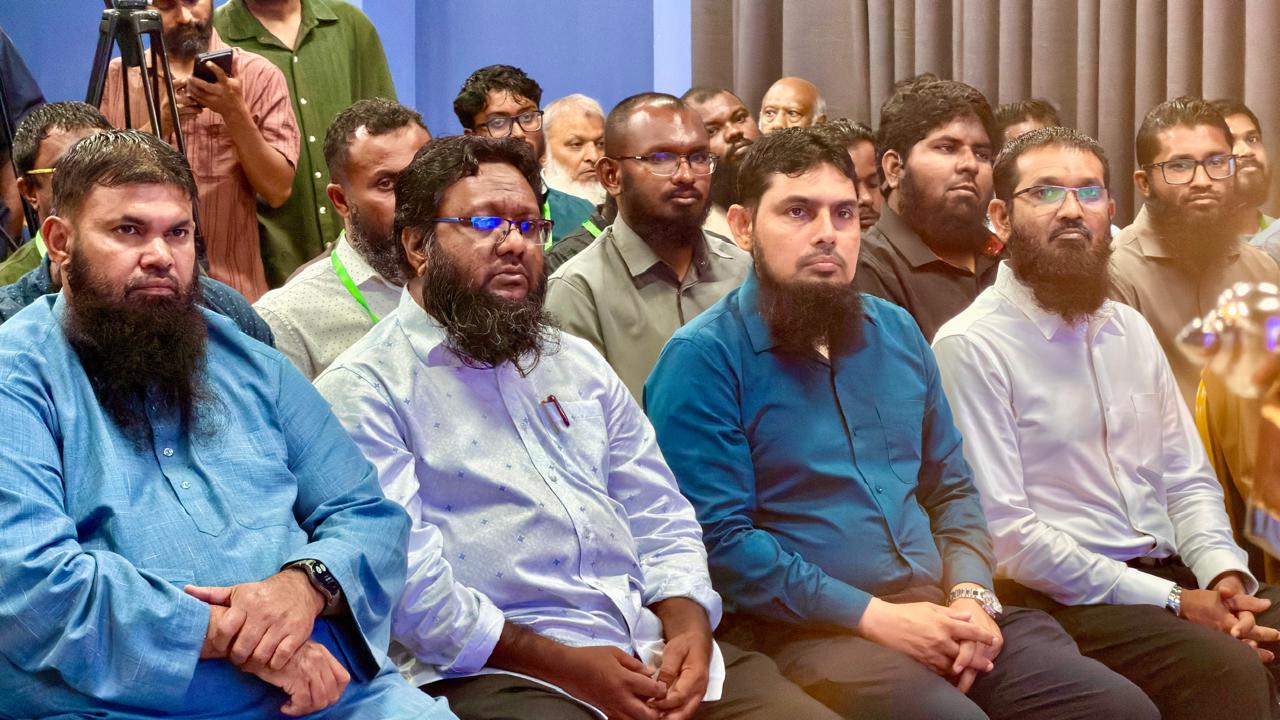
As the Maldivian government moves forward with plans for Rasmalé—its flagship eco-city and reclamation project designed to tackle urban crowding and climate threats—the country’s prominent religious organisation, Jamiyyathul Salaf, has issued a comprehensive appeal offering measured advice on the ideological and legal boundaries for the development.
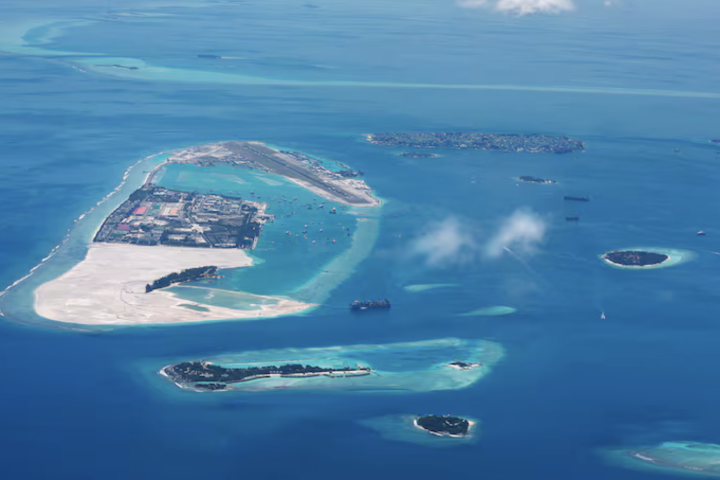
While the government envisions Rasmalé as an engine for foreign direct investment through a proposed 99-year lease with UAE-based developer Eagle Hills, Salaf’s 8 point appeal highlights deep-seated anxieties over national sovereignty, cultural preservation, and constitutional identity. Behind the document’s measured, policy-oriented language lies a clear strategy: to pre-emptively bind the state’s upcoming real estate legislation and ensure that international capital does not carve out liberal or extra-territorial pockets within the 100 percent Islamic republic.
The Rasmalé Plan vs. Ideological Red Lines
At the heart of the debate is the structure of the proposed deal. The state plans to grant Eagle Hills a 99-year lease over 500 hectares of reclaimed land, allowing sub-leasing to international investors alongside long-term residency visas. While Salaf acknowledges the need for economic diversification and foreign capital, its appeal makes clear that market openness must remain strictly subordinate to national and religious sovereignty.
In response to the government’s economic vision—which relies on 99-year leases, long-term visas, real estate growth, and global investment—Salaf has established a set of strict ideological safeguards. These include uncompensated property seizure rights, bans on non-Muslim rites, national origin caps, an explicit ban on Israeli citizens, and mandatory parliamentary oversight through the People’s Majlis.
Strategic Analysis: Reading Between the Lines
A closer examination of Salaf’s eight-point agenda reveals several targeted political and social objectives:
Codifying Social Restrictions in Advance
Salaf explicitly calls for primary legislation to prohibit non-Muslim places of worship, public non-Islamic symbols, and non-Islamic religious instruction in educational institutions within the project area.
- The Implicit Fear: Long-term foreign residents and international workers could establish non-Muslim cultural nodes or lobby for religious freedoms over time.
- The Strategy: By forcing these restrictions directly into the draft real estate law before contracts are finalised, Salaf aims to make social conservatism a non-negotiable precondition for foreign buyers.
High Investor Risk via Repossession Clauses
The statement insists that the government retain the right to repossess property without compensation if an entity or resident engages in acts deemed harmful to the nation’s “Islamic identity” or “national interest”.
- The Consequence: Introducing broad, ideologically defined termination clauses creates high regulatory risk for foreign investors, effectively acting as an ideological filter on who chooses to buy or operate in Rasmalé.
Geopolitical Alignment and Demographic Caps
Salaf demands strict country-of-origin quotas for unit leases and an explicit, total ban on Israeli participation, whether direct or indirect.
- The Context: This reflects local political sentiment surrounding Arab geopolitics while attempting to prevent any single foreign nationality from establishing dominant demographic weight within the new urban enclave.
Leveraging the Legislature
Analytical Breakdown of Salaf’s Policy Demands
Focus Area: Religious Freedom & Identity
- Expressed Demand: Enforce explicit legal prohibitions on non-Muslim symbols, places of worship, and comparative religious education.
- Strategic Intent / Implicit Goal: Prevent cultural pluralism or lifestyle integration among foreign long-term residents.
Focus Area: State Authority & Repossession
- Expressed Demand: Legal right for uncompensated property seizure for violations of Islamic principles or national interest.
- Strategic Intent / Implicit Goal: Retain domestic political leverage over foreign developers and property owners.
Focus Area: Demographics & Geopolitics
- Expressed Demand: Impose national origin caps on unit leases; bar all Israeli nationals and firms.
- Strategic Intent / Implicit Goal: Pre-empt foreign demographic concentration and align commercial policy with pan-Islamic stances.
Focus Area: Institutional Governance
- Expressed Demand: Mandatory parliamentary oversight and public consultation on major leases.
- Strategic Intent / Implicit Goal: Shift control from executive ministries to public-facing platforms where religious advocacy is most effective.
Balancing Capital and Identity
Jamiyyathul Salaf Appeal Translated by Etruth.mv
“Based on the discussions held with the relevant government institutions regarding the Rasmalé Project and the information we have gathered, this project is planned to be leased to the UAE-based company, Eagle Hills, for a period of 99 years to be developed and invested in under a real estate model, while ensuring that the ownership of the land remains with the Maldivian state. Under this project, the spaces and facilities built will be granted the right to be leaseholded to foreign parties for a period of 99 years with the permission of the Government of Maldives. Furthermore, during that period, with government permission, there will be opportunities for leaseholding to other parties, and with each transaction, a determined financial benefit will be accrued to the Maldivian state.
In addition to this, under a special visa issued to foreign parties who leasehold facilities from this site, they will also be granted the right to reside there for an extended period.
From the information we clarified, the official agreement for this project has not been signed thus far. Moreover, as the government has disclosed that a special real estate law will be formulated to establish the legal framework required for implementing such projects, the practical and legal details of the project will only be fully ascertained once that agreement and the relevant legislation come into existence.
Note that as the Maldives is a hundred percent Islamic nation, its national and constitutional identity is intertwined with Islam in a special way entirely different from other countries in the world. Therefore, in making such strategic decisions regarding foreign investments and permitting the prolonged stay of foreigners, ensuring the religious unity, social, and cultural security of the Maldives is an imperative necessity that must be included in the agreements and legal framework of such projects.
Therefore, including the Rasmalé Project, due to such special zones where large numbers of foreigners belonging to different religions and cultures can reside for long periods, we earnestly urge the current government and future governments to formulate the agreements and legal framework under robust principles such that no adverse impact will befall the freedom to advocate for religious freedom in the future, the Islamic identity of the Maldivian society, the sovereignty and independence of the country, the Islamic national principles upheld through generations, and the constitutional system of remaining a hundred percent Islamic state as guaranteed by the Constitution of the Republic of Maldives.
Therefore, we consider it an absolute necessity to ensure the following matters when formulating development project agreements and establishing the relevant legal frameworks:
| Policy Areas & Directives |
|---|
|
1. Safeguarding Islamic Identity and National Sovereignty:
|
|
2. Safeguarding State Sovereignty and Strategic Independence:
|
|
3. Assessing Demographic Changes and Security Risks:
|
|
4. Aiming for Economic Development that Maximises Benefits for Maldivian Citizens:
|
|
5. Establishing a Transparent and Accountable Policy:
|
|
6. Establishing Balance Between an Open Economy and National Foundations:
|
|
7. Establishing a Permanent Monitoring System:
|
|
8. Assessing Social Impacts:
|
Therefore, while requesting that investment frameworks be robustly designed to safeguard the nation’s Islamic ‘identity’ and national sovereignty in investments undertaken in the Maldives, to deny any opportunity in such projects carried out in the Maldives to any citizen of “Israel”—established under a Zionist occupation after seizing the sacred lands of Palestine—and to ensure that ownership of land and natural resources, as well as sovereign authority, remain fully vested in the State;
Jamiyyathul Salaf earnestly appeals to the Maldivian Government to design project agreements and the legal framework in a manner that secures maximum benefit for the Maldivian public from these projects, discloses agreements transparently, operates with public consultation, monitors full compliance with Islamic and social standards, and above all, safeguards the national interest.
We pray that Almighty Allah protects the Maldives, bestows safety and tranquility, and grants divine guidance to make decisions in the most beneficial manner for the nation and its people. May He grant us the good fortune to protect our religion, identity, and national sovereignty alongside development and prosperity. Aameen!”
Ends/