News Desk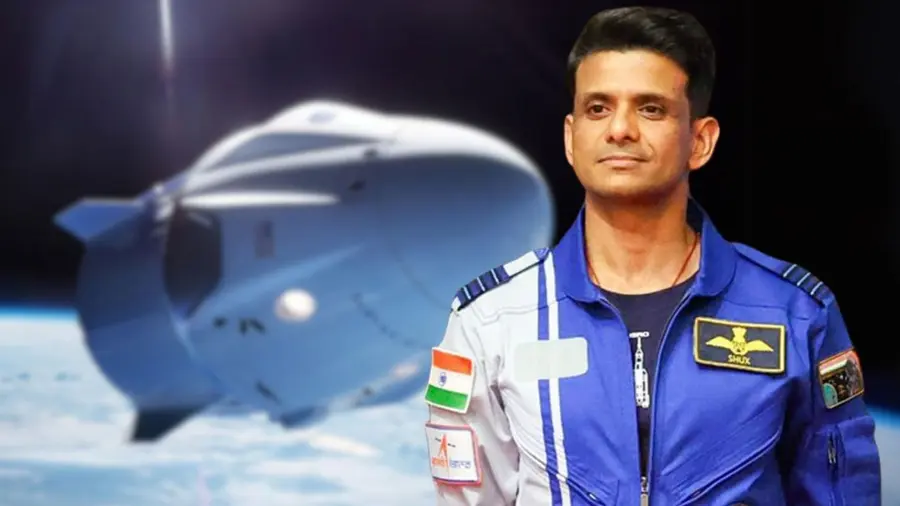
BENGALURU, India — High above Earth, Group Captain Subhanshu Shukla gazes out from the International Space Station, the first Indian astronaut to reach this orbiting laboratory. As he prepares to undock as part of the Axiom-4 mission, his journey marks a defining moment for India, a nation that has transformed its space ambitions into reality through the Indian Space Research Organisation (ISRO) and a formidable army of IT professionals.
Shukla’s mission is not just a personal triumph but a vivid illustration of India’s ascent as a global space power, driven by ingenuity, collaboration, and an unparalleled talent pool. This milestone carries the weight of decades of perseverance.
ISRO, founded in 1969, has long been a symbol of India’s scientific resolve, achieving extraordinary feats with a budget that pales in comparison to those of Western space agencies.
Its Chandrayaan missions, particularly the third, which achieved a historic landing near the moon’s south pole, stunned the world with their precision and affordability.
The Mars Orbiter Mission, known as Mangalyaan, made India the first Asian nation to reach Martian orbit, and it did so on its first attempt, a feat unmatched by any other country.
These successes reflect ISRO’s ability to innovate under constraints, a quality that has earned it global respect. Shukla’s presence on the ISS represents a bold step forward in India’s human spaceflight ambitions.
The Axiom-4 mission, a partnership among Axiom Space, NASA, and ISRO, places India among an elite group of nations participating in crewed missions to the ISS.
A seasoned Indian Air Force officer and test pilot, Shukla trained rigorously at NASA’s Johnson Space Center, preparing alongside international astronauts for experiments in microgravity. His work aboard the station includes studies in materials science, biology, and fluid dynamics, contributing to global research that could shape future space exploration.
His journey underscores ISRO’s growing role in international collaborations, a testament to its technical prowess and diplomatic outreach.
What sets India apart in this endeavor is its remarkable human resource capital, particularly in information technology. India’s IT sector, often called the engine of the global digital economy, produces over 1.5 million engineering graduates annually, many specializing in software development, data analytics, and artificial intelligence. Cities like Bengaluru, Hyderabad, and Pune pulse with innovation, hosting tech giants like Infosys, TCS, and Wipro, alongside a vibrant startup ecosystem. This talent pool has been instrumental in ISRO’s success, providing the technological backbone for its missions.
ISRO’s reliance on homegrown IT expertise is evident in its mission operations. The organization develops sophisticated software for satellite tracking, telemetry analysis, and mission simulations, all crafted by Indian engineers.
The Chandrayaan-3 mission, for instance, depended on advanced imaging and data processing tools to map the lunar surface, ensuring a precise landing. Similarly, the Gaganyaan program, India’s first indigenous human spaceflight initiative, leans heavily on IT for crew module simulations, life support systems, and real-time communication.
These capabilities highlight how India’s IT workforce enables ISRO to compete with global giants while keeping costs low. The Axiom-4 mission itself benefits from this expertise. Shukla’s experiments on the ISS generate vast datasets, which require robust systems for storage, processing, and analysis.
Indian IT professionals have contributed to developing these systems, leveraging skills in big data, AI, and machine learning to ensure that the mission’s scientific output is maximized. From protein crystallization studies to fluid behavior in microgravity, the data management tools designed by Indian engineers are helping unlock insights that could advance both terrestrial and extraterrestrial science.
This synergy between ISRO’s ambitions and India’s IT talent is a model of how the nation harnesses its strengths. India’s IT sector also fosters a culture of innovation that permeates ISRO’s work.
The country’s tech ecosystem thrives on adaptability and problem-solving, qualities that align seamlessly with the demands of space exploration. ISRO’s ability to launch satellites at a fraction of the cost of other agencies stems from its reliance on domestic talent, reducing dependence on expensive foreign technology.
The Polar Satellite Launch Vehicle (PSLV), often called ISRO’s workhorse, has launched over 300 satellites for countries worldwide, earning a reputation for reliability and affordability. Behind these launches are thousands of IT professionals who design, test, and operate the systems that make such missions possible.
Shukla’s mission carries profound symbolic weight for India, a nation that has risen from post-colonial challenges to become a space superpower.
ISRO’s achievements inspire millions, particularly young people pursuing careers in science and technology. Through initiatives like its “Space on Wheels” program and partnerships with universities, ISRO nurtures the next generation of innovators.
The IT sector amplifies this impact, offering opportunities for young engineers to work on cutting-edge technologies like AI, robotics, and cybersecurity, all of which are integral to modern space missions. This ecosystem of education and opportunity ensures that India’s space ambitions will continue to grow.
On the global stage, Shukla’s mission signals India’s increasing influence in space diplomacy. By participating in Axiom-4, India strengthens ties with NASA, the European Space Agency, and private entities like Axiom Space. These partnerships position India as a key player in the evolving landscape of space exploration, where commercial ventures and international cooperation are reshaping the future. With plans for lunar bases, Mars missions, and even asteroid mining, India’s blend of ISRO’s vision and IT expertise makes it a formidable contender.
As Shukla prepares to return to Earth, India celebrates not just his achievement but the collective effort behind it. From the mission control rooms in Sriharikota to the coding hubs of Bengaluru, thousands of individuals have contributed to this moment. ISRO’s ability to execute complex missions on a lean budget is a lesson in efficiency, while its reliance on India’s IT talent showcases the power of human capital.
The mission reflects a nation that dares to dream big, blending scientific ambition with technological skill. This milestone is more than one astronaut’s journey; it is a portrait of India’s potential. From the laboratories of Hyderabad to the classrooms inspiring future scientists, the country is writing a bold new chapter in space exploration.
Shukla’s view from the ISS, looking down at the planet he calls home, symbolizes a nation looking up, ready to claim its place among the stars. With ISRO’s vision and India’s IT prowess, the future holds limitless possibilities.