News Desk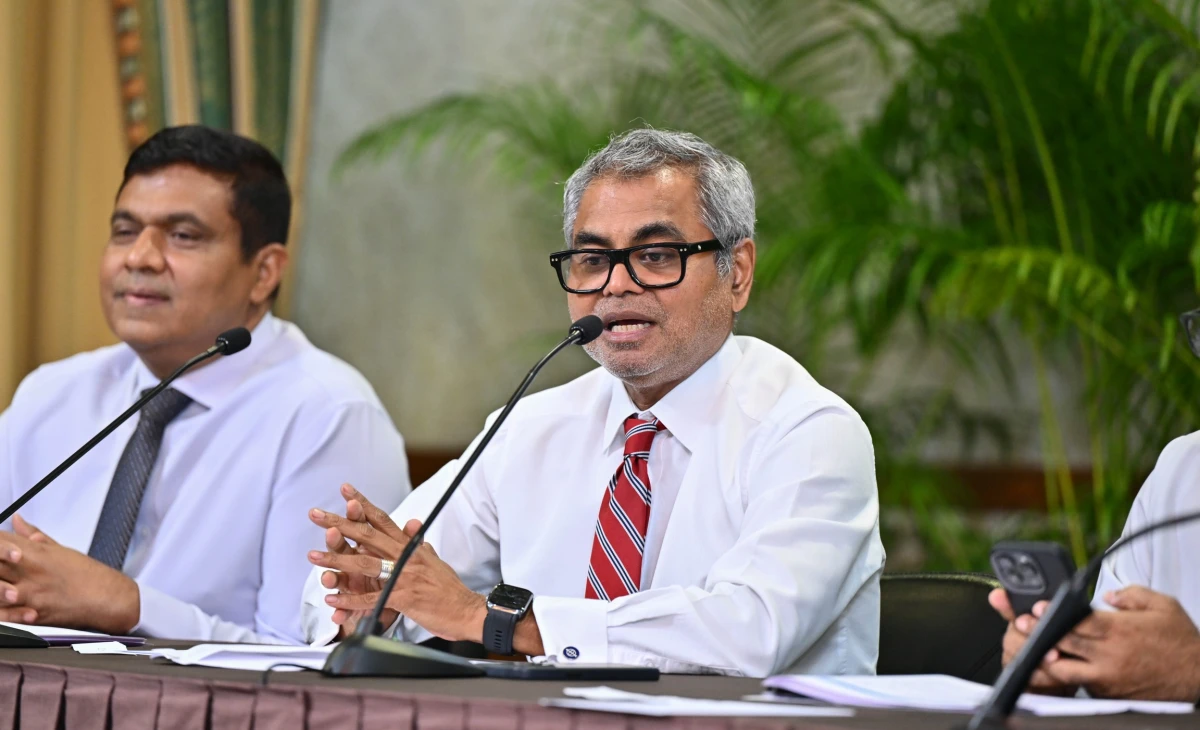
The government of President Dr Mohamed Muizzu has sharply raised its renewable‑energy ambitions, increasing the national target from 53 MW to 164 MW in 2024. Officials say the shift reflects the President’s directive to accelerate the transition to clean energy and reduce reliance on imported fuel.
Speaking today, Environment Minister Thorig Ibrahim said installation works for a 158 MW battery‑backed renewable energy system are progressing across multiple islands. He noted that hybrid renewable systems in Raa Atoll and Baa Atoll will be completed next month, marking a significant step in the government’s broader energy‑transition plan.
“The 40 MW power system is already being installed in 18 islands. Detailed design work is under way. In addition, a 14 MW renewable‑energy project covering 13 islands is now in the tender stage as a power‑purchase arrangement,” Thorig said.
According to the Ministry of Tourism and Environment, 110 islands currently have renewable‑energy systems in place, contributing to the national total of 164 MW. Demand for solar installations has risen sharply, with many communities requesting to join the programme. However, the minister noted that technical constraints remain.
“One of the challenges is that the grid cannot safely take more than 30 per cent renewable energy without upgrades. Strengthening the grids and installing battery systems is essential,” he said.
Thorig also highlighted progress on the SEZ Plotting Solar Project, described as the largest renewable‑energy initiative in the Maldives. Dredging for the project site is expected to begin in the coming days. Electricity generation is scheduled to start within two years of dredging, with the project expected to add 350 MW of power once fully operational.
Officials say that when combined with existing renewable installations, the Maldives will surpass 500 MW of clean‑energy capacity within the project timeline — a scale unprecedented in the country’s history.
The government maintains that the rapid expansion of renewable energy is central to its long‑term economic and environmental strategy, particularly as global fuel markets remain volatile due to the ongoing conflict in the Gulf.