News Desk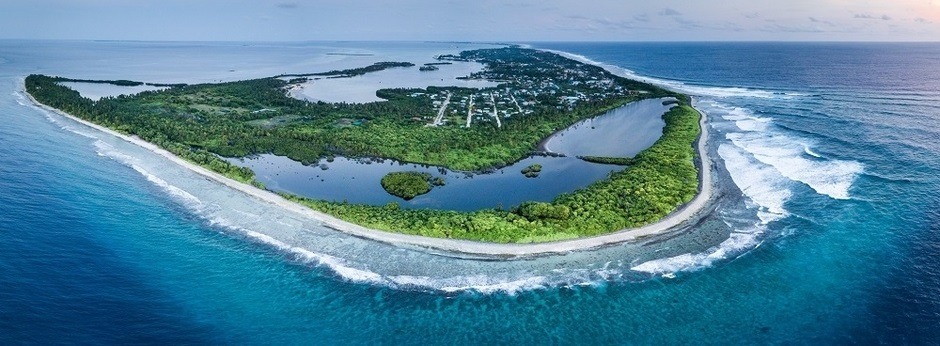
MALE’ — The numbers in the Finance Ministry’s latest budget report look like a win. The government collected USD 120 million, equivalent to MVR 1.8 billion, through resort lease extensions and land sale and transfer fees. It cleared a near-term cash need. The budget pressure eased, at least on paper.
What the numbers do not show is what was given away to get there.
In March 2025, the government amended the Tourism Act to offer resort operators a significant incentive. Any resort that paid a lump sum within the first six months could extend its lease by 49 years for USD 5 million. After that window closed, the same extension would cost USD 10 million. Eighteen parties took up the offer. A further 15 paid MVR 196 million in land sale and transfer fees.
The revenue is real. The problem is what it represents.
Forty-nine years is half a century. The resort islands covered by these extensions are among the most sought-after real estate on the planet, properties whose market value has consistently risen and will almost certainly continue to do so. By locking in a price today, at half what the market would charge after the window closed, the government has surrendered its ability to renegotiate, benefit from rising values or reclaim leverage over those properties for the next five decades. Whatever those islands are worth in 2050 or 2060, the Maldivian state will not see a rufiyaa more from them than what was agreed in 2025.
Economists who study sovereign asset management have a consistent warning about this kind of transaction. Using long-term national assets to cover short-term budget gaps is not structural reform. It is an accounting manoeuvre. It converts future wealth into present cash, books it as revenue and moves on. The underlying fiscal problem, the one that created the pressure in the first place, remains unaddressed.
The Maldives’ tourism land is not a renewable resource. There are a finite number of lagoons and islands of the kind that attract the world’s highest-spending travellers. Selling access to them below market value, under time pressure, to close a financing gap, is not economic management. It is the sovereign equivalent of pawning an heirloom to pay this month’s rent.
The USD 120 million will cover today’s bills. But when the next generation needs housing, healthcare and education, and the government turns to its most valuable assets for revenue, those assets will already be locked in leases signed at a discount in 2025. The foreign operators holding those leases will be under no obligation to renegotiate. They will have their contracts. The Maldives will have spent the money.
The question is not academic. Addu Vilingili offers a concrete example close to home. A unique tropical ecosystem, handed to outside operators, with limited demonstrable benefit to either the local community or the state. What the Maldives got from that arrangement, and what it gave up, is a conversation the country has never fully resolved.
The government will say the resort lease revenue helped it manage its debt obligations and stabilise public finances. That argument has some merit. But stabilising finances by discounting irreplaceable national assets is not a strategy. It is a delay. And the bill for that delay will be paid by people who had no say in the decision.